Is your factory's piping system facing issues with leaks or inability to control the flow rate? The engineering team from SCMA Co., Ltd., a provider of comprehensive measurement instruments and automation system solutions, recommends the use of 2 Way Valve or Two-Way Valve, an essential device for solving these problems. This article will take you through an in-depth understanding of the 2-way water valve and 2-way stop valve, along with a checklist for purchasing that will help reduce machine downtime in a practical manner.
What is a 2 Way Valve?
A 2 Way Valve, also known as a two-way valve by technicians, is a device with one inlet and one outlet, primarily functioning to control the direction, open/close, or adjust the flow rate of liquids, gases, and chilled water in piping systems. Devices such as the two-way valve and 2-way stop valve are essential components in solenoid valve systems, widely used in various industries. Choosing them correctly will help maintain the overall system's stability effectively.
How 2 Way Valve Works
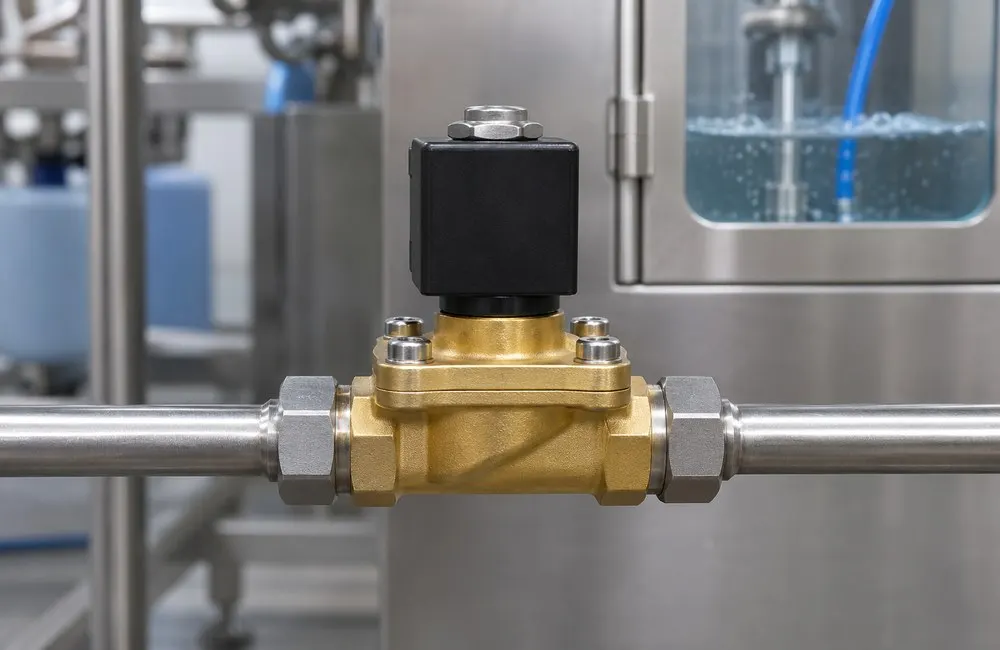
The working principle of the 2 Way Valve relies on the mechanism of opening and closing to control the flow of fluids such as air, water, or gas through the inlet and outlet ports. The 2 Way Valve has detailed working principles that engineers should be aware of as follows
Flow Through Inlet and Outlet Ports
The fluid begins to travel into the system through the inlet port (Inlet) of the 2 Way Valve. Then, the internal mechanism opens the channel to send the fluid to the outlet port (Outlet). This process helps to maintain the orderly movement of chemicals or water in the pipe
Control of On-Off
The 2/2 way valve has two ports and two positions, which are open or closed. When there is no power supply, the Normally Closed (NC) model is in the closed position, while the Normally Open (NO) model is in the open position. For solenoid valves, check the pressure conditions of the model before using this state in the design
Normally Closed (NC) and Normally Open (NO) States
Selecting the 2 Way Valve should consider the normal state when no power is supplied. The Normally Closed (Normally Closed - NC) type blocks the fluid until power is supplied, while the Normally Open (Normally Open - NO) type remains open until a signal is received to stop the operation
How Many Types of 2 Way Valve Are There?
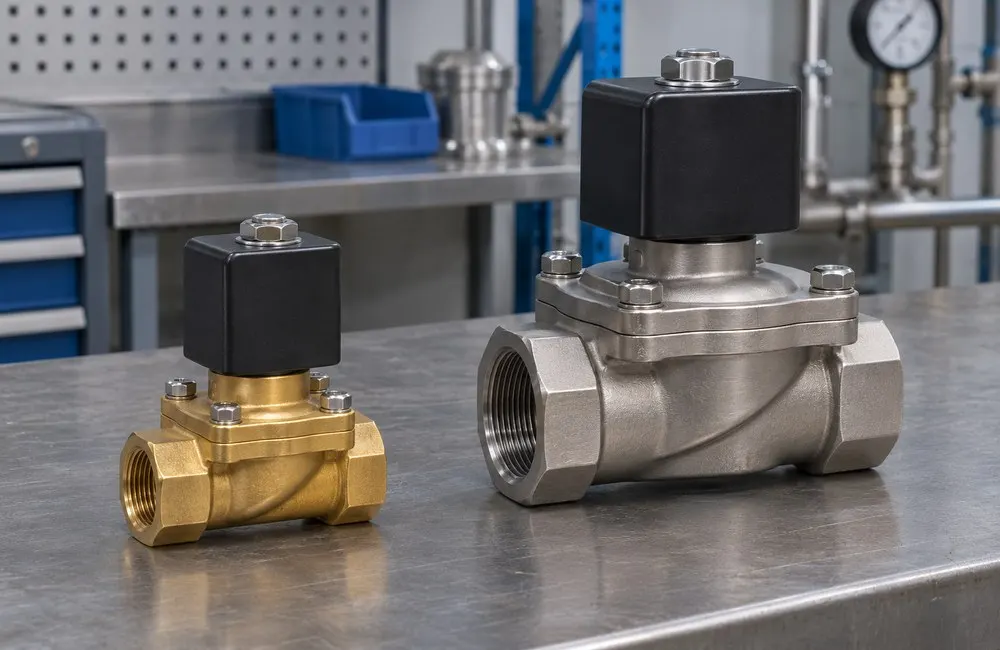
Based on the team SCMA's experience in designing automated systems, the classification of the 2 Way Valve considers the initial operating status when no electricity is supplied. The 2 Way Valve is divided into two main types to meet different usage requirements
Normally Closed Type (Normally Closed - NC)
The Normally Closed solenoid valve is in the closed position when the coil is not powered and opens when the coil is powered according to the conditions of the model. If it is used to separate the fluid, check the allowable leakage rate and the system's safety requirements as well
Normally Open Type (Normally Open - NO)
The Normally Open solenoid valve is in the open position when the coil is not powered and closes when the coil is powered according to the conditions of the model. For pilot models, check the minimum pressure difference according to the manual, and select the state when the power is off based on the system's risk.
Maintenance of 2 Way Valve
Proper maintenance of the 2 Way Valve involves inspecting and cleaning it at least once a year. This method helps extend its lifespan, prevent leakage issues, and reduce downtime of the production line. The following are recommended maintenance steps for the 2 Way Water Valve:
Checking for Leaks Around the Device
The maintenance team should regularly observe water stains, rust, or moisture around the joints and valve stem of the 2 Way stop valve. If any abnormalities are found, immediate action should be taken to prevent potential damage from spreading to other systems.
Cleaning Dirt and Scale
Before removing the valve, the responsible personnel should disconnect the power source and fluid supply, prevent reactivation, and confirm that there is no residual pressure. Clean the filter or components according to the manufacturer's method to avoid damage to the seal and valve seat.
Checking the Condition of Rubber Seals and O-rings (Seal/Gasket)
The rubber seals and O-rings of the 2 Way Water Valve are components that can easily deteriorate due to pressure. If the rubber starts to harden, deteriorate, or show signs of leakage, replace the parts immediately for safety.
Lubricating the Actuating Components
Check the manual before lubricating, as some valve models do not require lubrication. If the manufacturer specifies lubrication, choose a type and quantity compatible with the seal and fluid.
Checking the Flow Direction Correctly
Every time the 2 Way Valve is removed for maintenance, always check the arrow on the valve body. When reinstalling, ensure it is correctly aligned with the original flow direction to prevent seal damage or leakage issues.
Application of 2 Way Valve in Industry
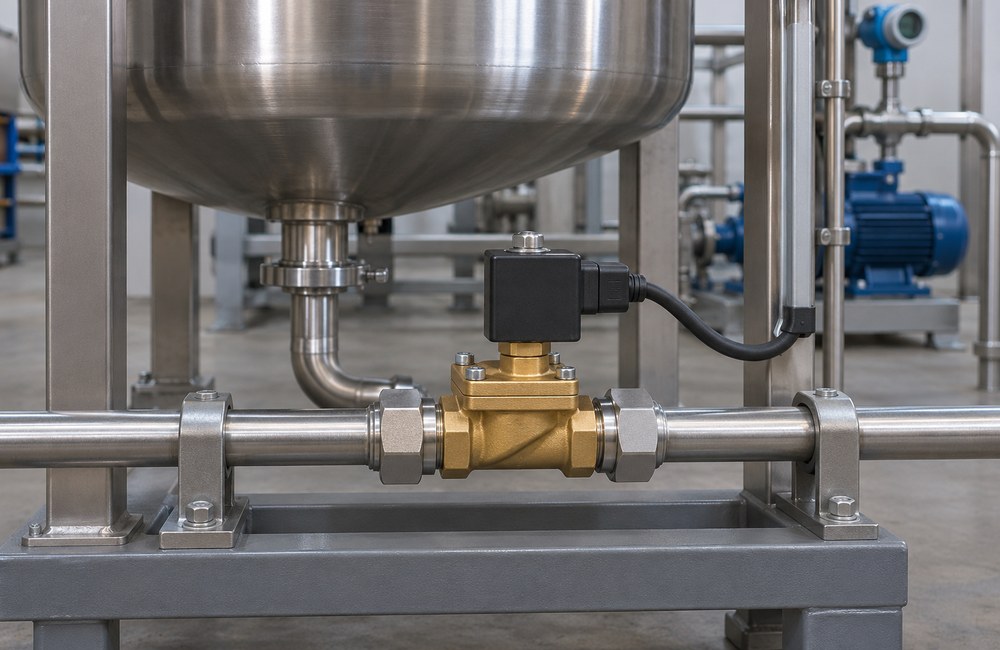
The application of 2 Way Valve in the industrial sector focuses on controlling the opening and closing, or adjusting the flow rate of liquids and gases, with a reliable design what is a 2-way valve in a hydraulic system These devices are therefore widely applied. 2-way valves play an important role in the following systems:
Front Line and Main Flow Control
The 2-way water valve serves as a key front line for adjusting the amount of water, cold water, hot water, chemicals, or air in the piping system. Accurate control helps ensure smooth and safe production processes for workers.
On-Off and Proportional Operation Types
The application of 2-way stop valve is divided into On-Off type, which is fully open or fully closed to immediately cut off the flow, and Proportional type, which can be partially opened at multiple levels to precisely control temperature or pressure.
Application in Air Conditioning and Piping Systems
2-way valves are widely used in large air conditioning systems (HVAC) to control the flow of cold water to air handling units (AHU). Engineers also use them in automatic control systems or general chemical piping systems in factories.
Advantages of 2 Way Valve
The main advantage of the 2 way valve is its ability to precisely control the flow rate along with the opening and closing of the fluid. Choosing to use a 2 way stop valve provides clear benefits to the industrial system as follows
Accurate and Stable Temperature Control
The 2 way valve can adjust the flow of cold water or air at multiple levels according to the signal from the thermostat. This feature helps maintain a stable cooling level in the air conditioning system, meeting the needs of production processes that require stability
Energy Savings in Cooling Systems
When the temperature reaches the set point, the 2 way valve immediately throttles or cuts off the flow of cold water. This type of operation helps reduce the load on the cooling system, resulting in tangible energy cost savings for the factory
Sealing Performance That Is Tight and Secure
The two-port valve can block the flow when the valve type and specification are selected to match the job. It is important to check the leakage specifications at the valve seat, as well as the flow direction and the specified pressure difference
Saving Space and Reducing Installation Costs
Compared to other types of valves, the 2 way valve has a simple structure and compact size, helping technicians install it easily, saving space on the job site, and also being more affordable than multi-directional valves
How to Choose a 2 Way Valve
Purchasing a 2 Way Valve that is cost-effective and suitable for the actual application requires considering various engineering factors, such as type, pressure, temperature, and the size of the piping system. The SCMA team summarizes the considerations for selecting 2 Way Water Valves and 2 Way Stop Valves as follows:
Select the appropriate type of operation:
On-Off Type: Only fully open or fully closed, suitable for small air conditioning units or fan coil units (FCU)
Proportional Type: Adjust the valve to finely control the flow rate, suitable for large AHU systems
Consider pressure and temperature:
Check the system's maximum pressure to prevent the 2 Way Valve from leaking or being damaged
Select seal and valve materials that are resistant to the temperature of the fluid, such as cold water, hot water, or chemicals
Size and flow rate (Cv value / BTU / GPM):
Select the size of the 2 Way Valve according to the required flow rate or compare it with the BTU size of the chiller system
For chilled water systems, engineers recommend selecting a valve size one size smaller than the main chilled water pipe
Precautions for Installing a 2 Way Valve
Although 2 Way Valves are durable devices, improper installation can cause premature damage. Engineers and system operators should always be aware of these precautions when working with 2 Way Water Valves or 2 Way Stop Valves.
Be cautious of foreign objects entering the piping system:
Scale deposits, rust, or loose thread tape can cause the valve disc to not close properly
Always install a filter (Y-Strainer) to capture contaminants before the device
Check the power supply to match the specifications:
Supplying the wrong voltage to the solenoid coil can cause the coil to overheat, resulting in the system stopping immediately
Avoid water hammer phenomena:
Quickly closing a 2 Way Valve in a high-pressure system can cause shock waves that damage the piping
Consider using a proportional-type valve to reduce the severity of sudden flow stoppage
Summary
2 Way Valve or Two-Way Valve is a crucial component for controlling fluid flow, opening and closing, and adjusting temperature in industrial factories. Regular maintenance and selecting a 2-way water valve that matches the pressure specifications will help enhance the reliability of the production process. If you need in-depth consultation on using a 2-way stop valve to reduce downtime, the engineering team from SCMA Co., Ltd. is ready to provide comprehensive solution design (Project & Solutions) and supply high-quality equipment.
Interested in purchasing or consulting via LINE Official: @SCMA
If you want to buy a 2 Way Valve, you can buy it from SCMA today!
Investing in a standard-compliant Two-Way Valve is a guarantee of success in your production line. SCMA Co., Ltd. (SCMA), as an expert in automation systems, is ready to provide distribution of world-leading brand 2-way water valves. We do not just sell equipment, but we offer precise, comprehensive solutions along with reliable service from experienced engineering teams to ensure your business grows steadily.
Frequently Asked Questions
What is the difference between a 2 Way Valve and a 3 Way Valve?
The 2-way type has one inlet and one outlet port to open or close the fluid flow, while the 3-way type has three ports for mixing or separating the direction of water.
What causes dripping from a 2-way valve?
The main cause is the deterioration of the internal rubber seal or O-ring. The component may tear due to exceeding the specified pressure.
Which is better, NC or NO for a 2-way water valve?
Choose NC if the design requires the flow path to be closed when there is no power, or choose NO if the flow path needs to remain open under those conditions. Consider response time, leakage through the valve, and necessary protective equipment based on risk assessment.
Can the coil of a burned-out 2-way stop valve be repaired?
Engineers do not recommend repairing by rewinding the coil. The safest and most stable method for the system is to replace the coil with a new one.
What is the Cv value in the specification of a 2 Way Valve?
The Cv value is a number indicating the ability of water to flow through the device. The higher this value, the more fluid can pass through.
References
Emerson ASCO – 2 Way Valve Information
Emerson ASCO – Example of Pilot-Operated Normally Open Solenoid Valve
Emerson ASCO – Solenoid Valve Manual for Safety Applications