
What is IIoT? How does it work and how is it different from IoT?
IIoT is revolutionizing the global industrial sector by elevating manufacturing to a fully digital era. SCMA, experts in Industry 4.0 solutions, are ready to share deep insights about the technology transforming production landscapes. With over a decade of service experience, we understand industry needs and offer tailored approaches for every sector.

What is IIoT (Industrial Internet of Things)?
IIoT, or Industrial Internet of Things, involves applying internet technology in the industrial sector by connecting machines, devices, and systems to enable real-time data exchange. Industrial IoT is at the heart of the Fourth Industrial Revolution, enabling factories to collect data from sensors, analyze it with intelligent systems, and use insights for business decisions. This system not only enhances production efficiency but also reduces costs, prevents machine damage, and creates a competitive edge in the digital age, allowing industries to adapt and evolve rapidly and sustainably.
How IIoT (Industrial Internet of Things) Works
IIoT stands for Industrial Internet of Things, which operates on the principle of connecting "devices" to the "internet network" to receive and transmit data and perform automated operations. The goal is to increase production efficiency, reduce losses, and enhance safety in industrial plants.
Main Steps of the IIoT System:
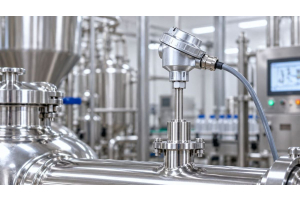
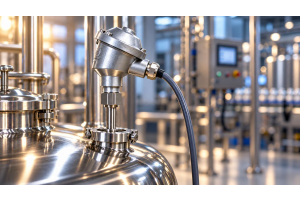
- End-Point Devices (Industrial Sensors/Devices) - Durable industrial sensors that collect various data such as temperature, pressure, vibration, electrical current, flow rate, and production parameters. They are installed at critical points of machinery.
- Industrial Connectivity - Uses standard industrial protocols such as OPC UA, Modbus, MQTT to transmit data over secure networks supporting both Ethernet, Industrial Wi-Fi and 5G.
- Advanced Processing (Edge & Cloud Computing) - Processes data at Edge Devices for real-time responsiveness and in the Cloud for deep analysis. Uses AI and Machine Learning to predict and find ways to improve.
- Control and Display System (Industrial Dashboard & Control) - Displays data through SCADA, HMI or Mobile Application in real-time. Managers and engineers can monitor status, analyze OEE and control from anywhere at any time.
Benefits of IIoT (Industrial Internet of Things)
The Industrial Internet of Things brings significant changes to the industrial sector, enabling organizations to fully transition into the digital era. It creates a competitive advantage and enhances business sustainability.
- Efficient Quality Inspection and Control - The IIoT system helps detect machine anomalies and product quality in real-time. Upon identifying issues, it can immediately alert and pinpoint the location of problems, allowing for quick resolution before impacting production lines. This reduces waste and continuously improves product quality.
- Real-Time Production Tracking and Analysis - With sensors installed throughout the factory, management can see an overview of production at all times, from production rates to machine efficiency and energy usage. This data aids in production planning, resource allocation, and cost management with precision.
- Predictive Maintenance - IIoT analyzes machine data to predict wear and tear, allowing for preemptive alerts before damage occurs. This helps in planning maintenance appropriately, reducing unplanned downtime, and extending the lifespan of machinery.
- Continuous Planning and Development of Production Processes - Insights from IIoT Platforms help identify areas for improvement. They can simulate various scenarios to find the best approaches, leading to efficiency improvements, waste reduction, and increased ability to meet customer demands.
What are the Key Components of IIoT?
An IIoT system consists of several technologies that work together seamlessly. Integrating these components effectively allows factories to fully leverage data for maximum efficiency.
Sensors and Sensor-Driven Computing
Industrial sensors are the starting point for data collection, measuring various parameters such as temperature, pressure, humidity, vibration, electrical current, and chemicals. Modern sensors come with built-in intelligence, capable of processing initial data and transmitting only critical information. Sensor-Driven Computing transforms raw data into meaningful insights ready for further analysis.
Industrial Analytics
An industrial analytics system processes massive amounts of data from sensors across the factory using Big Data Analytics, Machine Learning, and AI techniques to identify patterns, trends, and anomalies. It can process both real-time data for emergency alerts and historical analysis for long-term planning, providing accurate insights for decision-making.
Intelligent Machine Application
Smart applications running on a Cloud Platform serve as the brain of the IIoT system, controlling machine operations automatically based on predefined conditions. Users can access these through Web Dashboard or Mobile App to monitor status, receive alerts, and issue commands from anywhere. The system also supports integration with ERP, MES, and other organizational systems.
Features of an IIoT System
An IIoT system is designed to meet the specific needs of industrial sectors by focusing on connecting machines and control systems to enhance production efficiency. Unlike general IoT that emphasizes convenience in daily life, IIoT prioritizes high accuracy, stability, and data security. It supports operation in diverse environments such as high temperatures, humidity, and vibration, with backup systems ensuring continuous production even during disruptions.
What are the benefits of using IIoT in a factory?
Industrial IoT helps solve the basic problems of traditional work methods that rely on manual labor for data collection, which often results in delays, errors, and incomplete records. The industrial IoT system automatically converts physical activity data into digital form, providing accurate, transparent, and real-time information. This enables efficient production planning, OEE calculation, TAKT TIME tracking, and problem-solving, fostering confidence in decision-making and continuous improvement.
What are the differences between IIoT and IoT?
While both IIoT and IoT share a fundamental principle of connecting devices to the internet, there are clear distinctions in their objectives and applications. These differences impact system design, equipment selection, and safety standards.

IIoT
IIoT focuses on industrial applications, using rugged industrial-grade equipment that can withstand harsh environments such as temperatures above 50°C, dust, oil, and vibration. The system must be highly stable, operating continuously 24/7, emphasizing precision measurement, data security, and real-time responsiveness. Its primary objective is to enhance production efficiency, reduce costs, and ensure factory safety.
IoT
IoT focuses on facilitating daily life with inexpensive, small-sized, low-power devices such as Smart Home Devices and Wearables. The system is highly flexible, easy to use, emphasizing user experience and aesthetics. Its primary objective is to create convenience, save energy, and improve quality of life. Connectivity uses standard protocols like Wi-Fi, Bluetooth, Zigbee.
Connecting IIoT Systems with IoT
IIoT and IoT systems can seamlessly integrate with other organizational systems such as ERP for resource planning, CRM for customer management, MES for production management, or SCADA for process control. Standard API connections enable real-time data sharing between systems, allowing organizations to have a comprehensive view of their business operations from manufacturing to delivery. Additionally, mobile applications can be developed to provide executives and employees with access to information anytime, anywhere, enhancing work flexibility and decision-making.
Future Challenges for IIoT
The development of IIoT systems still faces several challenges, particularly in integrating legacy machinery with different protocols and standards, cyber security to prevent attacks that could impact production, and a shortage of skilled personnel in the field of IIoT. However, with rapid advancements in IoT technology, 5G, Edge Computing, and AI, as well as government support in many countries, IIoT is becoming the new standard for industry. Organizations adopting IIoT today will gain a competitive edge and be better prepared to handle disruptive technologies in the future.
Global Growth of the IIoT Market
The global IIoT market is experiencing rapid growth, from $113 billion in value in 2015 to an expected $195 billion by 2022, with an average annual growth rate of 7.9%. Currently, the IIoT market exceeds $500 billion and is projected to surpass $1 trillion by 2030. This growth is driven by smart factory policies and Industry 4.0 initiatives in many countries, particularly Germany, the United States, China, and Japan. In the Asia-Pacific region, Thailand is accelerating the development of digital infrastructure to support IIoT growth, which will enhance the competitiveness of Thai industries in global markets.
Want to buy IIoT? SCMA services are available today!
SCMA, the leader in comprehensive IIoT solutions, is ready to offer products and services that meet every industry's needs. From high-quality sensors, Edge Computing systems, user-friendly IIoT platforms, to consultation on system design, our team of experts has extensive experience installing IIoT systems for leading factories. We provide post-sales support and training to ensure you use them efficiently. Guaranteed quality with international standards, cost-effective pricing, and impressive service. Contact SCMA today to confidently step into Industry 4.0.
Summary
IIoT is a technology that is permanently transforming the industrial sector by connecting machines and systems to the internet, enabling intelligent data collection, analysis, and production control. Unlike general IoT, it emphasizes accuracy, durability, and industrial-level security. The benefits include increased efficiency, cost reduction, and competitive advantage. SCMA is ready to be your partner in bringing your organization into the digital age with complete IIoT solutions and a team of experts ready to serve. You can be assured that investing in IIoT today will yield valuable returns in the future.
Frequently Asked Questions
What is the difference between IoT and IIoT?
IoT focuses on everyday use, such as Smart Home applications, using inexpensive devices that prioritize convenience. In contrast, IIoT (Industrial Internet of Things) targets industrial usage, requiring durable, precise, and highly secure equipment to enhance production efficiency and reduce costs. IIoT has stricter safety standards and connectivity requirements compared to general IoT.
What technologies are components of IIoT?
The main components of IIoT include Industrial Sensors for data collection, Edge Computing for initial processing, Cloud Platform for in-depth analysis, Industrial Network for communication, and Application Software for display and control. Additionally, AI/ML is used for advanced analytics, while Cybersecurity measures are implemented to prevent threats.
What kind of data does Industrial IoT collect?
The main components of IIoT include Industrial Sensors for data collection, Edge Computing for initial processing, Cloud Platform for in-depth analysis, Industrial Network for communication, and Application Software for display and control. Additionally, AI/ML is used for advanced analytics, while Cybersecurity measures are implemented to prevent threats.
What is Industrial IoT?
Industrial IoT (IIoT) involves applying Internet of Things technology in the industrial sector by connecting machines, sensors, and systems through a network to collect data, analyze it, and control production processes automatically. This helps increase efficiency, reduce costs, and enhance safety in factories.