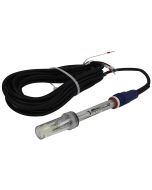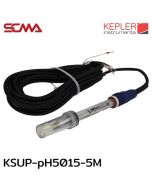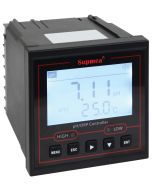
pH Meters

pH Meter is a crucial scientific tool for quality control in industries, agriculture, and research. This acid-base meter helps us accurately track and control production processes, impacting the quality of products and consumer safety. Currently, pH water testing has become an important standard that various industries must adhere to.

What is a pH Meter?

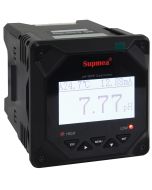
pH Meters

A pH meter is a tool used to measure the acidity or alkalinity of solutions, also known as the pH value. It measures the concentration ratio between hydrogen ions [H+] and hydroxide ions [OH-] in various solutions, with values ranging from 0 to 14 on a logarithmic scale. The pH meter works by measuring the ratio of H+ to OH-. If the solution has a higher concentration of H+ than OH-, it is considered acidic, with a pH value below 7.

Conversely, if there is a higher concentration of OH- than H+, the solution is considered alkaline, with a pH value above 7. When both ion concentrations are equal, the solution is neutral, having a pH value exactly at 7. Measuring pH is important for quality control in industries, agriculture, and research because it accurately indicates the acidity or alkalinity of solutions.

Operation Principle of pH Meter

pH Meters

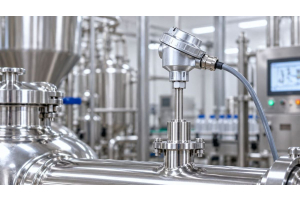
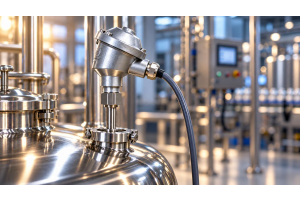
The operation of the pH meter relies on measuring the electrical voltage through an Electrode, which detects and sends signals in millivolts (mV) to the pH measurement device. The difference in voltage is directly proportional to the concentration of hydrogen ions in the solution. The measurement process occurs due to ion exchange between the sample solution and the internal glass electrolyte solution via a porous glass measuring electrode. However, continuous use will reduce the porosity of the glass measuring electrode, leading to a decrease in measurement accuracy.

How to Use a pH Meter

pH Meters

Using a pH meter correctly and accurately requires proper preparation of the pH measuring instrument, appropriate calibration, followed by measurement steps and post-use maintenance of the probe. The key steps are as follows:

  1. Turn on the pH meter and let it warm up by immersing the probe in water for about 30 minutes to ensure readiness and accurate measurement results.
  2. Calibrate the instrument by first cleaning the probe, setting the pH mode, then placing it in a buffer solution of pH 7 followed by pH 4 for acidic solutions or pH 10 for alkaline solutions.
  3. Stir all types of buffer solutions thoroughly with a stirrer before use to ensure uniformity and accurate calibration results.
  4. Pour the sample solution into a beaker in sufficient quantity to immerse the probe properly.
  5. Immerse the probe in the sample and press the pH measurement button. Wait approximately 2 minutes for a stable and accurate reading.
  6. Repeat the measurement to confirm the accuracy of the obtained value, and check that the values are consistent.
  7. After use, clean the probe with clean water and store it in a pH probe preservative solution to extend the life of the probe.

Standard pH Comparison Table for Drinking/Waste Disposal

pH Meters

Physical/Water Quality

Parameter

Department of Public Health

DHA

SMA

Acidity and Alkalinity (pH)

6.5-8.5 pH

6.5-8.5 pH

6.5-8.5 pH

Turbidity (NTU)

Not more than 5 NTU

Not more than 5 Silica Scale

Not more than 5 NTU

Water Color (Color)

Not more than 15 Platinum-Cobalt

Not more than 20 Hazen Units

Not more than 5 Platinum-Cobalt

Odor

Not specified

Must not have odor (chlorine excepted)

Not specified


General Chemical Water Quality

Caution When Using a pH Meter

Using a pH meter and buffer solutions requires caution for safety and measurement accuracy. These solutions can be harmful if they come into direct contact with the skin.

  • Buffer solutions may cause skin irritation and eye damage, and are dangerous if ingested or inhaled.
  • Wear gloves, safety goggles, and lab coats every time when working with solutions.
  • Always use buffer solutions with the correct pH value.
  • Rinse the electrode with deionized water before immersing it in a buffer solution.
  • Do not mix buffer solutions with other solutions or contaminate samples.

Maintenance of pH Meter

Maintaining the electrode clean is an easy way to extend its lifespan. During measurement, rinse the electrode with distilled water or deionized water. If there are residues on the glass bulb or if the equipment does not work consistently, a thorough cleaning is necessary by soaking it in electrode cleaner for 10-15 minutes and then rinsing thoroughly with distilled water. Most pH meters recommend against wiping with tissue paper or cloth as this can cause static electricity harmful to the electrode; refer to the user manual for specific details of the equipment.

After cleaning the electrode, place it back in its storage cap with preservative solution. It should be left soaking in the preservative solution for two to three hours after cleaning.

If you are interested in pH Meters, contact SCMA today!

SCMA is ready to provide high-quality pH water measurement solutions that meet all your needs. Our products have been certified to international standards and are suitable for use in laboratories, industrial plants, and agriculture.

Our team of experts is available to consult with you and recommend the most appropriate products for your specific application, along withcomprehensive after-sales service including calibration, maintenance, and repair to ensure that your pH meter operates accurately and efficiently.

Summary

A pH Meter is a crucial tool for measuring acidity or alkalinity in various industries, from food and beverage production, wastewater treatment, agriculture to laboratory research. The operation of the meter relies on the measurement of electrical potential differences through highly accurate electrodes, capable of measuring pH values between 0-14, with readings below 7 indicating acidity, above 7 indicating alkalinity, and 7 being neutral.

To achieve optimal performance from a pH Meter, correct calibration, regular maintenance, and strict adherence to usage procedures are essential. Additionally, users must consider the pH standards set by various agencies such as the Department of Health, FDA, and TISI to ensure that products or production processes meet specified standards.

SCMA is ready to be your partner in achieving efficient quality control with our high-quality pH Meters, expert consultation services, standard calibration, and comprehensive after-sales service. Contact us today to elevate your quality control standards to international levels.

Frequently Asked Questions

To help you better understand the pH Meter, we have compiled a list of frequently asked questions with clear explanations to enable you to use the equipment efficiently and select products that meet your needs.

How does a pH Sensor measure pH values?

A pH Sensor or pH Electrode works by measuring the voltage difference caused by ion exchange between the sample solution and the internal reference solution within the probe, converting the electrical potential into a pH value displayed on the screen.

What are pH Meter and Controller?

An automatic device used to measure and control pH levels in systems to maintain them within desired ranges, working with chemical dosing pumps to increase or decrease the pH as required.

What types of pH measuring equipment are there?

There are various models such as benchtop pH Meters for laboratories, portable ones for field use, pH Controllers for automatic control systems, and pH Strips for rough measurements.

What is a pH Meter used for?

It is used to measure and monitor the acidity or alkalinity levels in various solutions such as drinking water, wastewater, food products, and process fluids in industrial applications.

How many pH levels are there?

The scale ranges from 0-14. Values below 7 indicate acidity, a value of 7 is neutral, and values above 7 indicate alkalinity. The further the value is from 7, the higher the degree of acidity or alkalinity.

Does temperature affect pH levels?

Yes, temperature affects pH measurement as it influences ion dissociation in solutions. Therefore, temperature compensation should be applied during measurements to ensure accuracy.


← Previous Next →
🤖 IFM Product Assistant
Ask about products, specs and replacement models
Hello 👋 I can answer your questions about IFM efector products.

Examples:
• What is the replacement model for PN2021?
• Which pressure sensor models cover 250 bar?
🗑 Clear history

Parameter

Department of Public Health

DHA

Anchor.

Total Dissolved Solids (TDS)

Not more than 1,000 mg/L

Not more than 500 mg/L

Not more than 500 mg/L

Hardness

Not more than 500 mg/L

Not more than 100 mg/L

Not more than 100 mg/L

Sulfate

Not more than 250 mg/L

Not more than 250 mg/L

Not more than 200 mg/L

Chloride

Not more than 250 mg/L

Not more than 250 mg/L

Not more than 250 mg/L

Nitrate

Not more than 50 mg/L

Not more than 4 mg/L

Not more than 4 mg/L

Fluoride

Not more than 0.7 mg/L

Not more than 0.7 mg/L

Not more than 0.7 mg/L

Linear Alkylbenzene Sulfonate

Not specified

Not more than 0.2 mg/L

Not more than 0.2 mg/L

Phenolic Substances

Not specified

Not more than 0.001 mg/L

Not more than 0.001 mg/L