When it comes to moisture meters for materials or raw materials that require humidity control, there are currently popular technologies used to measure moisture levels. These include both needle and contact types, which are easy to use and provide quick measurements. While both technologies can measure moisture, they differ in their operating principles and usage methods, as follows:
Various Types of Material Moisture Meters
1. Pin-Type Moisture Meter
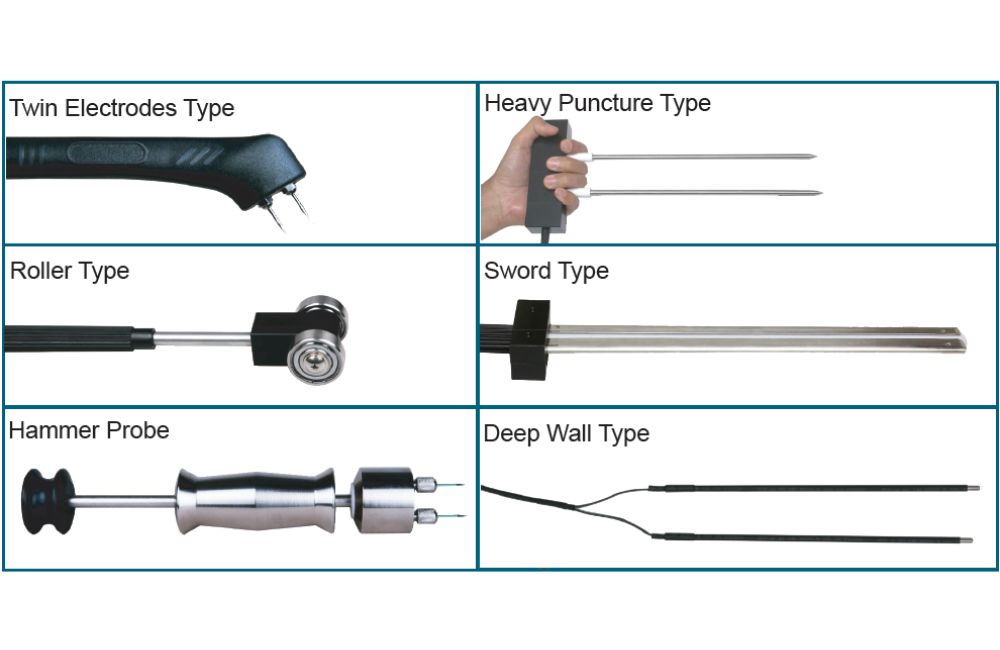
It has two metal pieces that serve as sensors, resembling pins used to penetrate materials or workpieces for moisture measurement. The length of the pin depends on the point where we want to measure the moisture (selectable according to the job requirements). In addition to the pin-type sensor attached to the meter itself, the KMT-70 model also offers other types of sensors for selection based on usage needs. This increases flexibility and convenience in use, allowing versatile applications with various sensors available.
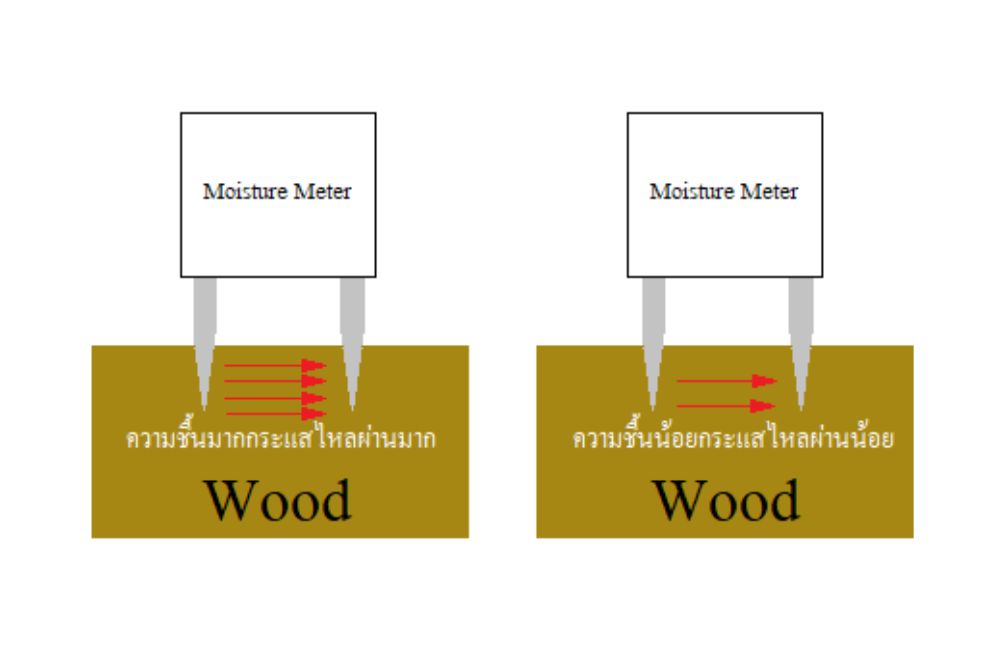
The principle of operation of a pin-type moisture meter is to measure the electrical resistance to determine the moisture content in materials. When using the sensor or pins to penetrate into the material, the pin-type moisture meter releases a weak current through the pin sensors and this current flows through the moisture within the material, sending feedback back to the meter to display the moisture reading. The higher the moisture content of the material, the lower its resistance, resulting in more current flow because high moisture can conduct electricity well. Conversely, if the material has low moisture content, it indicates that the material has high resistance.
2. Pinless Moisture Meter or Surface Contact Type
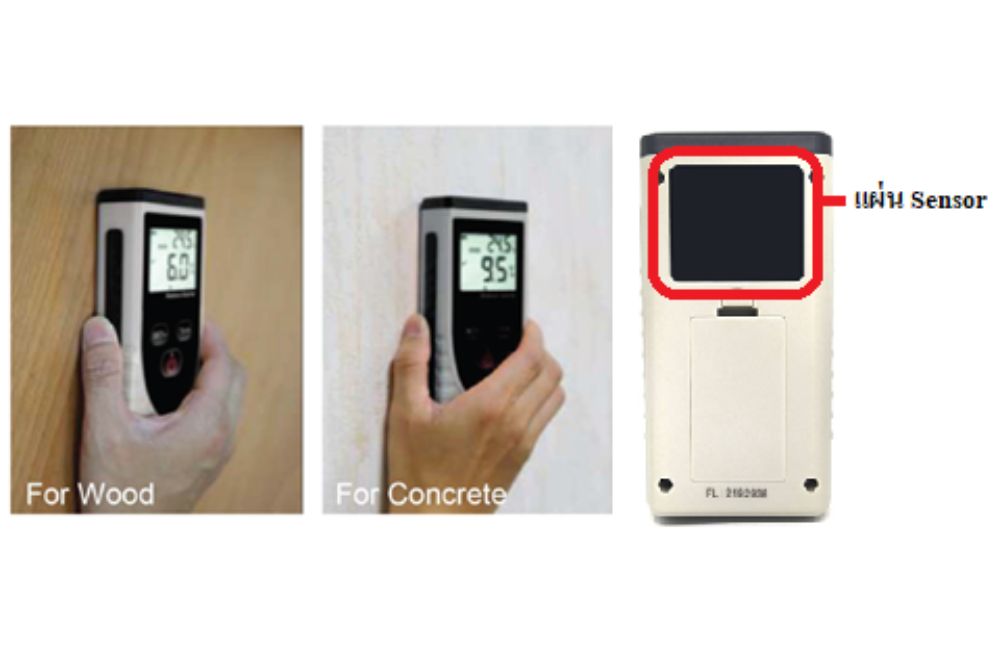
The operating principle involves a sensor plate on the back of the device that touches the surface. This measurement method does not damage the object's surface, but the area being measured must be flat and tightly against the sensor. It can measure down to approximately 0-55 mm.Therefore, when measuring this way, it is important that the sensor fully touches the surface, and the surface being measured should be smooth and flush with the sensor plate for accurate measurement results.
Operation of a non-contact or touch-surface moisture meter
It uses electromagnetic wave principles, causing changes in electric or magnetic fields. When the electric field changes, it induces a magnetic field, and if the magnetic field changes, it induces an electromagnetic field at the sensor plate on the back of the device. The meter then creates moisture content (humidity value) based on the signal read from the returned electromagnetic field, displaying humidity values on the screen. Non-contact moisture meters are commonly used for measuring wide surface areas, such as pre-painting concrete moisture levels. These devices can measure a broad area and provide accurate average moisture readings.
3. Soil Moisture Meter
This tool is used to measure soil moisture at various levels.It can be applied in agriculture to determine the condition of the soil before planting crops or trees and to check if there is sufficient moisture for plants.
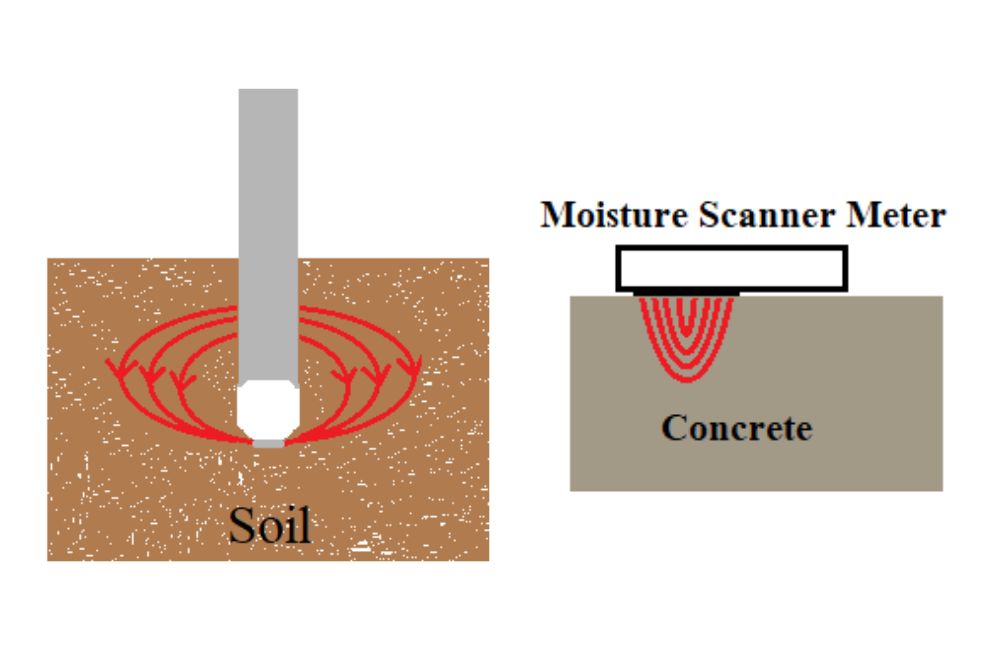
The operation principle of a Soil Moisture Meter is similar to that of a Pin Moisture Meter, but it uses rod sensors instead, allowing deeper moisture measurement.
The soil moisture meter is suitable for measuring moisture in soil, sand, natural compost, sawdust, paper pulp, construction materials, industrial sludge, and chemical fertilizers.
SCMA offers various types of material moisture meters from leading brands, both domestic and international, ensuring quality. Additionally, our experienced team is ready to assist and provide consultation for smooth operation.