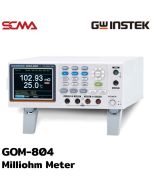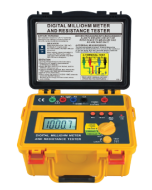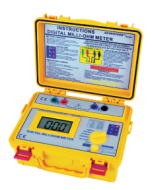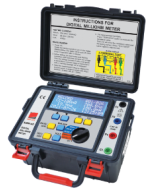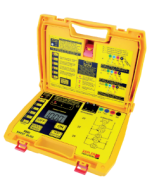

Electric resistance meter, an instrument that is like a compass in the complex world of electrical circuits! Accuracy in measurement is key to safety and efficiency in all electrical systems, whether it's maintenance, production, or design. SCMA offers high-quality measurement tools that help you accurately and reliably check and analyze resistance values. Elevate your electrical work and engineering to professional standards.
What is an Electric Resistance Meter (Ohmmeter)?

Ohmmeter is a tool used to measure electrical resistance, developed from the original ammeter and designed to display results directly in ohms. It comes in various forms depending on its use. For high-resistance measurements such as insulation testing of wires, megohmmeters (or meggers) are used. Meanwhile, for measuring earth resistance values, a specialized meter called an Earth Test Meter is employed.
What types of electrical resistance meters (ohmmeters) are there?
Ohmmeters come in several types designed to meet different usage requirements. Each type has its own strengths and limitations regarding accuracy, ease of use, and functionality. They can be broadly categorized into three main types: analog, digital, and multimeter.
Analog Ohmmeter
Analog ohmmeters use a needle that moves on the dial to display values. They operate with a simple mechanical system, consume little battery power, and are cost-effective. Suitable for general work where extremely high accuracy is not required, but may have drawbacks in terms of difficulty reading values, especially on non-linear scales.
Digital Ohmmeter
Digital ohmmeters display numerical values on an LCD screen, making them easier and more accurate to read than analog ones. They offer various additional functions such as data logging, minimum/maximum value measurement, or data transmission to a computer. While they are more expensive than analog models, they provide better performance and accuracy.
Multimeter
A multimeter is a versatile device that combines multiple measurements in one unit, such as resistance, voltage, and current. It is popular among electricians and electronics enthusiasts due to its portability and versatility. Available in both analog and digital versions, but may be complex for beginners because of the various functions and settings.
How an Electrical Resistance Meter Works

An electrical resistance meter works based on the fundamental principle of Ohm's law. The device supplies a known small amount of current through the circuit or equipment to be measured, then measures the voltage drop across it. It calculates the resistance using the formula R = V/I where R is resistance (in ohms), V is voltage (in volts), and I is current (in amperes). This process occurs automatically within the meter, allowing users to read the resistance value directly from the dial or display screen.
What is an Electrical Resistance Meter Used For?
An electrical resistance meter is a crucial tool for electrical and electronics work, with versatile applications ranging from basic equipment checks to diagnosing complex electrical system issues. Electricians and engineers frequently use this instrument to inspect, test, and troubleshoot various electrical circuits as follows:
Measuring the Resistance of Electrical Equipment
Directly measuring the resistance of electrical equipment is the most basic application of an ohmmeter. Technicians use it to check if the resistance value of components such as resistors matches the specified value. This measurement helps identify deteriorated or damaged parts, which often have changed from their normal resistance values.
Checking Circuit Continuity
The continuity test is an important application of an ohmmeter used to check if a circuit has complete connections or breaks. The tool emits a beep sound or displays very low resistance when the circuit is intact, allowing technicians to quickly locate loose or broken connection points.
Checking Wire Condition
An ohmmeter helps in checking wire condition by measuring resistance between both ends. Normal wires should have very low resistance, while broken or damaged ones will show abnormally high resistance values. This check enables technicians to efficiently identify and resolve wiring system issues.
Checking Electrical Components
Measuring the resistance of complex components such as coils or motors is an effective diagnostic method. Technicians can assess the condition of windings or internal parts by measuring resistance between various points, with abnormal values indicating short circuits or winding breaks.
How to Use an Electrical Resistance Meter

Effective resistance measurement requires selecting the appropriate test current for the job. For example, when checking high-current transformer connections, a higher test current should be selected to reveal weak points in the connection due to increased temperature and resistance. Conversely, when inspecting short circuits on printed circuit boards (PCBs), a lower test current should be chosen to prevent damage to thin circuit traces. Some models have multiple test current modes, including constant DC and pulse current modes, which help reduce heat accumulation issues at the tested component. Selecting an appropriate mode enhances measurement accuracy and prevents device damage.
Guidelines for Using an Electrical Resistance Meter
Using an electrical resistance meter safely and accurately requires following key principles:
- Always turn off the power supply of the circuit being measured, as measuring while current is flowing not only leads to inaccurate readings but can also damage the meter.
- Measure components isolated from the circuit if possible, because resistance in parallel with other components in a circuit will result in a reading that does not reflect the true value of the component.
- Choose an appropriate measurement range, check the condition of test leads for completeness, and always discharge capacitors before taking measurements.
If you are interested in purchasing an electrical resistance meter, SCMA is now available for your purchase!
At SCMA, we offer a wide range of high-quality electrical resistance meters to suit various needs, from basic models for general work to professional models with high accuracy for detailed tasks. All our devices are certified and come with quality warranties. Additionally, we provide consultation services to help you choose the right tool for your job, along with maintenance and inspection services to ensure that your equipment operates at peak efficiency throughout its lifespan.For more information or to place an order, visit our website or contact our sales team directly
Summary
An electrical resistance meter, also known as an ohmmeter, is a crucial tool for electrical and electronics work that helps efficiently diagnose issues in electrical circuits. There are both analog and digital types available, or they can be part of a multimeter. Choosing the right ohmmeter for your job and using it correctly will ensure accurate and safe measurements.
At SCMA, we sell high-quality electrical resistance meters with our team of experts ready to serve you so that your electrical systems operate efficiently and safely. Contact us today for consultation and services tailored to meet your needs.
Frequently Asked Questions
What is an Ohmmeter used to measure?
An ohmmeter is used to measure electrical resistance in circuits, equipment, or various electronic components. The unit of measurement is the ohm (Ω). Measuring resistance helps to check the integrity of a circuit, find short circuits or open circuits, and test the functionality of different electronic devices.
What does an Ohmmeter measure?
An ohmmeter measures electrical resistance, which indicates the ability to resist the flow of electric current in a circuit. Additionally, it can be used to check continuity in circuits, test diodes, measure capacitance values, and inspect transistors when it is a multimeter with these functions.
What does a Megohmmeter measure?
A megohmmeter (Megohm meter) or insulation resistance tester measures high resistances in megaohms (MΩ), particularly the insulation resistance of electrical circuits. It is used to check the condition of insulation in wires, motors, transformers, and other high-voltage equipment.
How does an Ohmmeter measure resistance?
An ohmmeter measures resistance by applying a known current through the circuit or component to be measured and then measuring the voltage drop across it. It then calculates the resistance according to Ohm's law (R = V/I). This process is automated within the device, with users simply selecting the appropriate function and measurement range and connecting test leads to the points being tested.