
SPECIAL PROMOTION — Up to 40% off across many product groups, until 31 December 2026 · Click to see all promotion itemsIFM, Sensor, Automation SystemMeasuring / Testing InstrumentsTemp Indicator, Control, T/C, RTD, TimerHeater, SCR Control, Solid State, Power Supply, Control CabinetField Measuring Instruments, Pressure Gauge, Level Control, Flow MeasurementEMC, Pneumatic, Solenoid ValveInspection Test Lamp, Head Light, Automotive Measuring InstrumentWeighing Scales, Marking Machine, PrintersEducational Training SystemsHot Line Tools & Equipment SPECIAL PROMOTION — Up to 40% off across many product groups, until 31 December 2026 · Click to see all promotion itemsIFM, Sensor, Automation SystemMeasuring / Testing InstrumentsTemp Indicator, Control, T/C, RTD, TimerHeater, SCR Control, Solid State, Power Supply, Control CabinetField Measuring Instruments, Pressure Gauge, Level Control, Flow MeasurementEMC, Pneumatic, Solenoid ValveInspection Test Lamp, Head Light, Automotive Measuring InstrumentWeighing Scales, Marking Machine, PrintersEducational Training SystemsHot Line Tools & Equipment View promotion items View all
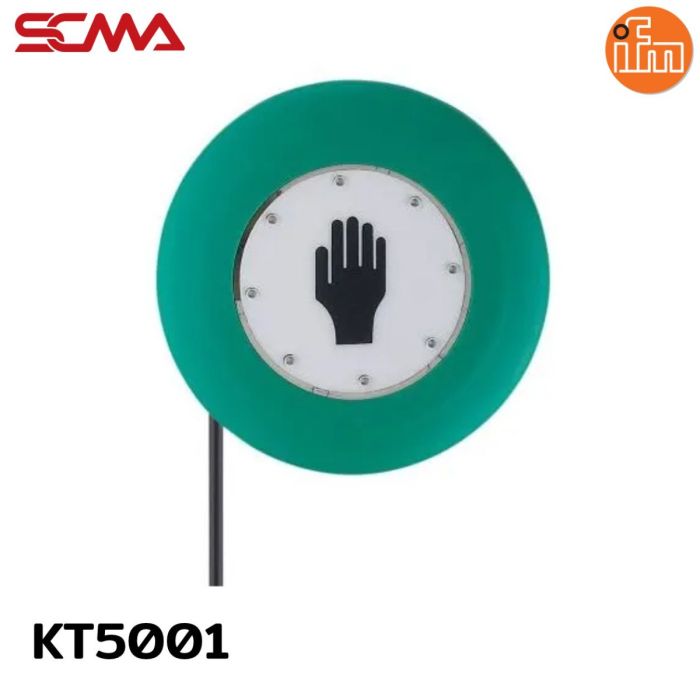
KT5001 \ Capacitive sensor \ Range mm \ PNP NO \ Ø 100 \ Cable PUR 2 m
Special Price THB 7,575.00 Regular Price THB 10,100.00
In stock
SKU
019443
In stock: 2 pcs
Delivery within: 17/11/2026
🚚 Free delivery on orders of THB 2,500 or more! (standard delivery fee THB 100)

ifm electronic, efector, position sensors, capacitive sensors, object detection, metal detection, level measurement, liquid measurement, granular material level measurement, rice level measurement, plastic pellet level measurement, SCMA, Pepperl+Fuchs, Keyence
*Price does not include VAT
Details of KT5001 \ efector 140 \ Hand sensor (Metal and non-metal detector) \KTRDHMK-RBPKG/AM/2M \ DE
KT5001 \ efector 140 \ Hand sensor (Metal and non-metal detector) \KTRDHMK-RBPKG/AM/2M \ DE Capacitive sensors from ifm that come with the ability to detect metal and non-metal in industrial manufacturing processes. Suitable for use in limited spaces, as well as all weather conditions, making it highly efficient.
Technical data KT5001 \ efector 140 \ Hand sensor (Metal and non-metal detector) \KTRDHMK-RBPKG/AM/2M \ DE
- Electrical design PNP
- Output function normally open
- Operating principle dynamic
- Operating voltage[V] 12...30 DC
- Current consumption[mA] 30
- Protection class III
- Reverse polarity protection yes
- Max. power-on delay time[ms] 500
- Electrical design PNP
- Output function normally open
- Permanent current rating of switching output DC[mA] 200
- Short-circuit protection yes
- Overload protection yes
- Length of output signal[ms] 300
- Response time[ms] 35
- Weight[g] 160
- Dimensions[mm] Ø 100 / L = 11
- Materials active face: PA Grilamid TR 90UV transparent; housing: PC/ABS black; Coloured surround: PC/ABS green


Write Your Own Review
Related Products
-
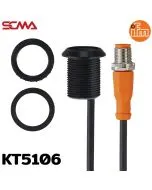 KT5106 \ Capacitive sensor \ Range mm \ PNP NO \ M22 \ Cable PUR 0.3 m+M12 ConnectorSpecial Price THB 4,425.00 Regular Price THB 5,900.00
-
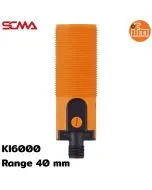 KI6000 \ Capacitive sensor \ Range 40 mm \ PNP NO/NC \ M30 \ Connector M12Special Price THB 4,575.00 Regular Price THB 6,100.00
-
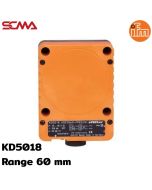 KD5018 \ Capacitive sensor \ Range 60 mm \ PNP NO/NC \ 105 x 80 x 40 mm \ terminalSpecial Price THB 10,275.00 Regular Price THB 13,700.00
-
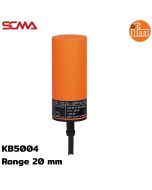 KB5004 \ Capacitive sensor \ Range 20 mm \ PNP NO \ Ø 34 \ Cable PVC 2 mSpecial Price THB 5,700.00 Regular Price THB 7,600.00
This website uses cookies
We use cookies to make the site work properly, to understand how it is used, and to show content that is relevant to you. You choose which types to allow; strictly necessary cookies are always on. Privacy Policy
🤖 AI Assistant
Ask about products, specs and replacement models
Hello 👋 Ask us anything — find products, compare specs, or troubleshoot.
🗑 Clear history