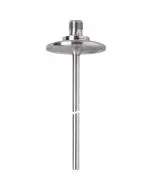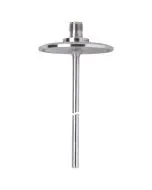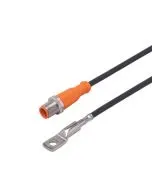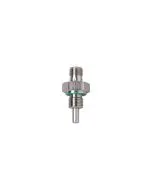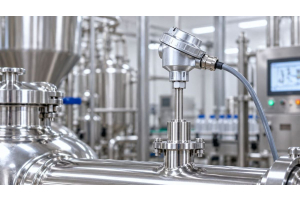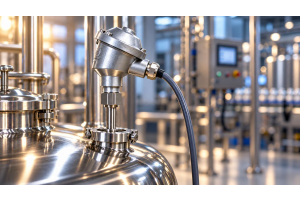

A Temperature Sensor or temperature measuring sensor is acrucial devicethat plays a significant role in modern industries. Precise control and measurement of temperature are the heart of production processes across various industries, whether it be food and beverage, chemical, or electronic component manufacturing. All these sectors rely on efficient temperature control sensor systems to maintain product quality and safety during production.

What are Temperature Controllers?
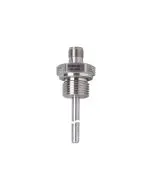
Temperature sensors, which are generally thermocouples or RTD (Resistance Temperature Detector) PT100, PT1000 devices, measure temperature through electrical signals. Thermometers are the most basic temperature measuring instruments used to gauge heat and cold levels in geological work. They track changes in concrete structures, building structures, soil, water, bridges, and other seasonal changes.Infrared Thermometers are also used for temperature detection.
A thermocouple (TC) consists of two different metals that generate an electrical voltage directly proportional to the change in temperature. There are several types available, such as Type K, J, T, E, R, S, N, which are commonly used for high-temperature applications. RTD (Resistance Temperature Detector) PT50, PT100, PT1000 are variable resistors that change their electrical resistance directly proportional to the temperature changes with high accuracy, repeatability, and linearity, making them suitable for low-temperature applications.
These temperature sensors play a crucial role in manufacturing industries, research, and environmental monitoring as they provide accurate and reliable temperature data through electrical signals that can be efficiently processed or displayed. They help analyze potential damage from fluctuating temperatures, offer immediate alerts when the temperature exceeds or falls below set points, and save energy by allowing Temperature Controllers to control and adjust settings accordingly.
What does a temperature sensor do?
A temperature sensor is a device designed to measure the level of heat or cold in an object by converting the degree of hotness or coolness into electrical signals. The operation of a temperature measuring instrument depends on the voltage flowing through a diode, where changes in temperature are directly proportional to the resistance of the diode. That is, as the temperature decreases, the resistance also decreases, and conversely, when the temperature increases, the resistance also increases.
The system measures the resistance occurring at the diode and converts it into a unit of temperature measurement that we are familiar with, such as Fahrenheit, Celsius, or Centigrade. Then it displays the result in numerical form on the display screen. In industrial inspection work or geology, these temperature sensors are used to measure the internal temperatures of various structures such as bridges, dams, buildings, power plants, and other constructions to track changes and evaluate their condition, which is very important.

Why are temperature sensors useful?
Temperature sensors are highly beneficial in a variety of industries, whether it be agriculture, plastic manufacturing, or food and pharmaceutical industries. This equipment helps control and maintain appropriate temperatures to prevent damage from excessively high or low temperatures and ensure product quality throughout the production process until reaching consumers. Additionally, they are also found in household appliances such as air conditioners, water heaters, irons, coffee makers, or microwaves.
Temperature Sensor Usage Examples
Temperature sensors play a crucial role in various industries, from healthcare to automotive racing, air conditioning systems, agriculture, manufacturing, aerospace, and automobiles. Common application examples include:
- Electric Motors: Motors have several components that require temperature measurement to prevent overheating.
- Workpiece Surfaces: Ring-to-rod temperature sensors are commonly used for efficient surface temperature measurements on smooth surfaces.
- Household Appliances: Kettles, toasters, washing machines, dishwashers, and coffee makers all have temperature sensors installed.
- Computers: Computers contain temperature sensors to prevent overheating that could cause damage.
- Industrial Applications: Industrial sensors must be highly durable due to harsh environments and high-temperature processes, such as kilns, steel smelting, copper boiling, etc.
- Refrigeration Units: NTC thermistors that can withstand temperatures up to 100C are often used for controlling the cooling of refrigeration units.
- Exhaust Gas Measurement in Racing Cars: Sensors must be highly reliable and accurate to maintain performance in hot, dangerous environments for race car drivers.
- Food Production: Temperature sensors are used to control the temperature of melting chocolate for 3D printing or cooking at appropriate temperatures.
- Alcohol Breathalyzers: Thermistors are used to measure the temperature of exhaled breath.
What Types of Industrial Temperature Sensors Are There?
There are several types of temperature sensors, each with different characteristics and applications to suit various environmental conditions and requirements. The following are the main types of temperature sensors commonly used in industry.

1. Negative Temperature Coefficient Thermistor (NTC Thermistor)
A thermistor is a temperature-sensitive resistor that shows continuous changes in resistance according to temperature variations. NTC Thermistors have high resistance at low temperatures, and as the temperature increases, the resistance decreases following a relationship between resistance and temperature. These sensors can accurately detect heat or slight temperature changes but provide nonlinear output. They operate within a range of -50°C to 250°C for glass-encapsulated types or up to 150°C for standard models. This type of sensor is particularly suitable for measuring cold temperatures, including those below zero.
2. Resistance Temperature Detector (RTD)
An RTD works by changing resistance according to temperature and consists of a film or wire wound around a ceramic or glass core. Platinum-based RTDs offer the highest accuracy, while nickel and copper are cheaper but less stable and repeatable. Platinum RTDs provide linear output with high precision in the range of -200°C to 600°C, though they are much more expensive. They are suitable for applications requiring high accuracy but come at a relatively higher cost.
3. Thermocouple
A thermocouple consists of two different metal wires connected electrically, and the voltage generated between them changes according to temperature, providing nonlinear output that requires calibration tables. They have low accuracy (0.5-5°C) but operate over the widest temperature range (-200°C to 1750°C). Suitable for high-temperature applications, they are cost-effective and widely used in industrial settings.
4. Semiconductor Temperature Sensor
This type of temperature sensor is often integrated into circuits using a pair of diodes with voltage-to-current characteristics sensitive to temperature, providing linear response but the lowest accuracy among basic sensors and the slowest response in the narrowest temperature range (-70°C to 150°C).

What do you need to know about installing temperature sensors? Ask SCMA today!
Efficient and accurate installation of temperature sensors requires expertise and experience. SCMA is a leader in temperature control systems with extensive experience, offering a team of expert engineers ready to consult and support from selecting the right equipment to maintenance.
If you are looking for reliable experts in temperature control systems, SCMA is preparedto provide consultationand services that meet your needs. Contact us today to receive free advice from our team of experts.
Summary
Temperature Controllers and temperature sensors are crucial for controlling production quality in the industrial sector. Choosing the right temperature sensor and proper installation will enhance production efficiency and safety in work processes. Temperature Controllers and sensors form a group of products that need to be used together, with various functions and controls. SCMA has a team ready to recommend and design according to customer requirements.
With the experience and expertise of SCMA, you can be assured that your temperature control system will be professionally maintained for maximum efficiency and long-term investment value.
Frequently Asked Questions
To better understand temperature sensors, we have compiled common questions from customers and interested parties along with clear and easy-to-understand answers for everyone to study.
How many types of Temperature Sensors are there?
There are four main types of temperature sensors commonly used in industry, including Thermistor (NTC/PTC), RTD (Resistance Temperature Detector), Thermocouple, and Semiconductor-based sensors. Each type has different characteristics and suitability for specific applications.
What is the function of a water temperature detector?
A water temperature detector measures and controls the temperature of water in various systems such as cooling systems, heating systems, or production processes that use water to ensure that the water temperature is appropriate for its intended use.
What is the function of a Fuel Temperature Sensor?
A Fuel Temperature Sensor is an instrument used to detect the temperature of fuel in an engine system. It sends data to the engine control system to adjust fuel delivery according to temperature, helping the engine operate efficiently and save fuel.
How many types of Thermistor are there?
There are two main types of thermistors:
- NTC (Negative Temperature Coefficient) - resistance decreases as temperature increases
- PTC (Positive Temperature Coefficient) - resistance increases as temperature rises. Both types have different applications depending on system requirements and usage.