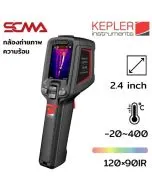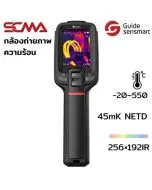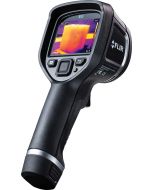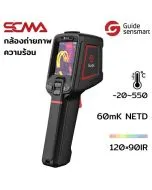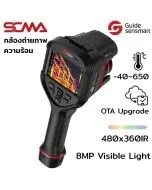
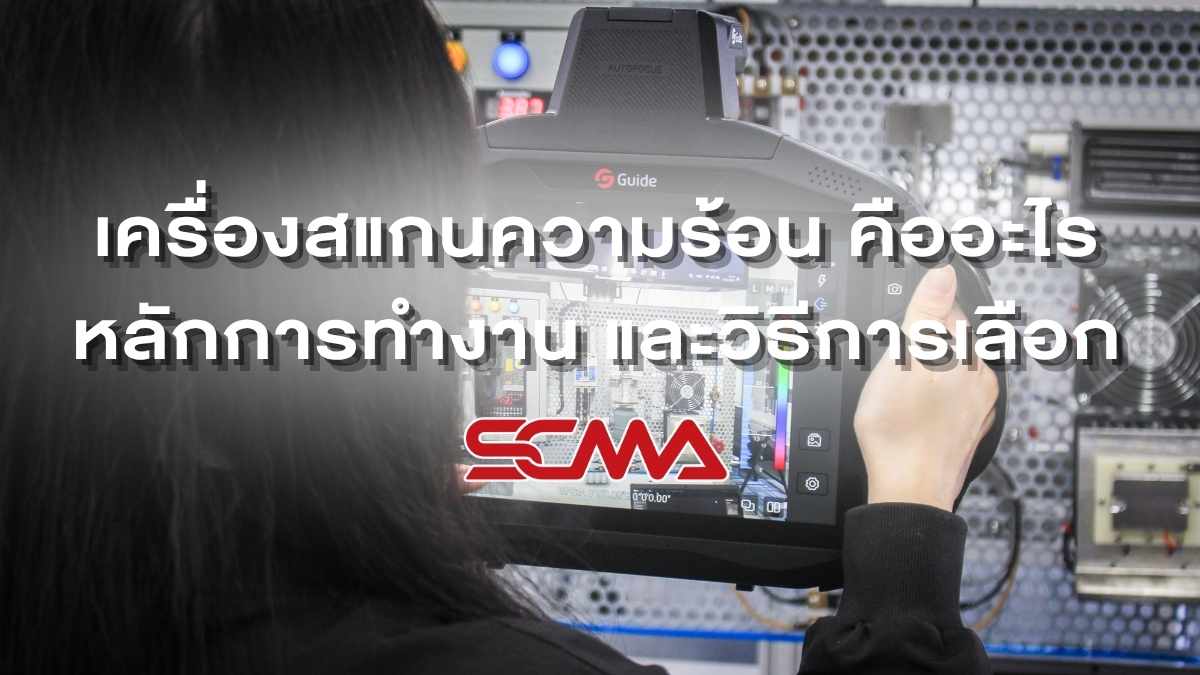
Thermal Scanner is the device you are considering to use for detecting invisible hot spots in your factory, correct? This article by the SCMA engineering team will delve into everything about thermal detectors and infrared cameras, from how they work, their true benefits, to smart selection techniques so that you can get an Infrared Thermal Imaging Camera that fits your budget and accurately solves industrial issues. If you need experts to help assess your system for the right tools, you can contact our services at SCMA Services immediately.
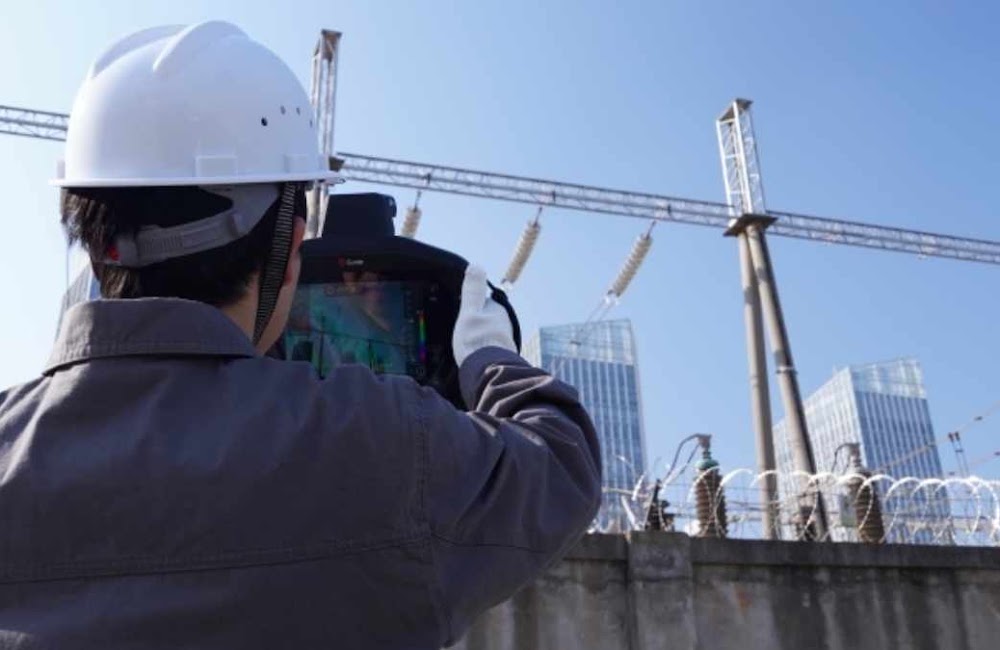
What is a Thermal Scanner (Thermal Scanner)?
Based on the experience of the SCMA engineering team, we explain that a thermal scanner, or thermal imager, is an advanced electronic device that works by detecting infrared radiation emitted from objects. The system then converts this data into heat images visible on the screen. The main difference between a thermoscan and an infrared thermometer with point measurement is that a thermal detector can display wide areas with clear temperature levels through color palettes (Color Palette). Images from an Infrared Camera will immediately show you where there are abnormally high temperatures, which serve as excellent early warning signs before machinery or electrical equipment suffers severe damage.
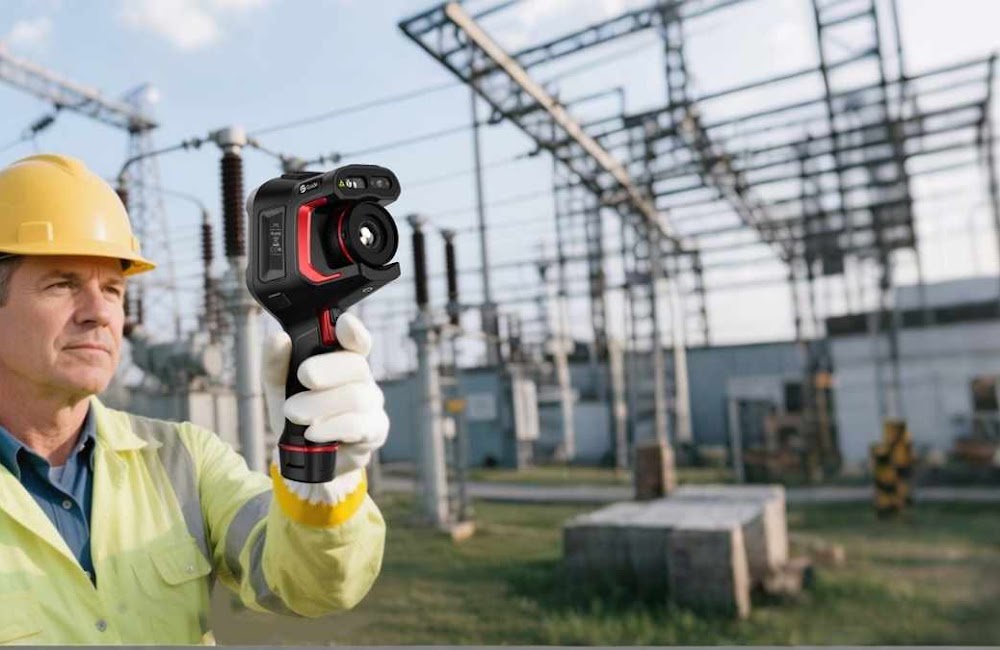
What are the Benefits of a Thermal Scanner? What Can It Be Used For?
The application of thermal scanners today is diverse, covering various industries. Let's look at the main benefits that make thermal imaging cameras an essential tool for every engineer.
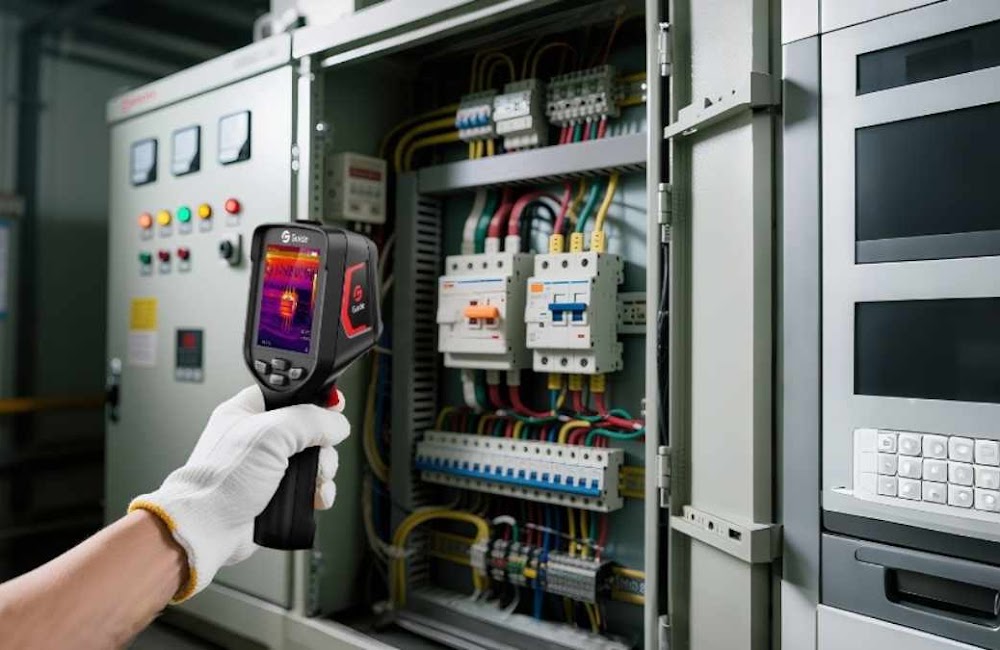
- Electrical system inspection and maintenance (Thermographic electrical scanning): Engineers use thermographic scanners to inspect control panels, wires, or breakers to find loose connections or overcurrent points. This helps prevent short circuits and fires accurately.
- Building inspection for water leaks and heat loss: Thermal scanning devices help contractors see cold air leakage from air-conditioned rooms as well as detect moisture seepage along concrete walls without damaging the structure.
- Industrial work, inspecting machinery and motors: Maintenance teams use thermographic scanners to check bearings or motors that are overheating due to friction. This allows them to plan preventive maintenance (Preventive Maintenance) promptly.
- Medical and safety applications: Currently, this technology is being applied for body temperature screening in public areas, used in rescue missions, or to detect intruders' movements at night for security purposes.
How to Choose a Thermal Scanner: What Specs Should You Look At?
To make your long-term investment in thermal scanners worthwhile, you need to consider specs that match the nature of your work. SCMA summarizes 4 technical factors you must check before deciding on a new thermoscan model as follows:
Image Resolution: The Higher, the Clearer
The sensor resolution (IR Resolution) is a crucial variable determining image sharpness. Thermal cameras with resolutions of 320x240 pixels or higher will help you analyze problems in very small areas or at long distances more accurately than models with lower resolution.
Temperature Range: Choose Wisely for Your Work
You must know the highest temperature range in your work process. For general air conditioning systems, using a thermoscan that measures up to 400 degrees Celsius is sufficient. However, for metal furnaces, you need to choose a model that can handle heat up to 1,000 degrees Celsius or more.
Thermal Sensitivity (NETD)
The NETD (Noise Equivalent Temperature Difference) value tells us how finely the infrared camera can distinguish temperature differences. The lower the NETD value, the sharper and clearer the image with less noise, making it easier to detect early abnormalities clearly.
Necessary Additional Functions: Zoom, Video Recording, Wi-Fi Connectivity
Today, thermal cameras have been developed to offer comprehensive convenience functions such as Wi-Fi connectivity for pulling images onto smartphones or Picture-in-Picture mode that overlays real images with thermal images. These features help engineering teams quickly prepare analysis reports.
Which Thermal Camera Brand is Good? Comparing Top Brands
In the market, there are thermal scanners to choose from in abundance. The SCMA team has summarized the highlights of leading brands to guide you in selecting a thermal camera that best meets your needs.
- Fluke: Leader in Durability and Reliability: If you need a thermal imager that can withstand harsh environments, Fluke is a global standard trusted by engineers. Learn more about the working principles of international standard infrared cameras here
- Hikmicro: High-Quality Option at an Affordable Price: This brand offers excellent image processing technology, providing high clarity at a price point that is accessible. It caters to users seeking value for money.
- GUIDE SENSMART: Smart Technology for Industrial Use: A leading brand we are proud to present, suitable for work requiring precise analysis software. You can click to view more details on the recommended Guide Sensmart thermal imaging camera.
- UNI-T: Brand for Beginners and Budget-Constrained Users: This brand is ideal for air conditioning technicians or maintenance teams needing an entry-level thermal imager for general inspection use.
How Much Does a Thermal Scanner Cost? Latest Update
Budget is one of the top factors in requesting approval for purchasing thermal scanners. We will provide an overview of standard thermal camera price ranges in the market to help your procurement team plan more effectively.
Budget for Entry-Level and General Use Models
Entry-level infrared cameras or accessories that can be paired with smartphones are priced between 7,000 - 15,000 THB. These devices cater to general building maintenance tasks, detecting electrical leaks in residential homes, or checking the heat of small circuit boards.
Pricing for Professional and Specialized Models
Gun-style thermoscanners designed for industrial use start at around 30,000 THB and can go up to hundreds of thousands of THB. These premium models come with highly sensitive sensor resolutions, durable IP54 or higher structures, and in-depth analysis software.
Factors Affecting the Price of Infrared Thermal Scanners
The main factors that drive up the cost of thermal scanners include the size of the infrared resolution (IR Resolution), the range of temperature measurement, additional features such as long-range lens changes, and warranty and after-sales service from suppliers.
Maintenance of Thermal Scanners
Maintaining thermal scanners in optimal working condition is a concern for engineers. The lenses of thermal detection devices use special materials that are more fragile than regular camera lenses; you must never clean them with corrosive chemicals. Use only microfiber cloths to gently remove dust. For industrial plants, it's crucial to send infrared thermal cameras for calibration at least once a year to maintain accuracy standards and fully comply with ISO requirements.
Summary
In summary, selecting the right thermal scanner involves assessing engineering needs alongside budget constraints. Whether your requirement is for general inspection or automated systems, if you need expert advice, the technical team at SCMA Co., Ltd. is ready to provide comprehensive guidance.
If you want to buy, you can purchase from SCMA today!
The thermal scanner equipment that meets the standard helps protect your business from machine downtime (Downtime) in a huge way. If your organization is looking for high-performance Thermal Imaging Camera, you can come and browse or view all of the SCMA measuring tools products. The SCMA engineering team is ready to provide integrated solutions to elevate your industrial success.
Frequently Asked Questions
What equipment is used for thermal scanning?
The main tool is a thermal scanner or infrared camera, which detects the heat waves emitted from objects and converts signals into color images so that we can see abnormalities.
Which brand of thermal camera is good?
Favored brands in the industry include Fluke for its durability, and Guide Sensmart for its cost-effectiveness and advanced image analysis technology.
What is a thermal scan camera?
A camera that installs sensors to receive heat radiation instead of normal light, allowing users to see heat structure images even in pitch-black areas or through smoke clouds.
How much does a Fluke thermal scanner cost?
The starting price will be around tens of thousands for small portable models and can increase up to hundreds of thousands for professional cameras requiring high resolution and advanced functions.
What are the benefits of electrical thermoscan?
It is extremely useful in checking loose wire connections, arc points, or heat accumulation points in control cabinets to prevent future circuit breaker problems.