
SPECIAL PROMOTION — Up to 40% off across many product groups, until 31 December 2026 · Click to see all promotion itemsIFM, Sensor, Automation SystemMeasuring / Testing InstrumentsTemp Indicator, Control, T/C, RTD, TimerHeater, SCR Control, Solid State, Power Supply, Control CabinetField Measuring Instruments, Pressure Gauge, Level Control, Flow MeasurementEMC, Pneumatic, Solenoid ValveInspection Test Lamp, Head Light, Automotive Measuring InstrumentWeighing Scales, Marking Machine, PrintersEducational Training SystemsHot Line Tools & Equipment SPECIAL PROMOTION — Up to 40% off across many product groups, until 31 December 2026 · Click to see all promotion itemsIFM, Sensor, Automation SystemMeasuring / Testing InstrumentsTemp Indicator, Control, T/C, RTD, TimerHeater, SCR Control, Solid State, Power Supply, Control CabinetField Measuring Instruments, Pressure Gauge, Level Control, Flow MeasurementEMC, Pneumatic, Solenoid ValveInspection Test Lamp, Head Light, Automotive Measuring InstrumentWeighing Scales, Marking Machine, PrintersEducational Training SystemsHot Line Tools & Equipment View promotion items View all
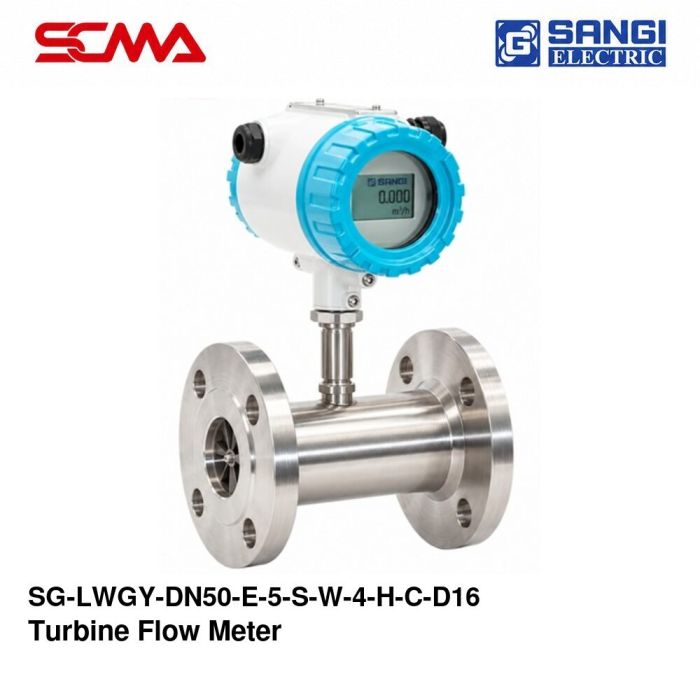
Turbine Flow Meter : SG-LWGY-DN50-E-5-S-W-4-H-C-D16
Special Price THB 25,125.00 Regular Price THB 33,500.00
In stock
SKU
045566
In stock: 1 pcs
Delivery within: 29/11/2026
🚚 Free delivery on orders of THB 2,500 or more! (standard delivery fee THB 100)

SG-LWGY-DN50-E-5-S-W-4-H-C-D16, SANGI, Turbine Flow Meter, DN50, 2 Inch, Turbine Flow Sensor, Industrial Flow Meter, Flow Measurement, Turbine Flow Measurement, Flow Rate Meter, Turbine Flow Rate Meter, Flow Meter, Flow Sensor, Impeller Flow Meter, DN50 Flow Rate Meter, 2 Inch Flow Meter
*Price does not include VAT
SANGI SG-LWGY-DN50-E-5-S-W-4-H-C-D16 Turbine Flow Meter, Size DN50
SANGI SG-LWGY-DN50-E-5-S-W-4-H-C-D16 Turbine Flow Meter is a turbine flow meter (Turbine Flow Meter) with a size of DN50 for measuring the flow rate of fluids within pipe systems. It works based on the principle that the speed at which the turbine rotor spins correlates to the flow rate.
This type of flow meter can be applied in industrial pipeline and production processes, but it is necessary to consider the properties of the fluid, the range of flow rates, and operating conditions to match the specifications of the product model.
General Features
- Product Model: SG-LWGY-DN50-E-5-S-W-4-H-C-D16
- Brand: SANGI
- Product Type: Turbine Flow Meter
- Measurement Principle: Turbine Flow Measurement
- Pipe Size: DN50
- Uses the principle of turbine rotor rotation to measure flow rate
- Suitable for application in industrial pipeline systems that meet the equipment's flow conditions
Technical Specifications
| Model | SG-LWGY-DN50-E-5-S-W-4-H-C-D16 |
| Brand | SANGI |
| Product Type | Turbine Flow Meter |
| Nominal Size | DN50 |
| Measurement Principle | Turbine |
How It Works
The turbine flow meter uses a turbine rotor inside the flow path. When fluid moves through the meter, it causes the rotor to spin. The speed of rotation is proportional to the flow rate. A sensor detects the spinning and processes this data into a measured flow rate value.
Size and Installation
The SG-LWGY-DN50-E-5-S-W-4-H-C-D16 is a DN50 size flow meter. Before installation, it's important to check the connection point design, fitting size, installation standards, compatibility with pipeline systems, as well as the direction of fluid flow and straight pipe lengths before and after the meter according to manufacturer specifications.
Usage Examples and Guidelines
- To measure the flow rate of fluids in industrial pipelines suitable for turbine meters
- To apply in production process flow tracking systems
- To use as a DN50 pipe system flow measurement device
- To apply in flow monitoring systems by selecting reading methods and connections according to specific model requirements
Considerations
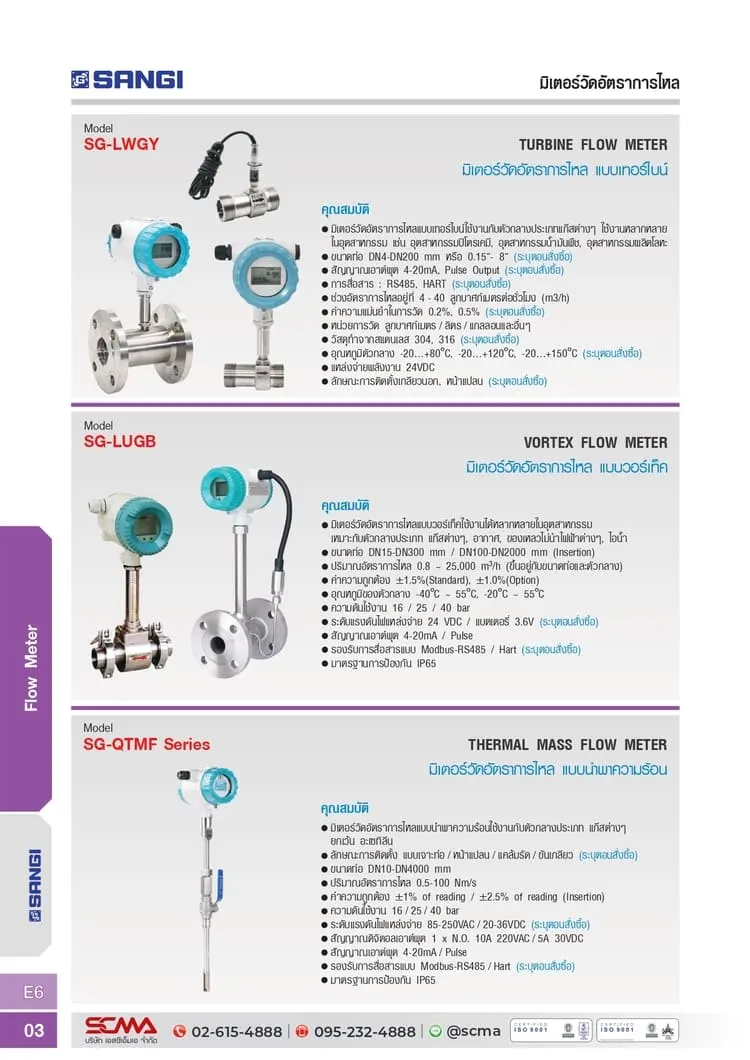
- To check the type of fluid, viscosity, temperature, and operating pressure to match manufacturer specifications
- To verify the range of flow rates and accuracy for a particular model before use
- To review connection patterns and fitting standards from specific technical documentation
- To examine display details, output signals, communication systems, and power sources before connecting control systems
- To check the direction of fluid flow and appropriate straight pipe lengths prior to actual installation and operation
Write Your Own Review
This website uses cookies
We use cookies to make the site work properly, to understand how it is used, and to show content that is relevant to you. You choose which types to allow; strictly necessary cookies are always on. Privacy Policy
🤖 AI Assistant
Ask about products, specs and replacement models
Hello 👋 Ask us anything — find products, compare specs, or troubleshoot.
🗑 Clear history