
SPECIAL PROMOTION — Up to 40% off across many product groups, until 31 December 2026 · Click to see all promotion itemsIFM, Sensor, Automation SystemMeasuring / Testing InstrumentsTemp Indicator, Control, T/C, RTD, TimerHeater, SCR Control, Solid State, Power Supply, Control CabinetField Measuring Instruments, Pressure Gauge, Level Control, Flow MeasurementEMC, Pneumatic, Solenoid ValveInspection Test Lamp, Head Light, Automotive Measuring InstrumentWeighing Scales, Marking Machine, PrintersEducational Training SystemsHot Line Tools & Equipment SPECIAL PROMOTION — Up to 40% off across many product groups, until 31 December 2026 · Click to see all promotion itemsIFM, Sensor, Automation SystemMeasuring / Testing InstrumentsTemp Indicator, Control, T/C, RTD, TimerHeater, SCR Control, Solid State, Power Supply, Control CabinetField Measuring Instruments, Pressure Gauge, Level Control, Flow MeasurementEMC, Pneumatic, Solenoid ValveInspection Test Lamp, Head Light, Automotive Measuring InstrumentWeighing Scales, Marking Machine, PrintersEducational Training SystemsHot Line Tools & Equipment View promotion items View all
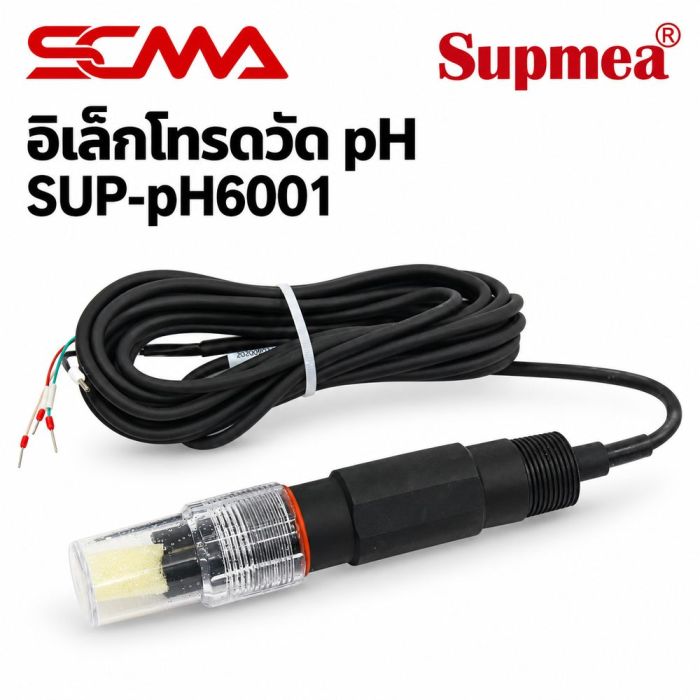
SUP-pH6001 pH ELECTRODE SUPMEA
Special Price THB 1,912.50 Regular Price THB 2,550.00
In stock
SKU
047902
In stock: 13 pcs
Delivery within: 22/11/2026
🚚 Free delivery on orders of THB 2,500 or more! (standard delivery fee THB 100)

SUP-pH6001, SUPMEA, pH electrode, pH sensor, pH measurement electrode, pH probe, acid-base sensor, industrial pH probe, pH probe for water treatment systems, 3/4 NPT thread pH electrode
*Price does not include VAT
Details of SUP-pH6001 SUPMEA pH Electrode
SUP-pH6001 SUPMEA pH electrode for industrial water quality testing, measurement range 2–12 pH. The electrode is made of plastic and uses a Porous TEFLON salt bridge with a 3/4 NPT installation thread and a standard 5-meter low-noise signal cable. Suitable for wastewater treatment systems, drinking water monitoring systems, RO systems, cooling towers, and process production water testing.
Features of SUP-pH6001 SUPMEA
- pH measurement electrode with a range of 2–12 pH
- Electrode body made of plastic
- Porous TEFLON salt bridge
- Response time less than 1 minute
- Installation thread size: 3/4 NPT
- Standard 5-meter low-noise signal cable, customizable length available
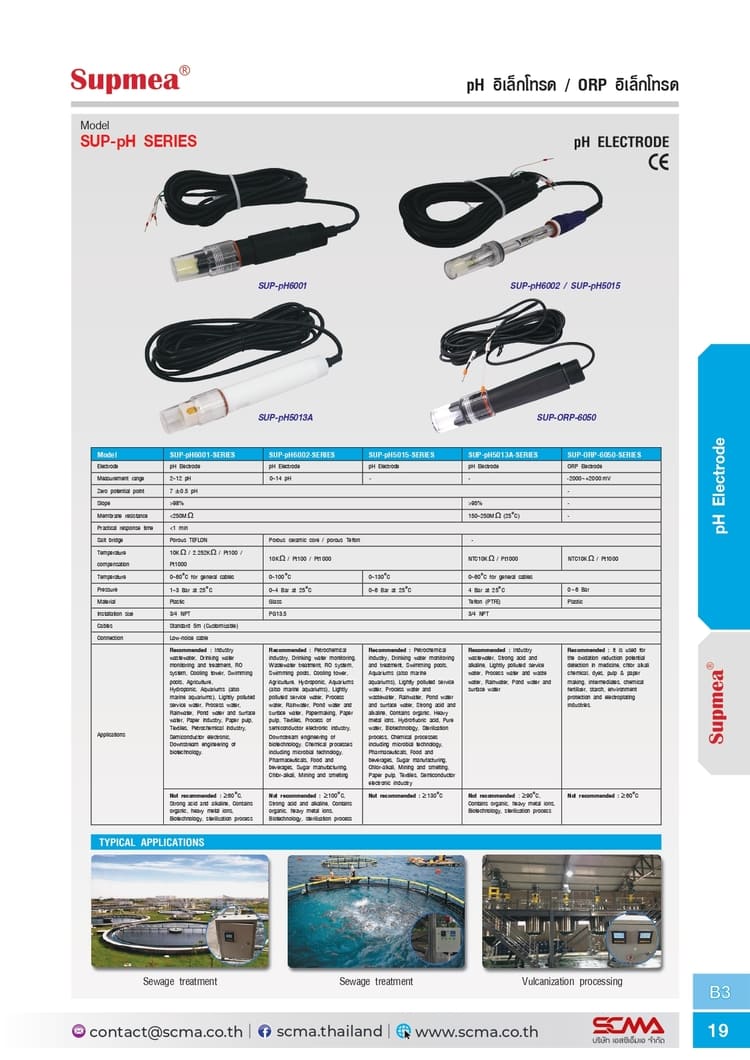
- Temperature compensation sensor options include 10KΩ, 2.252KΩ, Pt100 or Pt1000 depending on the sub-model selected
Technical Data of SUP-pH6001 SUPMEA
- Type of electrode: pH Electrode
- Measurement range: 2–12 pH
- Zero Potential Point: 7 ±0.5 pH
- Slope of the electrode: more than 98%
- Membrane resistance: less than 250 MΩ
- Response time: less than 1 minute
- Salt bridge: Porous TEFLON
- Temperature compensation options: 10KΩ / 2.252KΩ / Pt100 / Pt1000
- Temperature range for general cables: 0–60°C
- Operating pressure: 1–3 bar at 25°C
- Electrode material: plastic
- Installation thread size: 3/4 NPT
- Signal cable type: Low-noise cable
- Standard cable length: 5 meters
Usage Examples of SUP-pH6001 SUPMEA
- Industrial wastewater monitoring and treatment systems
- Drinking water monitoring and treatment systems
- RO systems and cooling towers
- Pools and aquaculture systems
- Agriculture and hydroponic plant growing systems
- Water in production processes, rainwater, pond water, and surface water
Usage Limitations of SUP-pH6001 SUPMEA
- Not recommended for use at temperatures above 60°C
- Not suitable for concentrated acids or bases
- Not recommended for liquids containing organic substances or heavy metal ions
- Not recommended for biotechnology processes and sterilization procedures
Write Your Own Review
This website uses cookies
We use cookies to make the site work properly, to understand how it is used, and to show content that is relevant to you. You choose which types to allow; strictly necessary cookies are always on. Privacy Policy
🤖 AI Assistant
Ask about products, specs and replacement models
Hello 👋 Ask us anything — find products, compare specs, or troubleshoot.
🗑 Clear history