
SPECIAL PROMOTION — Up to 40% off across many product groups, until 31 December 2026 · Click to see all promotion itemsIFM, Sensor, Automation SystemMeasuring / Testing InstrumentsTemp Indicator, Control, T/C, RTD, TimerHeater, SCR Control, Solid State, Power Supply, Control CabinetField Measuring Instruments, Pressure Gauge, Level Control, Flow MeasurementEMC, Pneumatic, Solenoid ValveInspection Test Lamp, Head Light, Automotive Measuring InstrumentWeighing Scales, Marking Machine, PrintersEducational Training SystemsHot Line Tools & Equipment SPECIAL PROMOTION — Up to 40% off across many product groups, until 31 December 2026 · Click to see all promotion itemsIFM, Sensor, Automation SystemMeasuring / Testing InstrumentsTemp Indicator, Control, T/C, RTD, TimerHeater, SCR Control, Solid State, Power Supply, Control CabinetField Measuring Instruments, Pressure Gauge, Level Control, Flow MeasurementEMC, Pneumatic, Solenoid ValveInspection Test Lamp, Head Light, Automotive Measuring InstrumentWeighing Scales, Marking Machine, PrintersEducational Training SystemsHot Line Tools & Equipment View promotion items View all
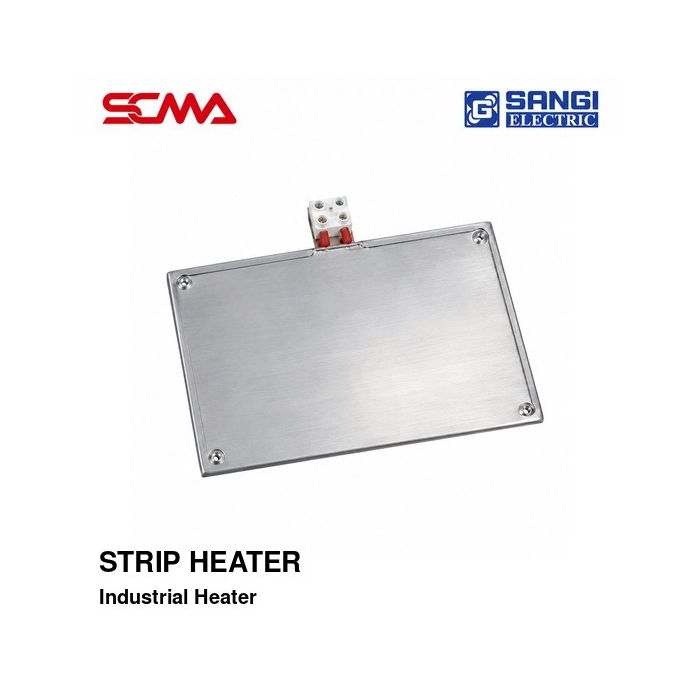
STRIP HEATER SANGI ELECTRIC
Price on request – please contact us
Out of stock
SKU
051013
Out of stock

Strip Heater, SANGI ELECTRIC, Industrial Strip Heater, Electric Strip Heater, Strip Heating Element, Industrial Heating Element, Metal Strip Heater, Industrial Electric Heater, Resistance Strip Heater, Surface Contact Heater, Contact Heating Element, Flat Surface Heater, Machine Heater, Industrial Process Heater, Custom Strip Heater, Custom Made Heater, Made to Order Heater, Machine Heating Element, Industrial Surface Heating, Direct Contact Heating, Industrial Temperature Heating, Mold Heating, Metal Component Heating, Plastic Processing Heater, Packaging Machine Heater, Heating Element for Machinery, Equipment Heating, Industrial Heating Equipment, Process Temperature Control, Heater Replacement, OEM Industrial Heater, Heater for Industrial Manufacturing, Strip Heater, Industrial Strip Heater, Electric Strip Heater, Strip Heating Element, Surface Contact Heater, Strip Heater, Electric Heater, Industrial Heater, Machine Heater, Mold Heater, Metal Component Heater, Plastic Processing Heater, Industrial Machinery Heater, Industrial Equipment Heater, Custom Strip Heater, Special Order Heater, SANGI ELECTRIC Heater, Strip Heater Replacement, Industrial Heating System
*Price does not include VAT
SANGI ELECTRIC Strip Heater (Industrial Strip Heater)
SANGI ELECTRIC Strip Heater is a flat or strip-shaped (Strip Heating Element) electric heater for heating machine parts and industrial equipment, by transferring heat through contact with the surface of the workpiece that needs heating.
This type of heater can be applied to temperature control of metal parts, heating in machines, and production processes that require heat transfer to specific areas. The size, electrical power, and installation method should be selected appropriately according to the usage conditions.
The product can be designed and manufactured according to the user's requirements to suit the installation location, workpiece characteristics, and the machine's electrical system. It is recommended to have detailed size information and usage conditions for consideration.
General Features (Features)
- Brand: SANGI ELECTRIC
- Product Type: Strip Heater
- Flat electric heater for industrial applications
- Uses the principle of generating heat through electrical resistance
- Heats the workpiece through surface contact
- Suitable for heating parts of machines
- Can be installed together with devices and structures designed to accommodate it
- Used in temperature control of machines and production processes
- Can be sized appropriately according to the installation area
- Supports custom design and manufacturing according to requirements
- Suitable for replacing existing heaters according to the approved specifications
Technical Specifications (Technical Specifications)
| Specifications | Details |
|---|---|
| Brand | SANGI ELECTRIC |
| Product Name | Strip Heater |
| Product Type | Industrial Electric Strip Heater |
| Heating Principle | Electrical Resistance Heating |
| Heat Transfer | Surface Contact Heating |
| Heater Dimensions | According to Selected or Custom Design |
| Rated Wattage | To Be Specified According to Application |
| Rated Voltage | To Be Specified According to Application |
| Operating Temperature | Subject to Approved Heater Specification |
| Heater Material | To Be Confirmed According to Construction |
| Electrical Connection | To Be Confirmed According to Order Specification |
| Mounting Method | According to Equipment Design |
| Manufacturing | Custom Design / Made to Order |
| Application | Industrial Heating / Machine Heating / Process Heating |
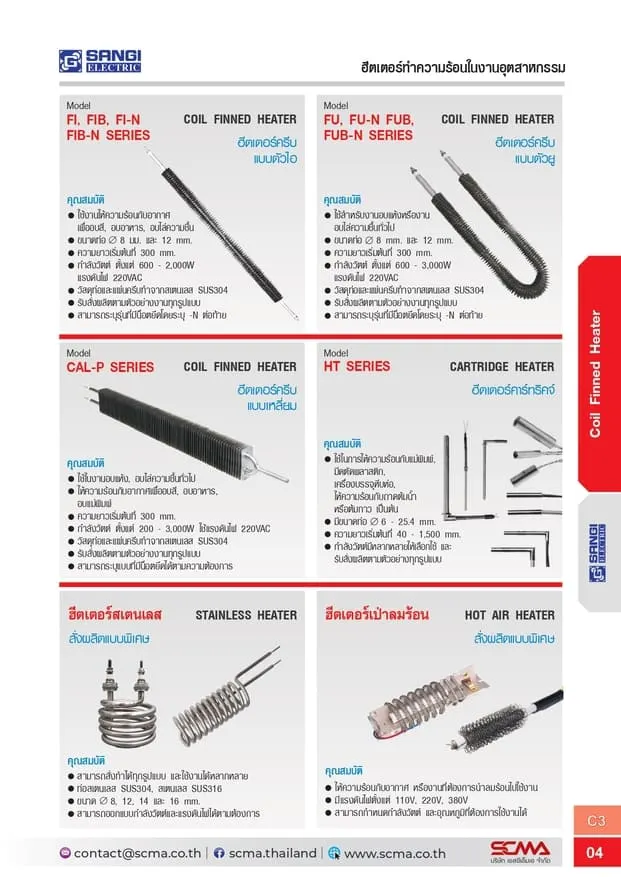
| Catalog Reference | SCMA General Catalog Vol.5, C3-04 |
Note: The catalog does not specify the power, voltage, maximum temperature range, or standard size separately for Strip Heater, so it must be confirmed according to the drawing or product details offered.
Working Principle of Strip Heater
Strip Heater operates by converting electrical energy into thermal energy through the internal resistance component of the heater set. When the voltage is supplied according to the specified rating, the heating element will generate heat and transfer it through the heater structure to the workpiece surface.
Heat transfer depends on the electrical power, contact area size, installation characteristics, ambient temperature, and properties of the workpiece.
To ensure effective heat transfer, the heater should be installed to properly contact the area that needs heat, following the manufacturer's specifications for clamping force and installation distance.
Application with Industrial Machinery
Strip heaters can be applied to machines that require heating of metal parts or specific areas of the system, such as mold heating, material processing equipment, or parts in packaging machinery, when the heater structure and specifications are appropriately designed.
The selection must consider the temperature requirements, heating duration, and the ability to transfer heat from the heater to the workpiece.
Selection of Strip Heater Size
The selection of the heater plate size should be related to the area that needs heating and the installation position. It is necessary to check the length, width, thickness, and mounting position of the heater.
| Dimension | Description |
|---|---|
| Length (L) | The length of the heater according to the installation area |
| Width (W) | The width of the heater |
| Thickness (T) | The thickness of the heater according to the manufacturing type |
| Mounting Position | Installation position and mounting points |
| Terminal Position | Position of the electrical terminal |
If you need to replace the original heater, you should check the actual size or send a drawing to enable appropriate consideration of the heater model.
Electrical Power and Selection of Watt Density
The electrical power (Wattage) of the Strip Heater must be selected appropriately according to the system's heat load, considering the mass of the workpiece, initial temperature, target temperature, the time required to heat, and heat loss to the environment.
Additionally, the heat density on the heater surface (Watt Density) should be considered, as selecting a power that is too high compared to the heat transfer area may cause abnormally high accumulated temperatures and affect the service life.
The appropriate electrical power and Watt Density must be determined according to the heater structure and actual usage conditions.
Temperature Control
The use of the heater plate should include a temperature control system, such as a Temperature Controller, together with an appropriate temperature sensor, to maintain the workpiece temperature within the specified range.
For systems at risk of abnormally high temperatures, it is recommended to install a shutdown device when overheating occurs, designed to operate separately from the normal temperature control system according to the risk level.
Custom Order Information
| Required Information | Description |
|---|---|
| Heater Type | Strip Heater |
| Overall Dimensions | Length, width, and thickness (mm) |
| Heater Wattage | Required Power (W) |
| Rated Voltage | Operating Voltage (V) |
| Working Temperature | Required Operating Temperature (°C) |
| Heating Application | Type of workpiece and heating process |
| Contact Surface | Area and surface condition that the heater must contact |
| Mounting Details | Position of mounting holes, mounting distance, and mounting style |
| Electrical Connection | Type of wiring and position of terminals |
| Drawing / Sample | Drawing or sample heater |
| Quantity | Required quantity |
Examples of Applications
- Heating of machine parts
- Heating of plates or metal parts
- Heating of molds designed for use
- Heating in packaging machines
- Temperature control of industrial equipment
- Production and assembly of machines
- Improvement or replacement of existing heaters
- Design of specialized heating systems
Installation and Usage Guidelines
- Check the heater size to match the installation area
- Check the voltage and power to match the system requirements
- Check the cleanliness and surface condition of the workpiece before installation
- Install the heater in contact with the heat transfer area as recommended by the manufacturer
- Use appropriate fastening devices that match the heater structure
- Avoid installation that causes twisting or misalignment pressure
- Route the wiring away from areas with temperatures exceeding the wire rating
- Use appropriate temperature controllers and temperature sensors
- Provide proper grounding and electrical protection devices
- Inspect the equipment and heater before starting use
- Check the fastening and electrical systems during maintenance intervals
Safety Precautions
- Use voltage that matches the heater rating
- Do not operate the heater beyond the temperature specified by the manufacturer
- Do not supply power to a heater designed for heat transfer through the workpiece without proper cooling
- Install temperature control and overheating protection systems according to system risks
- Avoid contact with the heater when it is at high temperature
- Check the stability of the installation
- Inspect the wiring, terminals, and electrical insulation before use
- Do not modify the shape or structure of the finished heater without confirmation from the manufacturer
- Turn off the power supply and wait for the heater to cool down before removing, replacing, or maintaining it
- The product is a Strip Heater, not a Silicone Heater
- The catalog does not define the standard product size as a numerical table
- Electrical power and voltage must be confirmed according to the model or custom order
- The maximum temperature depends on the structure and actual usage conditions
- The structural material and electrical terminal design must be checked according to the product specification
- Prepare a Drawing or a sample heater for production ordering
- Check the required accessories, such as mounting hardware and electrical wiring
- Check warranty details and shipping conditions before ordering
Important Notes
Write Your Own Review
This website uses cookies
We use cookies to make the site work properly, to understand how it is used, and to show content that is relevant to you. You choose which types to allow; strictly necessary cookies are always on. Privacy Policy
🤖 AI Assistant
Ask about products, specs and replacement models
Hello 👋 Ask us anything — find products, compare specs, or troubleshoot.
🗑 Clear history