
SPECIAL PROMOTION — Up to 40% off across many product groups, until 31 December 2026 · Click to see all promotion itemsIFM, Sensor, Automation SystemMeasuring / Testing InstrumentsTemp Indicator, Control, T/C, RTD, TimerHeater, SCR Control, Solid State, Power Supply, Control CabinetField Measuring Instruments, Pressure Gauge, Level Control, Flow MeasurementEMC, Pneumatic, Solenoid ValveInspection Test Lamp, Head Light, Automotive Measuring InstrumentWeighing Scales, Marking Machine, PrintersEducational Training SystemsHot Line Tools & Equipment SPECIAL PROMOTION — Up to 40% off across many product groups, until 31 December 2026 · Click to see all promotion itemsIFM, Sensor, Automation SystemMeasuring / Testing InstrumentsTemp Indicator, Control, T/C, RTD, TimerHeater, SCR Control, Solid State, Power Supply, Control CabinetField Measuring Instruments, Pressure Gauge, Level Control, Flow MeasurementEMC, Pneumatic, Solenoid ValveInspection Test Lamp, Head Light, Automotive Measuring InstrumentWeighing Scales, Marking Machine, PrintersEducational Training SystemsHot Line Tools & Equipment View promotion items View all
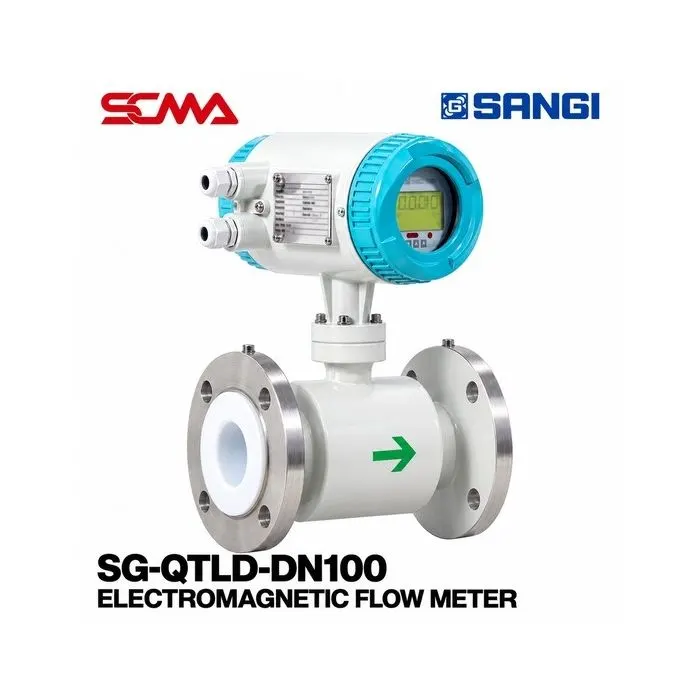
SG-QTLD-DN100 Electromagnetic Flow Meter SANGI
Special Price THB 26,160.00 Regular Price THB 43,600.00
In stock
SKU
038402
In stock: 3 pcs
Delivery within: 25/11/2026
🚚 Free delivery on orders of THB 2,500 or more! (standard delivery fee THB 100)

SANGI SG-QTLD-DN100 ELECTROMAGNETIC FLOW METER, SG-QTLD-DN100, SANGI SG-QTLD Series, Electromagnetic Flow Meter, Magnetic Flow Meter, Mag Flow Meter, Industrial Flow Meter, DN100 Flow Meter, 4 Inch Flow Meter, 100mm Electromagnetic Flow Meter, Electromagnetic Induction Flow Meter, Compact Magnetic Flow Meter, Industrial Liquid Flow Meter, Conductive Liquid Flow Meter, Water Flow Meter, Wastewater Flow Meter, Industrial Water Flow Meter, Process Flow Meter, Magnetic Flow Transmitter, Electromagnetic Flow Transmitter, Flanged Flow Meter, 4-20mA Flow Meter, Pulse Output Flow Meter, Modbus Flow Meter, RS485 Flow Meter, Neoprene Liner Flow Meter, Hastelloy C Electrode Flow Meter, Stainless Electrode Options, Industrial Flow Measurement, Water Treatment Flow Meter, Water Supply Flow Meter, Wastewater Treatment Flow Meter, Pump Station Flow Meter, PLC Flow Meter, HMI Flow Meter, SCADA Flow Meter, Factory Automation, Process Control, SANGI Flow Meter Thailand, Flow Meter SANGI, Magnetic Flow Meter, Electromagnetic Induction Flow Meter, Electromagnetic Flow Meter, DN100 Flow Meter, 4 Inch Flow Meter, 100mm Flow Meter, Water Flow Meter, Wastewater Flow Meter, Process Flow Meter, Industrial Flow Meter, 4-20mA Flow Meter, Pulse Output Flow Meter, Modbus Flow Meter, RS485 Flow Meter, Water Treatment Flow Meter, Wastewater Treatment Flow Meter, Factory Automation Flow Meter, Process Control Flow Meter, SANGI SG-QTLD-DN100 Thailand
*Price does not include VAT
SANGI SG-QTLD-DN100 Electromagnetic Flow Meter
SANGI SG-QTLD-DN100 is an electromagnetic flow meter in the SG-QTLD Series designed for measuring the flow rate of electrically conductive liquids such as industrial water, wastewater, and process fluids suitable for the material of the equipment.
The SG-QTLD-DN100 model is a flow meter for DN100 pipe size or approximately 4 inches in diameter. It uses electromagnetic induction principles to detect the speed of fluid flowing through the measuring tube and processes it into flow rate data for display or transmission to control systems.
Electromagnetic Flow Measurement technology does not have rotating blades or mechanical parts inside the flow path, reducing maintenance related to moving components. This makes it suitable for continuous flow measurement in industrial applications.
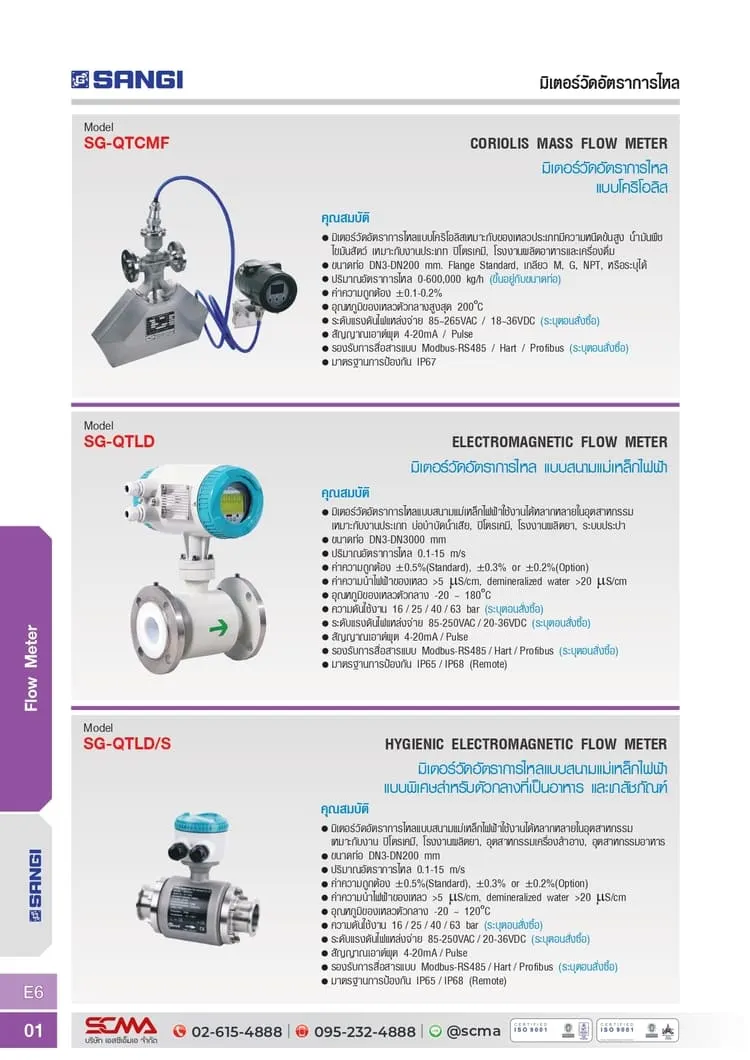
The SG-QTLD Series offers options for Analog Output 4-20mA, Pulse Output, and communication systems Modbus-RS485, HART, or Profibus depending on the model. It can be applied to PLCs, HMIs, SCADA systems, and production control systems according to installed functions.
The DN100 sub-model with data from SCMA, code SG-QTLD-DN100(4")-S1-P3-L4-E3-K1-F3-D1-G1-G2-C4-F1 is a Compact Type using Liner Neoprene (CR), Electrode Hastelloy C, and Cast Iron housing with 4-20mA signal, Pulse, and Modbus.
Features
- SANGI flow meter
- SG-QTLD-DN100 model in the SG-QTLD Series
- Type: Electromagnetic Flow Meter
- Pipe size DN100 or approximately 4 inches
- Metering by electromagnetic induction principle
- Suitable for liquids with appropriate electrical conductivity
- No rotating blades inside the flow path
- SG-QTLD Series flow range: 0.1-15 m/s
- Standard accuracy of the series ±0.5%
- Precision options available at ±0.3% or ±0.2%
- Suitable for Analog Output 4-20mA option
- Pulse Output option supported
- Communication options include Modbus-RS485, HART, and Profibus
- Suitable for water systems, wastewater treatment systems, and process control applications
Technical Specifications
Note: The values listed as References in the table are for the sub-model code DN100 published by SCMA. This does not mean that all SG-QTLD-DN100 units use Hastelloy C material, Neoprene or have identical power supply and communication formats.
Working Principle of Electromagnetic Flow Meter
The Electromagnetic Flow Meter operates on Faraday's Law of Electromagnetic Induction by creating a magnetic field through the measuring pipe where electrically conductive fluid flows.
When the fluid moves through the magnetic field, it generates a small voltage that is proportional to its flow velocity. The meter electrodes detect this voltage and send signals to the processing unit for calculation as flow rate.
This measurement method does not have rotating blades in the flow path, thus reducing wear issues from moving parts and is suitable for systems requiring continuous monitoring.
Pipe Size DN100 (Nominal Pipe Diameter)
The SG-QTLD-DN100 is a pipe size DN100 or approximately 4 inches meter used for installation in piping systems that match the meter's size and connection standards.
Standard flange options include DIN PN10, PN16, PN25, and PN40. However, due to different standard flanges of DN100 not being directly interchangeable, it is necessary to confirm the required standard and pressure rating before ordering.
Flow Measurement Range
The SG-QTLD Series specifies a flow velocity range of 0.1-15 m/s for selecting meter size and operating range.
The actual working flow rate range of DN100 depends on the internal cross-sectional area of the measuring pipe and the measurement range setting within the unit, so it is advisable to check the minimum, normal, and maximum system flow rates before selection.
Measurement Accuracy
The SG-QTLD Series has a standard accuracy of ±0.5% with optional accuracies of ±0.3% or ±0.2%, depending on model specification and calibration conditions.
For high-precision applications, it is important to verify the measurement range, testing conditions, and Calibration Certificate of the actual delivered unit.
Liquid Conductivity
The SG-QTLD Series supports liquids with a conductivity greater than 5 µS/cm and for Demineralized Water, it specifies that the value must be above 20 µS/cm.
Therefore, it is not suitable for measuring fuel oil, lubricating oil, or hydrocarbon liquids with a lower conductivity than specified.
Neoprene (CR) Liner Material
The referenced sub-model SG-QTLD-DN100 uses Neoprene (CR) liner material which is suitable for consideration when used with wastewater or water containing sediment as per the manufacturer's specifications.
The sub-model information specifies a liquid temperature range of -10 to +80 °C. However, compatibility of the material with chemicals, temperatures, and actual usage conditions must be verified before use.
Hastelloy C Electrode Material
The referenced DN100 model uses Hastelloy C electrode material for detecting electrical signals from liquids passing through a magnetic field.
Hastelloy C is an alloy group with corrosion resistance in various conditions, but chemical compatibility must be verified by checking the type of chemicals, concentration, and temperature before use. This material should not be considered suitable for all types of liquids.
4-20mA Output Signal
The referenced DN100 model supports Analog Output 4-20mA to send flow rate data to PLC, HMI, Data Logger or other control systems that support it.
Before connecting, the wiring method and scaling values set in the device should be checked to match the desired flow rate range.
Pulse Output
The referenced DN100 model supports Pulse Output for sending pulse signals to cumulative volume flow counting systems. The Pulse Scaling must be configured according to usage requirements.
Output coordinates, wiring characteristics, and signal frequency specifications should be checked as per the manufacturer's manual.
Modbus Communication
The referenced DN100 model supports Modbus for sending meter data into control systems such as PLC, HMI, and SCADA.
Installation requires checking the Modbus Register Map, Device Address, Baud Rate, Parity, and wiring configuration according to the manual of the delivered model.
Power Supply
The referenced DN100 model uses AC 85-250 V power supply. Voltage must be verified from the nameplate before powering on.
The SG-QTLD Series also offers DC power supply options for some models, so it should not be assumed that all units use the same AC power source.
IP65 Protection Level
The DN100 Compact Type sub-model refers to the IP65 protection level as specified by the manufacturer for use in industrial environments.
Installation should check the sealing of cable entry points and appropriate installation locations, avoiding conditions that exceed the protection level.
Pipe System Installation (Installation)
The Electromagnetic Flow Meter should be installed at a position where there is full pipe cross-sectional liquid during measurement, avoiding positions where air bubbles may accumulate or cause incomplete liquid flow in the pipe.
It must check straight pipe lengths before and after the meter according to the manufacturer's manual, and install proper Grounding and Electrical Bonding systems to reduce interference signals affecting measurements.
Application Examples (Applications)
- Potable water and water supply systems
- Sewage treatment systems
- Pump stations and water pumping systems
- Circulating water systems in industrial machinery
- Pipe systems for conductive liquids
- Flow rate measurement systems in production processes
- PLC and HMI flow control systems
- Data logging and monitoring through SCADA
- Factory Automation and Process Control Systems
Installation Precautions
- Check the DN100 pipe size and flange standards
- Check the liquid's electrical conductivity value
- Select Liner and Electrode suitable for the medium
- Verify actual operating pressure and temperature
- Install with full pipe cross-sectional liquid during measurement
- Avoid locations where air bubbles may accumulate
- Follow manufacturer’s manual for straight pipe lengths
- Check Grounding and Electrical Bonding
- Separate signal wires from power lines that may cause interference signals
- Verify supply voltage matches the Nameplate specifications
- Set Output and Modbus according to the manual
- Relieve pressure and disconnect power before removal or maintenance
Important Notes Before Purchase (Important Notes)
- The product is an Electromagnetic Flow Meter, model SG-QTLD-DN100 by SANGI
- Pipe size DN100 or approximately 4 inches
- Suitable for liquids with specified electrical conductivity values
- Several sub-codes may use different Liner and Electrode materials
- Mandatory to check flange standards and pressure ratings
- Must confirm power supply voltage and communication systems
Write Your Own Review
This website uses cookies
We use cookies to make the site work properly, to understand how it is used, and to show content that is relevant to you. You choose which types to allow; strictly necessary cookies are always on. Privacy Policy
🤖 AI Assistant
Ask about products, specs and replacement models
Hello 👋 Ask us anything — find products, compare specs, or troubleshoot.
🗑 Clear history