
SPECIAL PROMOTION — Up to 40% off across many product groups, until 31 December 2026 · Click to see all promotion itemsIFM, Sensor, Automation SystemMeasuring / Testing InstrumentsTemp Indicator, Control, T/C, RTD, TimerHeater, SCR Control, Solid State, Power Supply, Control CabinetField Measuring Instruments, Pressure Gauge, Level Control, Flow MeasurementEMC, Pneumatic, Solenoid ValveInspection Test Lamp, Head Light, Automotive Measuring InstrumentWeighing Scales, Marking Machine, PrintersEducational Training SystemsHot Line Tools & Equipment SPECIAL PROMOTION — Up to 40% off across many product groups, until 31 December 2026 · Click to see all promotion itemsIFM, Sensor, Automation SystemMeasuring / Testing InstrumentsTemp Indicator, Control, T/C, RTD, TimerHeater, SCR Control, Solid State, Power Supply, Control CabinetField Measuring Instruments, Pressure Gauge, Level Control, Flow MeasurementEMC, Pneumatic, Solenoid ValveInspection Test Lamp, Head Light, Automotive Measuring InstrumentWeighing Scales, Marking Machine, PrintersEducational Training SystemsHot Line Tools & Equipment View promotion items View all
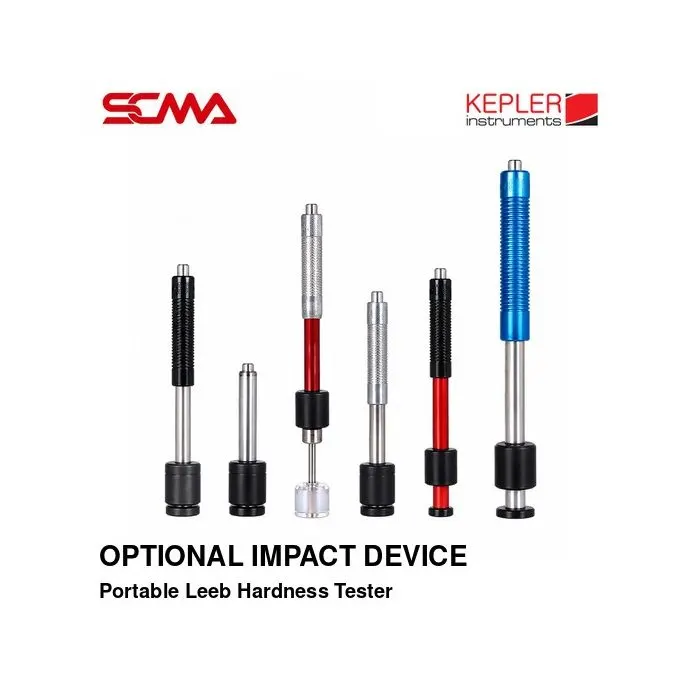
OPTIONAL IMPACT DEVICE PORTABLE LEEB HARDNESS TESTER KEPLER
Price on request – please contact us
Out of stock
SKU
051003
Out of stock

OPTIONAL IMPACT DEVICE, KEPLER, Portable Leeb Hardness Tester, Leeb Hardness Tester Impact Device, Hardness Tester Impact Probe, Replacement Impact Device, Optional Hardness Tester Probe, D Type Impact Device, C Type Impact Device, DC Type Impact Device, DL Type Impact Device, D+15 Impact Device, G Type Impact Device, E Type Impact Device, Portable Hardness Tester Accessories, Digital Hardness Tester Probe, Metal Hardness Tester Accessories, Leeb Rebound Hardness Testing, Impact Hardness Measurement, Steel Hardness Testing, Cast Iron Hardness Testing, Metal Hardness Inspection, Restricted Access Hardness Testing, Industrial Hardness Testing, Non Destructive Hardness Inspection, KEPLER KH-Series Accessories, KH-270 Optional Impact Device, KH-278 Impact Device, KH-660 Impact Device, KH-601E Impact Device, Impact Head for Hardness Tester, Leeb Hardness Tester Impact Head, Supplementary Impact Head for Hardness Tester, Replacement Impact Head, Metal Hardness Tester Probe, D Type Impact Head, C Type Impact Head, DC Type Impact Head, DL Type Impact Head, D+15 Impact Head, G Type Impact Head, E Type Impact Head, Portable Hardness Tester Accessories, Digital Hardness Tester Probe, KEPLER Hardness Tester Impact Head, KEPLER Impact Head, Industrial Metal Hardness Testing Accessories
*Price does not include VAT
KEPLER Optional Impact Device for Portable Leeb Hardness Tester (Metal Hardness Meter Impact Attachment)
KEPLER Optional Impact Device is a range of impact heads for portable metal hardness testers that support interchangeable impact devices. It is used to check the hardness of metallic materials using the Leeb Rebound Hardness Testing method, suitable for quality control tasks, machinery part inspections, and metal hardness testing in industries.
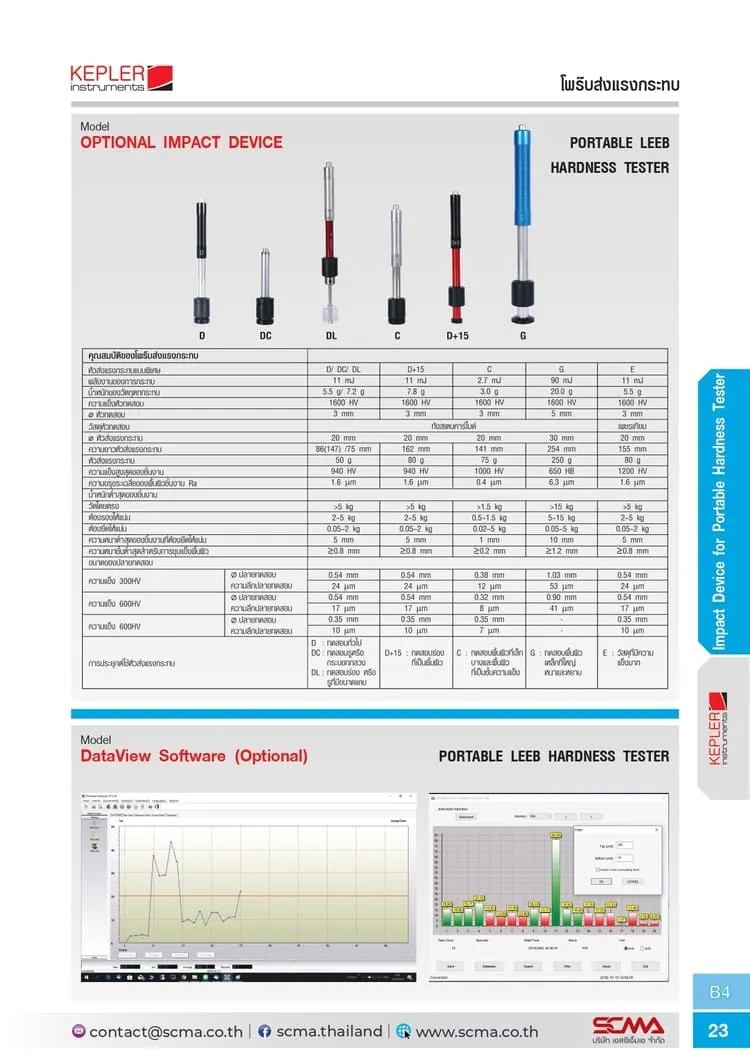
The impact heads come in various types such as D, C, DC, DL, D+15, and G. Each type has different mechanical characteristics, impact energy, and usage conditions.
To change the impact head, users must ensure that the tester supports the selected impact head type, including checking the connectors and setting up the Impact Device within the machine to properly process hardness values.
Features
- Brand: KEPLER
- Product Type: Optional Impact Device
- Suitable as an impact attachment for Portable Leeb Hardness Tester that supports interchangeable heads
- Used in systems checking metal hardness using the Leeb Rebound Hardness Testing method
- Offers various types of impact heads to suit different workpiece characteristics
- Supports metal hardness testing within the measurement range of the impact head and tester
- Includes general-purpose impact heads and those for limited access areas
- Includes impact heads requiring different levels of impact energy
- Serves as a replacement or supplementary impact head for compatible testers
- Fits well for material testing, quality control tasks, and metal hardness inspections
Impact Device Types
| Impact Device Type | Characteristics | Typical Application |
|---|---|---|
| D Type | Standard Impact Device | General metal hardness inspection work |
| C Type | Low-Energy Impact Device | Work requiring reduced impact energy compared to D-Type |
| DC Type | Compact Impact Device | Limited access inspection areas |
Note: The table shows the general usage characteristics of each impact tip type. It does not confirm that all types are available or compatible with every KEPLER model. E-Type is specified as an option for certain models only.
Operation Principle of Leeb Impact Device
The impact head of a Leeb Hardness Tester functions by sending the striker into contact with the material surface and measuring its movement before and after impact to process the rebound hardness testing data according to the Leeb principle.
Leeb measurement considers the ratio between the rebound velocity and pre-impact velocity, displaying the hardness value based on the type of impact tip used, such as HLD, HLC or HLDL depending on the tester's capabilities.
The obtained hardness values can be converted into HB, HRC, HRB, HV units or others according to material and conversion tables supported by the device. However, these conversions are not directly equivalent to tests conducted through other methods in all cases.
Details for Impact Tip Selection
D Type - Standard Impact Device
A standard impact tip suitable for general metal hardness testing on parts that meet test requirements regarding size, weight, thickness and support.
C Type - Low-Energy Impact Device
The C type uses less energy than the D-Type and is suitable for certain applications requiring reduced impact effects. The part's thickness, weight, and characteristics must be checked before use.
DC Type - Compact Impact Device
A compact impact tip suitable for measuring in restricted areas where size limitations apply. Actual head size and reach must be verified.
DL Type - Slender Tip Impact Device
The DL type impact tip has a slender and elongated shape, suitable for inspecting hard-to-reach areas such as grooves or confined spaces. Consider the measurement requirements and stability of the workpiece.
D+15 Type - Extended Impact Device
The D+15 type impact tip is designed with an extended length at the end to reach specific measuring positions. Ensure that the shape of the workpiece matches the impact tip appropriately.
G Type - High-Energy Impact Device
The G type impact tip uses high-impact energy, suitable for inspecting large workpieces or rough surfaces under conditions specified by the manufacturer.
E Type - Diamond Indenter Impact Device
The E type impact tip uses a diamond indenter for specific inspection tasks. Ensure that the measuring instrument supports the E-Type and is properly configured before use.
Gauge Models with Additional Impact Tip Information
| Gauge Model | Impact Device Information |
|---|---|
| KEPLER KH-270 | The catalog specifies the D type impact tip as standard and lists additional accessories C, DC, G, D+15, DL. Confirm the changeover method before ordering. |
| KEPLER KH-278 | The catalog specifies the D type impact tip as standard and lists additional accessories C, DC, G, D+15, DL. Confirm the changeover method before ordering. |
| KEPLER KH-601E | The supplier states that it supports D, DC, DL, C, D+15, G and E impact tips. |
| KEPLER KH-660 | The supplier lists additional accessories C, DC, G, D+15 and DL. |
Note: Some models' supplementary impact tip information is insufficient to confirm that users can change the impact tips directly. Especially for those specified as Integrated Impact Device types, consult the manual and supplier support before purchasing.
Guidelines for Selecting Suitable Impact Tips
- Check the model of your Portable Leeb Hardness Tester in use.
- Determine if the instrument supports impact tip changes.
- Select an appropriate impact tip type based on workpiece size, shape and weight.
- Consider access areas and measuring positions.
- Check the minimum thickness and workpiece support
- Inspect surface roughness and prepare surface before measurement
- Verify hardness scale and impact tip range compatibility
- Check probe connections and set impact tip type in tester
- Select appropriate reference block for the impact tip
- Review equipment list prior to purchase
Setup and Measurement Procedure
- Inspect instrument condition and impact tip before use
- Ensure selected impact tip is compatible with tester
- Install impact tip according to manufacturer's manual
- Set Impact Device type in tester to match used impact tip
- Select material type and hardness scale as appropriate
- Check workpiece stability and support
- Prepare surface per Leeb test requirements
- Verify readings with suitable standard hardness block
- Conduct measurements according to specified testing method
- Record and evaluate results as per job specifications
- Clean impact tip and store equipment after use
Applications (Examples)
- Hardness inspection of steel and alloy components
- Hardness check on stainless steel parts
- Hardness testing of castings
- Inspection of machine part hardness
- Measure workpieces with specific shapes or access areas
- Check hardness of molds and tools
- Used in production quality control processes
- Serve as supplementary or replacement impact tips for compatible testers
Purchase Considerations
- This is an additional impact tip, not a complete Portable Leeb Hardness Tester unit
- D, C, DC, DL, D+15, G and E tips have different usage requirements
- Do not substitute energy level, accuracy or measurement range of D tip for other types
- Must verify compatibility with actual tester model to be used
- Instruments using integrated impact tips may have limitations on changing tips
- Leeb testing requires consideration of weight, thickness and surface condition of workpiece
- Use appropriate reference block for the impact tip type
- Troubleshoot and reconfigure system after impact tip change
Write Your Own Review
This website uses cookies
We use cookies to make the site work properly, to understand how it is used, and to show content that is relevant to you. You choose which types to allow; strictly necessary cookies are always on. Privacy Policy
🤖 AI Assistant
Ask about products, specs and replacement models
Hello 👋 Ask us anything — find products, compare specs, or troubleshoot.
🗑 Clear history