
SPECIAL PROMOTION — Up to 40% off across many product groups, until 31 December 2026 · Click to see all promotion itemsIFM, Sensor, Automation SystemMeasuring / Testing InstrumentsTemp Indicator, Control, T/C, RTD, TimerHeater, SCR Control, Solid State, Power Supply, Control CabinetField Measuring Instruments, Pressure Gauge, Level Control, Flow MeasurementEMC, Pneumatic, Solenoid ValveInspection Test Lamp, Head Light, Automotive Measuring InstrumentWeighing Scales, Marking Machine, PrintersEducational Training SystemsHot Line Tools & Equipment SPECIAL PROMOTION — Up to 40% off across many product groups, until 31 December 2026 · Click to see all promotion itemsIFM, Sensor, Automation SystemMeasuring / Testing InstrumentsTemp Indicator, Control, T/C, RTD, TimerHeater, SCR Control, Solid State, Power Supply, Control CabinetField Measuring Instruments, Pressure Gauge, Level Control, Flow MeasurementEMC, Pneumatic, Solenoid ValveInspection Test Lamp, Head Light, Automotive Measuring InstrumentWeighing Scales, Marking Machine, PrintersEducational Training SystemsHot Line Tools & Equipment View promotion items View all
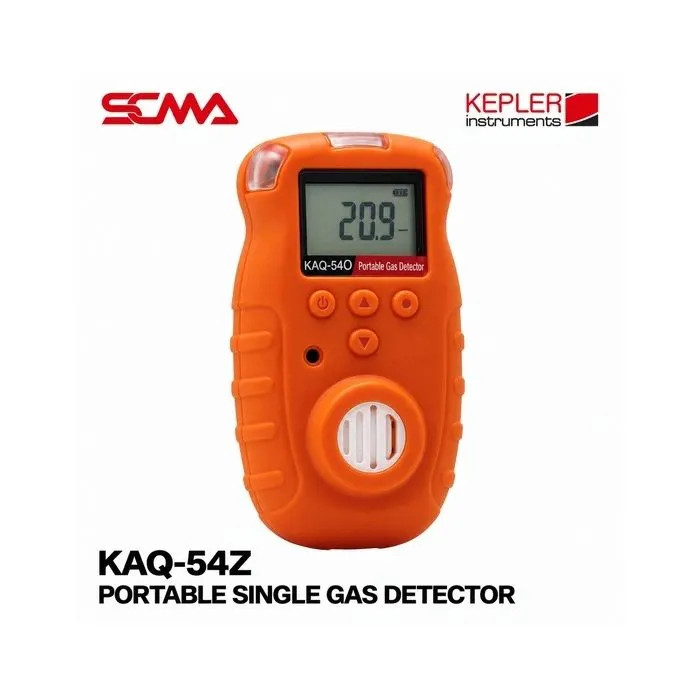
KAQ-54Z PORTABLE SINGLE GAS DETECTOR KEPLER
Price on request – please contact us
Out of stock
SKU
050978
Out of stock

KAQ-54Z, KEPLER, Portable Single Gas Detector, Portable Ozone Detector, Ozone Gas Detector, O3 Gas Detector, O3 Monitor, Portable Ozone Gas Monitor, Single Gas Monitor, Industrial Ozone Detector, Electrochemical Ozone Sensor, Ozone Measuring Range 0-50ppm, Natural Diffusion Gas Detector, Gas Safety Monitor, Audible Alarm, Visual Alarm, Vibration Alarm, 85dB Gas Alarm, Self-Test, Self-Diagnostic, Low Battery Warning, IP65, Ex ia IIC T3, Rechargeable Lithium Battery, Industrial Gas Monitoring, Ozone Generator Monitoring, Workplace Gas Safety, Ozone Gas Detector, Ozone Meter, Portable Ozone Gas Meter, Single Gas Detector, Industrial Ozone Meter, 0-50 ppm Ozone Detector, Ozone Concentration Meter, Ozone Alarm Device, Factory Gas Detector, KEPLER Gas Detector KAQ-54Z, Factory Safety Equipment, Industrial Gas Measuring Tool
*Price does not include VAT
Portable Single Gas Detector KEPLER KAQ-54Z (Ozone Gas Detector)
KEPLER KAQ-54Z Portable Single Gas Detector is a portable ozone gas detector designed to measure the concentration of ozone (O3) in air, with a measurement range of 0-50 ppm. It is suitable for monitoring worker safety in areas where ozone is used or produced, such as industrial plants, ozone production systems, and water treatment processes.
The device uses an Electrochemical sensor specifically designed to detect ozone gas through Natural Diffusion sampling method, allowing air gases to naturally diffuse into the sensor head without requiring an internal pump to draw in the gas sample.
KAQ-54Z comes with audio, light, and vibration alarm systems. The sound level of the alarm is no less than 85 dB at a distance of 1 meter. It also features a Self-Test system upon startup, along with a Self-Diagnostic function and low battery alert to help users check equipment readiness before starting work.
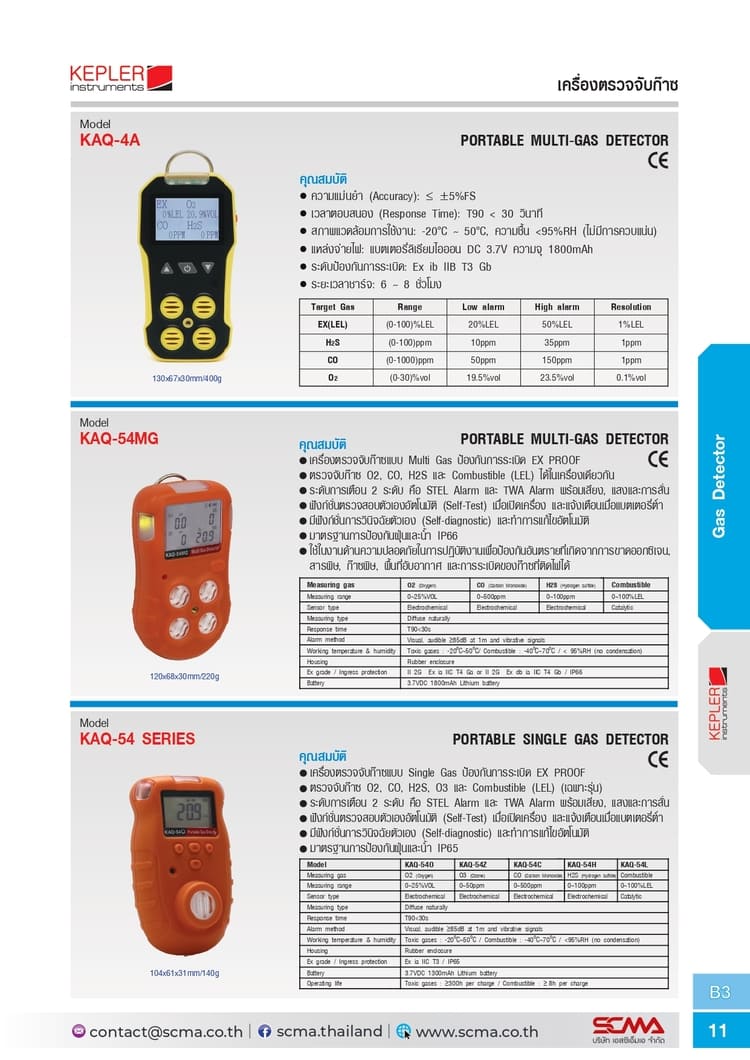
The device has an IP65 dust and water protection rating and is marked with explosion-proof Ex ia IIC T3 according to the catalog data. It uses a rechargeable 3.7V DC lithium battery with a capacity of 1300 mAh, making it suitable for ozone gas detection in industrial settings under specified usage conditions.
General Features
- Brand: KEPLER
- Model: KAQ-54Z
- Type: Portable Single Gas Detector
- Detects Ozone (O3)
- Measurement Range: 0-50 ppm
- Uses Electrochemical gas detection sensor
- Natural Diffusion sampling method
- Response Time T90 less than 30 seconds
- Audible, visual and vibration alarm system
- Alarm sound level no less than 85 dB at a distance of 1 meter
- Automatic self-test upon startup (Self-Test)
- Device diagnostic function (Self-Diagnostic)
- Battery low alert system
- Rubber enclosure material
- Dust and water protection rating IP65
- Marks explosion-proof Ex ia IIC T3
- Uses rechargeable 3.7V DC lithium battery with a capacity of 1300 mAh
- Suitable for monitoring ozone in industrial systems and work environments
Technical Specifications (Technical Specifications)
| Specifications | Details |
|---|---|
| Brand | KEPLER |
| Model | KAQ-54Z |
| Product Type | Portable Single Gas Detector |
| Detectable Gas | Ozone (O3) |
| Measuring Range | 0-50 ppm |
| Sensor Type | Electrochemical |
| Sampling Method | Natural Diffusion |
| Response Time | T90 < 30 Seconds |
| Alarm Method | Visual, Audible and Vibration |
| Audible Alarm | ≥85 dB at 1 m |
| Self-Test | Automatic at Startup |
| Self-Diagnostic | Supported |
| Low Battery Warning | Supported |
| Operating Temperature | -20 to +50°C |
| Operating Humidity | <95% RH, Non-Condensing |
| Housing | Rubber Enclosure |
| Ingress Protection | IP65 |
| Explosion Protection Marking | Ex ia IIC T3 (As Listed in Catalog) |
| Battery Type | Rechargeable Lithium Battery |
| Battery Voltage | DC 3.7V |
| Battery Capacity | 1300 mAh |
| Operating Life | ≥300 Hours per Charge (Toxic Gas Series Rating; Verify for O3 Configuration) |
| Measurement Accuracy | Refer to Manufacturer Datasheet |
| Measurement Resolution | Refer to Manufacturer Datasheet |
| Dimensions / Weight | Refer to Manufacturer Datasheet |
Operation of the Ozone Gas Detector
KAQ-54Z uses an Electrochemical sensor to detect ozone gas. When the gas enters the sensor area, it triggers a chemical-electrical reaction proportional to the amount of detected gas. The processing circuit then converts this signal into an ozone concentration value in ppm (Parts per Million).
The natural diffusion sampling method relies on the gas diffusing directly from the environment into the sensor. Therefore, the device should be carried or installed in a position where air can enter the gas intake port without obstruction.
The measurement values depend on the condition of the sensor, calibration, gas concentration, environmental conditions, and any interfering substances present in the testing area.
Alert System and Functionality
- Ozone Measurement: Measures ozone concentrations from 0-50 ppm
- Audible Alarm: Audible alert when hazardous conditions are met
- Visual Alarm: Visual alert to make it easy for the operator to notice
- Vibration Alarm: Vibration alert suitable for noisy environments
- Self-Test: Automatic check of device functionality upon activation
- Self-Diagnostic: Checks system status and errors
- Low Battery Warning: Alerts when battery power is low
- Alarm Settings: Check alarm settings and STEL/TWA functions from the specific model manual before use
Device Preparation and Usage
- Check the model code KAQ-54Z and the gas type supported by the sensor before starting to use it.
- Check battery level and device condition before operation.
- Verify calibration due date and conduct Bump Test according to manufacturer's manual.
- Turn on the device and check Self-Test status before using it.
- Ensure alarm settings comply with safety requirements and risk assessment criteria.
- Make sure the gas intake port is free of dust, dirt, or obstructions.
- Carry the device in a position suitable for monitoring worker exposure to gases.
- If the device alerts or shows abnormal conditions, follow the emergency plan of your workplace.
- After use, clean and store the device according to manufacturer's instructions.
Examples and Usage Guidelines
Safety Considerations
- KAQ-54Z is a single gas detector for ozone only, it cannot replace multi-gas detectors
- Ozone is a hazardous gas that can be harmful to the respiratory system even at low concentrations, appropriate exposure control measures must be established
- The warning level settings should be reviewed according to legal requirements, standards, and risk assessments of the workplace
- A bump test and calibration as per manufacturer's instructions must be performed before use
- Sensor response may be affected by interfering substances or environmental conditions; limitations from the manual should be checked
- Explosion Protection certification and suitability for hazardous areas must be verified before bringing the unit into such zones
- Battery charging is not allowed in hazardous areas unless permitted by the manufacturer and equipment certification
- A gas detector is a monitoring aid, it cannot replace ventilation systems or other safety measures
- Check accessory details, certification documents, and calibration documentation before ordering
Write Your Own Review
This website uses cookies
We use cookies to make the site work properly, to understand how it is used, and to show content that is relevant to you. You choose which types to allow; strictly necessary cookies are always on. Privacy Policy
🤖 AI Assistant
Ask about products, specs and replacement models
Hello 👋 Ask us anything — find products, compare specs, or troubleshoot.
🗑 Clear history