
SPECIAL PROMOTION — Up to 40% off across many product groups, until 31 December 2026 · Click to see all promotion itemsIFM, Sensor, Automation SystemMeasuring / Testing InstrumentsTemp Indicator, Control, T/C, RTD, TimerHeater, SCR Control, Solid State, Power Supply, Control CabinetField Measuring Instruments, Pressure Gauge, Level Control, Flow MeasurementEMC, Pneumatic, Solenoid ValveInspection Test Lamp, Head Light, Automotive Measuring InstrumentWeighing Scales, Marking Machine, PrintersEducational Training SystemsHot Line Tools & Equipment SPECIAL PROMOTION — Up to 40% off across many product groups, until 31 December 2026 · Click to see all promotion itemsIFM, Sensor, Automation SystemMeasuring / Testing InstrumentsTemp Indicator, Control, T/C, RTD, TimerHeater, SCR Control, Solid State, Power Supply, Control CabinetField Measuring Instruments, Pressure Gauge, Level Control, Flow MeasurementEMC, Pneumatic, Solenoid ValveInspection Test Lamp, Head Light, Automotive Measuring InstrumentWeighing Scales, Marking Machine, PrintersEducational Training SystemsHot Line Tools & Equipment View promotion items View all
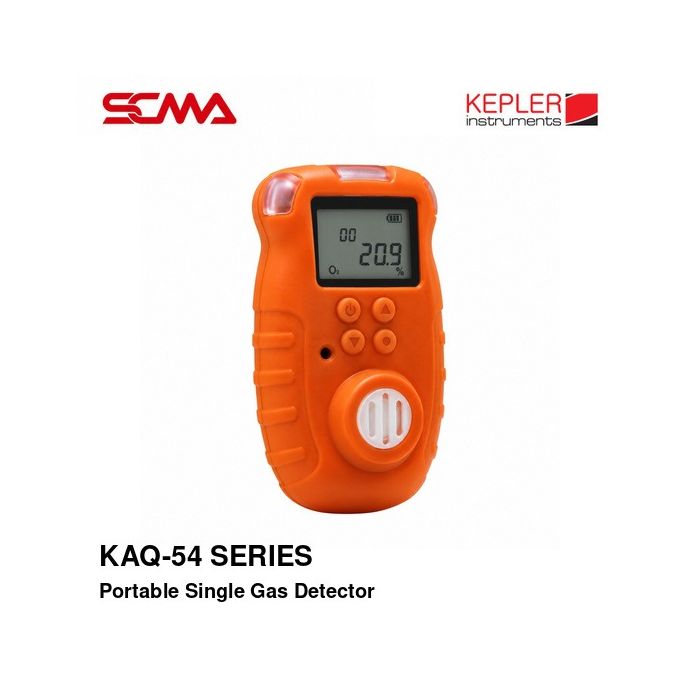
KAQ-54 SERIES PORTABLE SINGLE GAS DETECTOR KEPLER
Price on request – please contact us
Out of stock
SKU
050977
Out of stock

KAQ-54 Series, KEPLER, Portable Single Gas Detector, Single Gas Detector, Personal Gas Monitor, Portable Gas Monitor, Industrial Gas Detector, Oxygen Detector, Ozone Detector, Carbon Monoxide Detector, Hydrogen Sulfide Detector, Combustible Gas Detector, O2 Detector, O3 Detector, CO Detector, H2S Detector, LEL Detector, KAQ-54O, KAQ-54Z, KAQ-54C, KAQ-54H, KAQ-54L, Electrochemical Gas Sensor, Catalytic Gas Sensor, Gas Alarm, Audible Alarm, Visual Alarm, Vibration Alarm, Self Test, Self Diagnostic, Low Battery Alarm, IP65, Ex ia IIC T3, Rechargeable Lithium Battery, Confined Space Gas Monitoring, Industrial Safety Equipment, Gas Detector, Gas Meter, Portable Gas Detector, Single Gas Detector, KEPLER Gas Detector, KAQ-54 Gas Detector, Safety Gas Detection Device, Industrial Gas Meter
*Price does not include VAT
KEPLER KAQ-54 Series (Portable Single Gas Detector)
KEPLER KAQ-54 Series Portable Single Gas Detector is a single gas portable detector for monitoring and detecting gas concentrations in workplaces, industrial facilities, and areas that may be at risk from toxic gases, oxygen deficiency, or flammable gases.
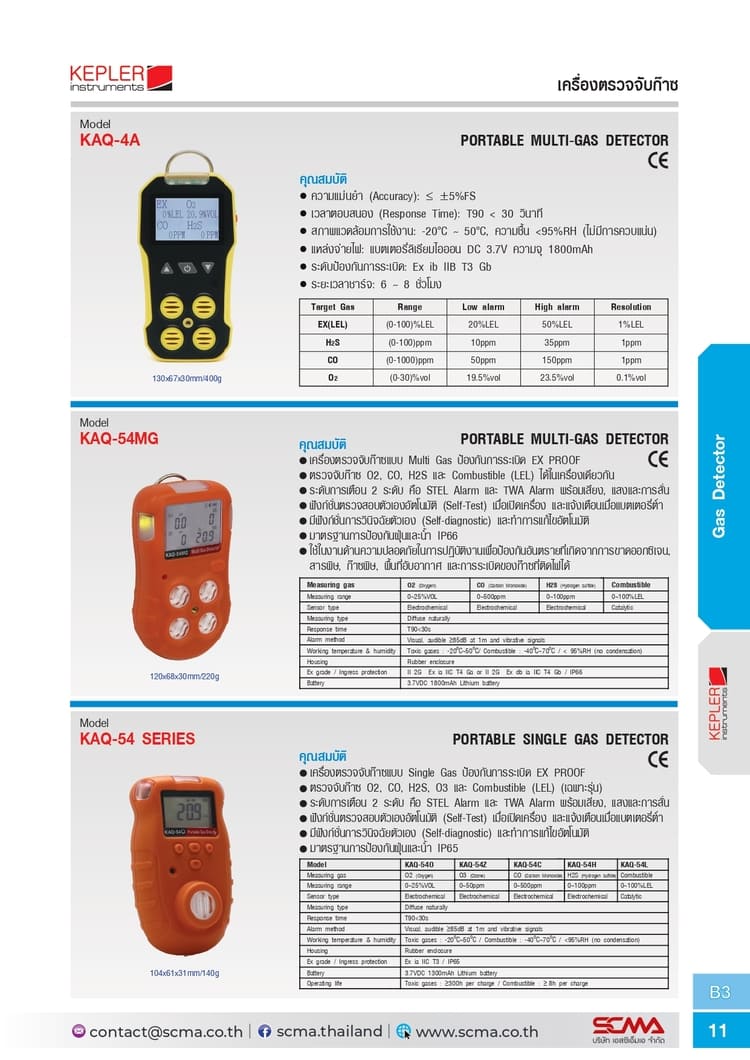
The KAQ-54 series gas detectors are available in 5 models: KAQ-54O for oxygen (O2), KAQ-54Z for ozone (O3), KAQ-54C for carbon monoxide (CO), KAQ-54H for hydrogen sulfide (H2S), and KAQ-54L for flammable gas (LEL). Each model is designed for gas detection according to the type of sensor installed.
The device has an alarm system with sound, light, and vibration, along with an automatic self-test function when the device is turned on, and a low battery alarm system, allowing users to easily check the device's readiness before use.
The device has a dust and water protection standard of IP65 and an explosion protection level of Ex ia IIC T3 according to the catalog data. It uses a rechargeable lithium battery with DC 3.7V and a capacity of 1300 mAh, suitable for portable gas detection in industrial environments according to the device's specifications.
General Features
- Brand: KEPLER
- Product Series: KAQ-54 Series
- Product Type: Portable Single Gas Detector
- Gas detection can be selected by model: O2, O3, CO, H2S, or Combustible Gas
- One device supports gas detection according to the selected model
- Uses electrochemical sensors for O2, O3, CO, and H2S
- Uses catalytic sensors for flammable gas (LEL)
- Detects gas through natural diffusion (Natural Diffusion)
- Response time T90 is less than 30 seconds
- Alarm system with light, sound, and vibration
- Alarm sound level is not less than 85 dB at a distance of 1 meter
- Has an automatic self-test function when the device is turned on (Self-Test)
- Has a low battery alarm system
- Has a self-diagnostic function for device operation (Self-Diagnostic)
- Device housing is made of rubber (Rubber Enclosure)
- Dust and water protection level: IP65
- Explosion protection level: Ex ia IIC T3 according to catalog data
- Uses a lithium battery with DC 3.7V and a capacity of 1300 mAh
Sub-models and Measuring Range (Model Selection Guide)
| Model | Measuring Gas | Measuring Range | Sensor Type |
|---|---|---|---|
| KAQ-54O | Oxygen (O2) | 0-25% Vol | Electrochemical |
| KAQ-54Z | Ozone (O3) | 0-50 ppm | Electrochemical |
| KAQ-54C | Carbon Monoxide (CO) | 0-500 ppm | Electrochemical |
| KAQ-54H | Hydrogen Sulfide (H2S) | 0-100 ppm | Electrochemical |
| KAQ-54L | Combustible Gas (LEL) | 0-100% LEL | Catalytic |
Technical Specifications
| Brand | KEPLER |
| Series | KAQ-54 Series |
| Product Type | Portable Single Gas Detector |
| Available Models | KAQ-54O / KAQ-54Z / KAQ-54C / KAQ-54H / KAQ-54L |
| Detected Gas | One Gas According to Selected Model |
| Sensor Type | Electrochemical / Catalytic (Depending on Model) |
| Sampling Method | Natural Diffusion |
| Response Time | T90 < 30 Seconds |
| Alarm Method | Visual, Audible and Vibration |
| Audible Alarm | ≥85 dB at 1 m |
| Self-Test | Automatic at Startup |
| Self-Diagnostic | Supported |
| Low Battery Warning | Supported |
| Operating Temperature (Toxic Gas Models) | -20 to +50°C |
| Operating Temperature (Combustible Model) | -40 to +70°C |
| Operating Humidity | <95% RH, Non-Condensing |
| Housing | Rubber Enclosure |
| Ingress Protection | IP65 |
| Explosion Protection Marking | Ex ia IIC T3 (Refer to Product Certification) |
| Battery Type | Rechargeable Lithium Battery |
| Battery Voltage | DC 3.7V |
| Battery Capacity | 1300 mAh |
| Operating Life (Toxic Gas Models) | ≥300 Hours per Charge (As Stated in Catalog) |
| Operating Life (Combustible Model) | ≥8 Hours per Charge |
| Dimensions / Weight | Refer to Specific Model Documentation |
Submodel Details of KAQ-54 Series
KAQ-54O - Oxygen Detector (O2)
Oxygen gas detector for monitoring oxygen levels in the atmosphere, measuring in the range of 0-25% Vol, using an Electrochemical sensor, suitable for applications requiring the detection of abnormally low or high oxygen levels.
KAQ-54Z - Ozone Detector (O3)
Ozone gas detector for measuring O3 concentration in the range of 0-50 ppm, using an Electrochemical sensor, suitable for applications involving ozone production or usage areas, and areas requiring monitoring of ozone gas exposure.
KAQ-54C - Carbon Monoxide Detector (CO)
Carbon monoxide gas detector for measuring CO in the range of 0-500 ppm, using an Electrochemical sensor, suitable for detecting risks from gases generated during combustion processes and engine or furnace operations.
KAQ-54H - Hydrogen Sulfide Detector (H2S)
Hydrogen sulfide gas detector for measuring H2S in the range of 0-100 ppm, using an Electrochemical sensor, suitable for wastewater treatment systems, drainage systems, and industrial areas where H2S gas may accumulate.
KAQ-54L - Combustible Gas Detector (LEL)
Flammable gas detector for measuring in the range of 0-100% LEL, using a Catalytic sensor, suitable for risk monitoring of flammable gas accumulation. It is necessary to check the type of gas the sensor responds to and the calibration gas before use.
Alert System and Device Inspection
The KAQ-54 series device has an alert system with light, sound, and vibration to help users become aware when the device detects conditions that meet the alert criteria.
The device supports automatic self-test (Self-Test) upon startup, along with a self-diagnostic system and low battery alert. Details on alert levels and settings must be checked from the sub-model manual and actual usage requirements.
The function of alerts based on STEL and TWA concentration values specified in the catalog should be checked for compatibility and usage methods per gas type, as each type has different exposure assessment criteria and alert conditions.
Operating Principle
Models using the Electrochemical sensor detect gas through the electrochemical reaction inside the sensor and process it into concentration values. Flammable gas detection models use a Catalytic sensor, which responds to flammable gases under the sensor's operating conditions.
The device uses Natural Diffusion gas sampling method, where gas from the environment diffuses into the sensor area without using an internal pump, as stated in the catalog.
Detection performance depends on gas type, environmental conditions, sensor status, calibration, and usage method. Therefore, it is necessary to check the device's readiness before each operation.
Usage and Pre-Operation Inspection
- Select the sub-model that matches the gas type to be detected.
- Check the sensor type and measurement range to ensure they are suitable for the task.
- Check the battery level and device status before use.
- Check the calibration expiration date and perform a Bump Test according to the manual and safety procedures.
- Ensure the gas inlet is not blocked.
- Set the alert level appropriately for the gas and the work area requirements.
- Install or carry the device in a position suitable for monitoring gas exposure.
- If there is an alert or abnormality, follow the company's safety procedures and emergency plan.
- Inspect and maintain the device according to the manufacturer's specified schedule.
Application Examples
- Industrial gas inspection work
- Pipeline and machinery maintenance work
- Atmosphere inspection in areas at risk of toxic gas exposure
- Gas monitoring in wastewater treatment systems
- Inspection of areas with combustion or engine operation
- Monitoring areas where ozone gas is used
- Inspection of flammable gas risks in industrial systems
- Oxygen level inspection according to the workplace safety plan
- KAQ-54 Series is a single-gas detector; the device must be selected to match the gas to be measured
- The gas detector cannot replace procedures for work in confined spaces or other risk control measures
- Inspection of confined spaces may require multiple types of gas detectors depending on the risk assessment results
- Bump Test and instrument calibration should be performed according to the manufacturer's and workplace requirements
- Before entering hazardous areas, the explosion-proof certificate and scope of use must be checked
- Battery charging should not be done in hazardous areas unless the device manual and certificate clearly permit it
- Catalytic sensors may be affected by contaminants and low oxygen conditions; check the limitations in the manual before use
- Warning level settings should be in accordance with standards, requirements, and risk assessments of the organization
- The list of components, certificates, and calibration documents should be checked with the supplier before ordering
Safety Considerations
Write Your Own Review
This website uses cookies
We use cookies to make the site work properly, to understand how it is used, and to show content that is relevant to you. You choose which types to allow; strictly necessary cookies are always on. Privacy Policy
🤖 AI Assistant
Ask about products, specs and replacement models
Hello 👋 Ask us anything — find products, compare specs, or troubleshoot.
🗑 Clear history