
SPECIAL PROMOTION — Up to 40% off across many product groups, until 31 December 2026 · Click to see all promotion itemsIFM, Sensor, Automation SystemMeasuring / Testing InstrumentsTemp Indicator, Control, T/C, RTD, TimerHeater, SCR Control, Solid State, Power Supply, Control CabinetField Measuring Instruments, Pressure Gauge, Level Control, Flow MeasurementEMC, Pneumatic, Solenoid ValveInspection Test Lamp, Head Light, Automotive Measuring InstrumentWeighing Scales, Marking Machine, PrintersEducational Training SystemsHot Line Tools & Equipment SPECIAL PROMOTION — Up to 40% off across many product groups, until 31 December 2026 · Click to see all promotion itemsIFM, Sensor, Automation SystemMeasuring / Testing InstrumentsTemp Indicator, Control, T/C, RTD, TimerHeater, SCR Control, Solid State, Power Supply, Control CabinetField Measuring Instruments, Pressure Gauge, Level Control, Flow MeasurementEMC, Pneumatic, Solenoid ValveInspection Test Lamp, Head Light, Automotive Measuring InstrumentWeighing Scales, Marking Machine, PrintersEducational Training SystemsHot Line Tools & Equipment View promotion items View all
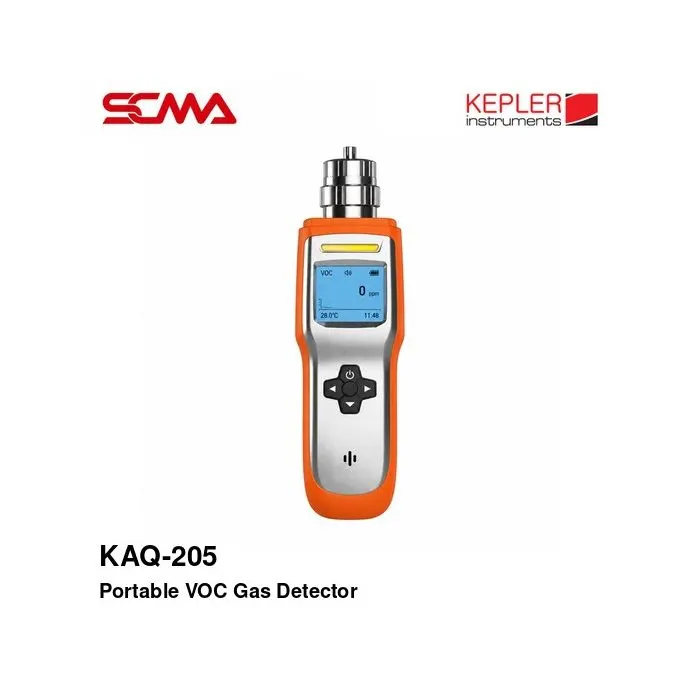
KAQ-205 PORTTABLE VOC GAS DETECTOR KEPLER
Price on request – please contact us
Out of stock
SKU
050980
Out of stock

KAQ-205, KEPLER, Portable VOC Gas Detector, VOC Gas Detector, Portable VOC Detector, VOC Monitor, Volatile Organic Compounds Detector, Photoionization Detector, PID Gas Detector, PID VOC Monitor, Handheld VOC Detector, Industrial VOC Gas Detector, Organic Vapor Detector, Gas Concentration Monitor, VOC Leak Detection, PID Sensor Technology, UV Lamp Lifetime Over 10000 Hours, 700 Gas Library, 1.3 Million Data Storage, Data Logger, 16 Hours Battery Operation, PC Data Analysis, 4G, Cat1, Bluetooth, Audible Alarm, Visual Alarm, Vibration Alarm, Fall Alarm, GPS, BeiDou, Environmental Monitoring, Petrochemical Gas Detection, Industrial Hygiene, VOC Gas Detector, Easy Volatile Organic Compound Detector, Portable VOC Meter, Vapor Concentration Monitor, PID Gas Sensor, VOC Concentration Meter, Chemical Vapor Detector, Factory Vapor Detector, KEPLER Gas Detector, KAQ-205 VOC Detector, Industrial Air Quality Measurement Tool, Safety Gas Detection Device
*Price does not include VAT
Portable VOC Gas Detector KEPLER KAQ-205 (KEPLER KAQ-205 Portable VOC Gas Detector)
KEPLER KAQ-205 Portable VOC Gas Detector is a portable device for measuring volatile organic compounds (VOCs) using Photoionization Detection (PID) technology to check the concentration of vapor in the air. It is suitable for environmental monitoring work in industrial plants, petrochemical industries, and areas at risk from leaks of volatile organic compounds.
The device uses a highly sensitive PID sensor with a UV lamp that has an operational lifespan according to the catalog data exceeding 10,000 hours, supporting over 700 types of VOC databases. This allows for accurate detection of vapor concentrations based on substance type and instrument settings.
KAQ-205 supports high-capacity data logging with more than 1.3 million records, capable of storing data for approximately two years according to the set parameters and recording conditions. The data can be used for VOC concentration trend analysis and reporting purposes.
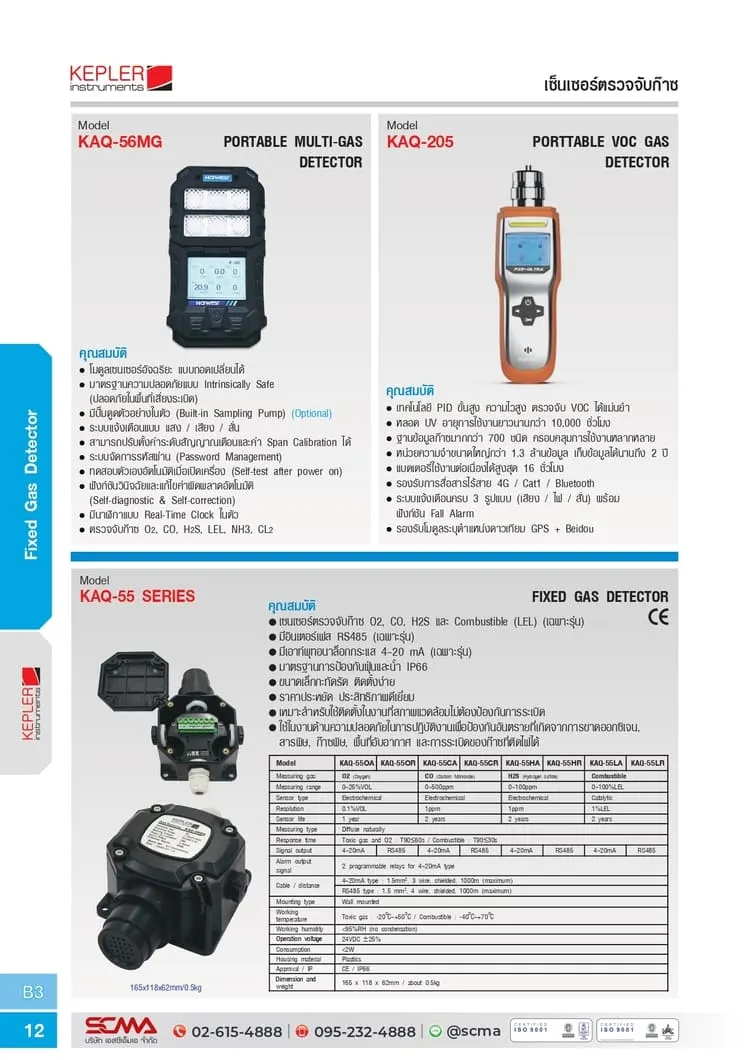
The device is designed to support audio, light, and vibration alerts, along with a Fall Alarm function to alert in case of an event that meets the detection criteria for falls. It also supports 4G / Cat1 / Bluetooth wireless communication as well as GPS + BeiDou positioning systems according to equipment specifications and supported functions.
General Features
- Brand: KEPLER
- Model: KAQ-205
- Type of Product: Portable VOC Gas Detector
- Uses Photoionization Detection (PID) technology
- For measuring volatile organic compounds (VOCs)
- The UV lamp has an operational lifespan exceeding 10,000 hours according to catalog data
- Supports over 700 types of gas or VOC databases
- Data logging capacity exceeds 1.3 million records
- Supports long-term data storage for approximately two years based on recording conditions
- Supports continuous battery operation up to 16 hours according to catalog data
- Has audio, light, and vibration alert systems
- Supports Fall Alarm function
- Supports 4G / Cat1 / Bluetooth communication depending on the device model
- Supports GPS + BeiDou positioning system based on installed equipment
- Suitable for VOC measurement in industrial work and environmental monitoring tasks
Technical Specifications
| Specifications | Details |
|---|---|
| Brand | KEPLER |
| Model | KAQ-205 |
| Product Type | Portable VOC Gas Detector |
| Target Gas Category | Volatile Organic Compounds (VOCs) |
| Measurement Technology | PID (Photoionization Detector) |
| UV Lamp Lifetime | More Than 10,000 Hours |
| Gas Library | More Than 700 Gas Types |
| Data Storage Capacity | More Than 1.3 Million Records |
| Long-Term Data Storage | Up to Approximately 2 Years, Depending on Logging Conditions |
| Battery Operating Time | Up to 16 Hours (As Stated in Catalog) |
| Wireless Communication | 4G / Cat1 / Bluetooth, Depending on Configuration |
| Alarm Method | Audible / Visual / Vibration |
| Fall Alarm | Supported |
| Satellite Positioning | GPS + BeiDou (Depending on Configuration) |
| Measurement Range | Refer to KAQ-205 Model-Specific Datasheet |
| Measurement Resolution | Refer to KAQ-205 Model-Specific Datasheet |
| Measurement Accuracy | Refer to KAQ-205 Model-Specific Datasheet |
| PID Lamp Energy | Refer to KAQ-205 Model-Specific Datasheet |
| Response Time | Refer to KAQ-205 Model-Specific Datasheet |
| Ingress Protection | Refer to KAQ-205 Model-Specific Datasheet |
| Explosion Protection | Verify Product Certification Before Use |
| Battery Voltage / Capacity | Refer to KAQ-205 Model-Specific Datasheet |
| Dimensions / Weight | Refer to KAQ-205 Model-Specific Datasheet |
PID (Photoionization Detector) Operation Principle
The PID VOC meter uses high-energy UV light from a UV lamp to ionize molecules of substances with ionization energies lower than the photon energy of the lamp. The detection circuit then processes the signal generated to calculate and display the concentration of the substance in the air.
The PID sensor can respond to several types of volatile organic compounds, but it cannot distinguish between different types of substances in an unknown mixture based solely on the PID signal.
Measuring each type of substance may require a Correction Factor according to manufacturer data and reference gas calibration values. Therefore, displaying VOC concentration levels must consider the type of substance and proper settings.
VOC Gas Database and Measurement System
The KAQ-205 supports over 700 types of VOC substances based on catalog information, allowing users to select relevant data for measurement tasks according to the capabilities and settings of the device.
Having a substance listed in the database does not mean that the device can automatically identify the type of substance in the air, nor is it guaranteed to detect all types of substances in every environment. It is advisable to check the PID lamp energy, response to target substances, and Correction Factor before use.
Data Logging System
The device supports storing over 1.3 million data entries, capable of continuous long-term data collection for approximately two years under supported configuration conditions. This allows users to analyze trends in VOC concentration changes at different times using measurement data.
Extracting data from the device and its use with a computer should be verified through software interfaces and compatible equipment as specified directly by the KAQ-205 manual.
Alert System and Communication
- Audible Alarm: Sound alert when measurement values reach hazardous threshold levels.
- Visual Alarm: Alert with lights or display signals on the device.
- Vibration Alarm: Vibration alert for users in noisy areas.
Usage and Measurement
- Check the type of VOC substance to be measured and the suitability of the PID sensor.
- Verify measurement range data and UV lamp power before use.
- Check calibration status and perform Bump Test as per manufacturer's manual and procedures when required.
- Ensure battery readiness and system alert functionality.
- Select substance type or Correction Factor according to steps in the manual and reference gas used for calibration.
- Position sampling points appropriately based on measurement objectives.
- Await stable readings before recording results.
- Set data logging intervals as per job requirements and device capabilities.
- Fulfil safety plans upon detecting substance concentrations that meet alert criteria.
- Maintain UV lamps, sensors, and sample sets according to manufacturer recommendations.
Examples and Usage Guidelines
- Measure VOC substances in petrochemical and chemical industry plants.
- Check the concentration of organic vapor emissions in work areas.
- Use for monitoring VOCs during painting processes and solvent usage procedures.
- Evaluate environmental conditions in production processes involving easily volatile organic compounds.
- Apply to detect leaks of chemical vapors.
- Utilize to track VOC concentrations during system and machinery maintenance operations.
- Measure VOC substances for assessing workplace environment and safety.
- Record data to analyze trends in VOC concentration levels over time.
Safety Considerations and Measurement Accuracy
- PID cannot independently identify the types of substances in unknown mixtures.
- The measurement of each type of VOC requires checking sensor response and Correction Factor values.
- Do not use PID devices as oxygen measuring instruments or to replace LEL gas detectors.
Write Your Own Review
This website uses cookies
We use cookies to make the site work properly, to understand how it is used, and to show content that is relevant to you. You choose which types to allow; strictly necessary cookies are always on. Privacy Policy
🤖 AI Assistant
Ask about products, specs and replacement models
Hello 👋 Ask us anything — find products, compare specs, or troubleshoot.
🗑 Clear history