
SPECIAL PROMOTION — Up to 40% off across many product groups, until 31 December 2026 · Click to see all promotion itemsIFM, Sensor, Automation SystemMeasuring / Testing InstrumentsTemp Indicator, Control, T/C, RTD, TimerHeater, SCR Control, Solid State, Power Supply, Control CabinetField Measuring Instruments, Pressure Gauge, Level Control, Flow MeasurementEMC, Pneumatic, Solenoid ValveInspection Test Lamp, Head Light, Automotive Measuring InstrumentWeighing Scales, Marking Machine, PrintersEducational Training SystemsHot Line Tools & Equipment SPECIAL PROMOTION — Up to 40% off across many product groups, until 31 December 2026 · Click to see all promotion itemsIFM, Sensor, Automation SystemMeasuring / Testing InstrumentsTemp Indicator, Control, T/C, RTD, TimerHeater, SCR Control, Solid State, Power Supply, Control CabinetField Measuring Instruments, Pressure Gauge, Level Control, Flow MeasurementEMC, Pneumatic, Solenoid ValveInspection Test Lamp, Head Light, Automotive Measuring InstrumentWeighing Scales, Marking Machine, PrintersEducational Training SystemsHot Line Tools & Equipment View promotion items View all
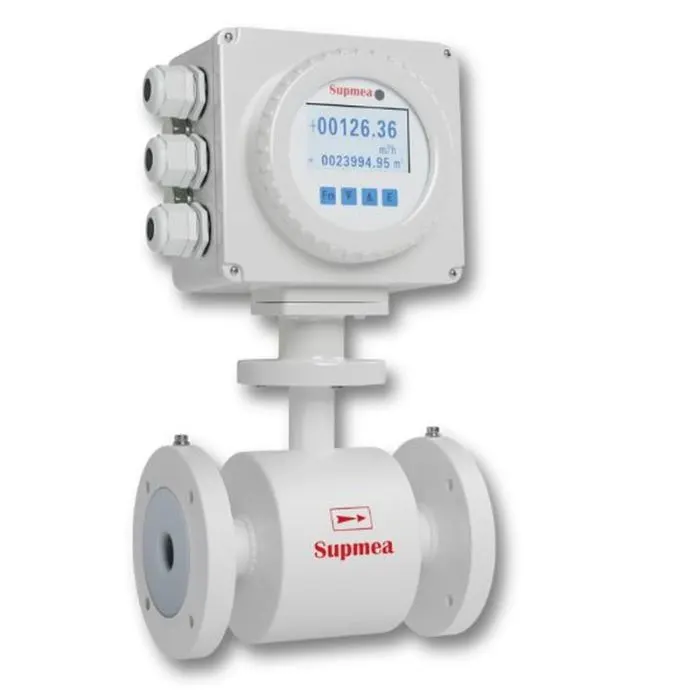
Electromagnetic Flow Meter : FMC240-1CJCMCKAMM3N6WC2020 /DN100(4")/Remote type, cable 20m
Special Price THB 30,675.00 Regular Price THB 40,900.00
Out of stock
SKU
050044
Out of stock
Delivery date: Within 30-45 days

FMC240-1CJCMCKAMM3N6WC2020, FMC240 Series, Electromagnetic Flow Meter, Magnetic Flow Meter, DN100 Flow Meter, 4 Inch Flow Meter, Remote Type Flow Meter, Cable 20m, RS485 Modbus, 4-20mA
Model: FMC240-1CJCMCKAMM3N6WC2020
Series: FMC240 Series
Type of Product: Electromagnetic Flow Meter / Magnetic Flow Meter
Size: DN100 (4")
Structure Type: Remote Type
Cable Length: 20 m
Nominal Pressure: PN ≤ 1.6 MPa
Precision: ±0.5%
Repeatability: 0.16%
Output: 4–20mA
Communication: RS485 Modbus
Power Supply: 220VAC / 24VDC
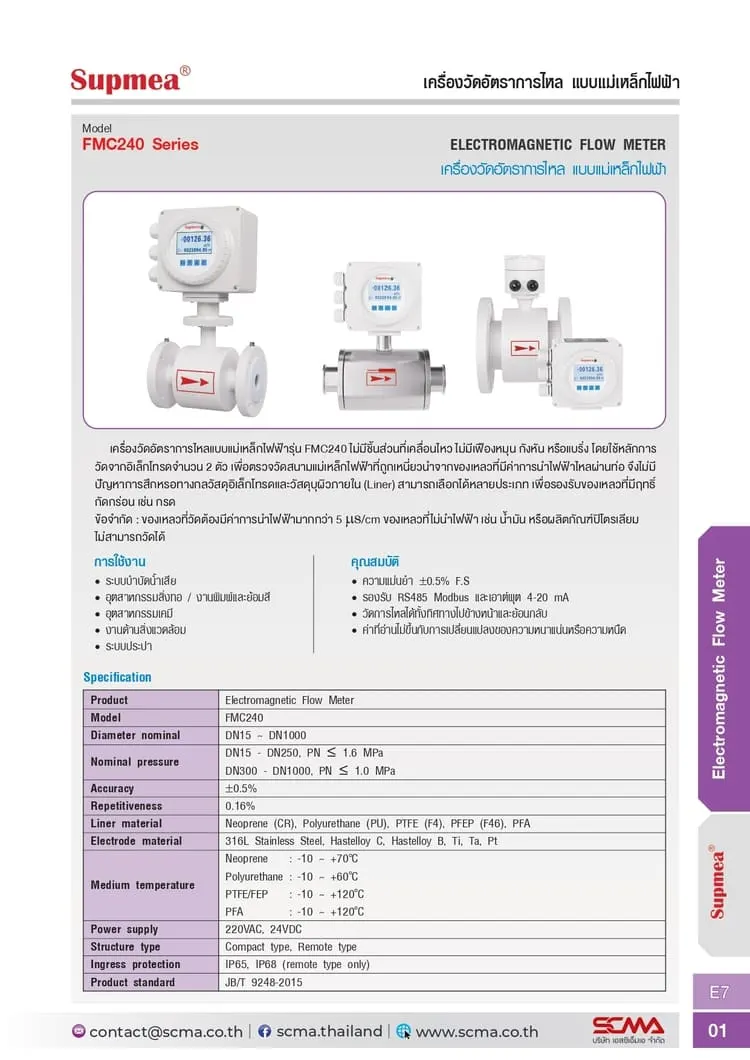
Catalog Page: E7-01
*Price does not include VAT
FMC240-1CJCMCKAMM3N6WC2020 Electromagnetic Flow Meter DN100 (4") Remote Type Cable 20 m
The FMC240-1CJCMCKAMM3N6WC2020 is an electromagnetic flow meter in the FMC240 Series, specifying a size of DN100 or 4 inches, with a Remote Type structure and a cable length of 20 meters. It is suitable for measuring the flow rate of liquids that have electrical conductivity in industrial systems.
Highlights
- Electromagnetic Flow Meter for conductive liquids
- Size DN100 (4")
- Remote Type Structure
- Cable Length 20 m
- Nominal Pressure PN ≤ 1.6 MPa
- Accuracy ±0.5%
- Repeatability 0.16%
- Suitable for Output 4–20mA
- Supports RS485 Modbus
- Able to measure flow in both forward and reverse directions
- No moving parts inside, such as gears, turbines, or bearings
Tech Specifications
- Model: FMC240-1CJCMCKAMM3N6WC2020
- Series: FMC240 Series
- Product Type: Electromagnetic Flow Meter
- Nominal Diameter: DN100
- Nominal Size: 4 inch
- Structure Type: Remote Type
- Cable Length: 20 m
- Series Size Range: DN15–DN1000
- Nominal Pressure: PN ≤ 1.6 MPa
- Accuracy: ±0.5%
- Repeatability: 0.16%
- Power Supply: 220VAC / 24VDC
- Output: 4–20mA
- Communication: RS485 Modbus
- Ingress Protection: IP65 / IP68 (Remote Type only)
- Product Standard: JB/T 9248-2015
Material Options in FMC240 Series
- Liner Material: Neoprene (CR), Polyurethane (PU), PTFE (F4), PFEP (F46), PFA
- Electrode Material: 316L Stainless Steel, Hastelloy C, Hastelloy B, Ti, Ta, Pt
Temperature Range by Liner Material
- Neoprene: -10°C to +70°C
- Polyurethane: -10°C to +60°C
- PTFE / FEP: -10°C to +120°C
- PFA: -10°C to +120°C
Applications
- Wastewater Treatment Systems
- Textile Industry
- Printing and Dyeing Work
- Chemical Industry
- Environmental Applications
- Potable Water Systems
Usage Limitations
The liquid being measured must have a conductivity greater than 5 µS/cm, as non-conductive liquids such as oil or petroleum products cannot be measured using the Electromagnetic Flow Meter principle.
Configuration Code
1CJCMCKAMM3N6WC2020
Note: The above Configuration Code is kept according to the specified product code, and the meaning of each code has not been translated because SCMA General Catalog Vol.5 page E7-01 does not clearly display a Coding Table confirming the meaning of each section.
Additional Note: DN100 (4"), Remote Type, and Cable Length 20 m are used according to the details specified in this item listing. The catalog page E7-01 confirms that FMC240 Series supports Remote Type but does not directly specify a standard cable length of 20 m in the table.
Product Information
- Model: FMC240-1CJCMCKAMM3N6WC2020
- Type: Electromagnetic Flow Meter
- Size: DN100 (4")
- Structure: Remote Type
- Cable Length: 20 m
- Nominal Pressure: PN ≤ 1.6 MPa
- Accuracy: ±0.5%
- Output: 4–20mA
- Communication: RS485 Modbus
- Catalog: SCMA General Catalog Vol.5
- Catalog Page: E7-01
Write Your Own Review
This website uses cookies
We use cookies to make the site work properly, to understand how it is used, and to show content that is relevant to you. You choose which types to allow; strictly necessary cookies are always on. Privacy Policy
🤖 AI Assistant
Ask about products, specs and replacement models
Hello 👋 Ask us anything — find products, compare specs, or troubleshoot.
🗑 Clear history