
SPECIAL PROMOTION — Up to 40% off across many product groups, until 31 December 2026 · Click to see all promotion itemsIFM, Sensor, Automation SystemMeasuring / Testing InstrumentsTemp Indicator, Control, T/C, RTD, TimerHeater, SCR Control, Solid State, Power Supply, Control CabinetField Measuring Instruments, Pressure Gauge, Level Control, Flow MeasurementEMC, Pneumatic, Solenoid ValveInspection Test Lamp, Head Light, Automotive Measuring InstrumentWeighing Scales, Marking Machine, PrintersEducational Training SystemsHot Line Tools & Equipment SPECIAL PROMOTION — Up to 40% off across many product groups, until 31 December 2026 · Click to see all promotion itemsIFM, Sensor, Automation SystemMeasuring / Testing InstrumentsTemp Indicator, Control, T/C, RTD, TimerHeater, SCR Control, Solid State, Power Supply, Control CabinetField Measuring Instruments, Pressure Gauge, Level Control, Flow MeasurementEMC, Pneumatic, Solenoid ValveInspection Test Lamp, Head Light, Automotive Measuring InstrumentWeighing Scales, Marking Machine, PrintersEducational Training SystemsHot Line Tools & Equipment View promotion items View all
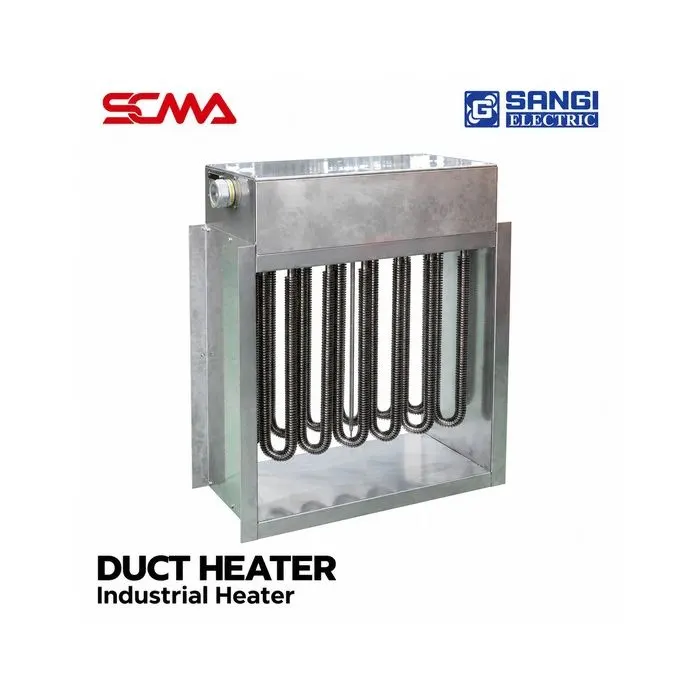
DEHUMIDIFIER DUCT HEATER SANGI ELECTRIC
Price on request – please contact us
Out of stock
SKU
051021
Out of stock

Duct Heater, SANGI ELECTRIC, Industrial Duct Heater, Electric Duct Heater, HVAC Duct Heater, Duct Heating Element, Industrial Air Duct Heater, Electric Air Heating System, Duct Mounted Heater, Air Reheat Heater, HVAC Reheat Heater, Dehumidification Reheat Heater, Relative Humidity Control Heater, Air Conditioning Duct Heater, Industrial Electric Heater, Stainless Steel Duct Heater, Galvanized Steel Duct Heater, Zinc Coated Steel Heater, Finned Heating Element, Stainless Steel Tubular Heater, Tubular Duct Heater, Industrial Process Air Heater, Cleanroom Duct Heater, Cleanroom Humidity Control, Warehouse Humidity Control, Raw Material Storage Air Conditioning, Shopping Mall HVAC Heater, Custom Made Duct Heater, Made to Order Duct Heater, Industrial Temperature Control, Air Handling Unit Heater, AHU Duct Heater, Industrial Heating Equipment, Dehumidifier Heater, Duct Fan Heater, Electric Duct Heater, Duct Heater, HVAC Heater, AHU Heater, Reheat Heater, Relative Humidity Control Heater, Finned Heater, Stainless Steel Tubular Heater, Stainless Steel Duct Heater, Galvanized Steel Heater, Cleanroom Duct Heater, Cleanroom Heater, Raw Material Storage Heater, Shopping Mall HVAC Heater, Industrial Electric Heater, Custom Made Heater, Made to Order Heater, SANGI ELECTRIC Heater, Dehumidifier Heater SANGI, Heating Equipment in Duct System
*Price does not include VAT
SANGI ELECTRIC Dehumidifying Heater (Industrial Duct Heater)
SANGI ELECTRIC Duct Heater is an electric heater designed for installation within the air ducts of HVAC and ventilation systems to heat the air flowing through the heating unit, helping to adjust temperature and control relative humidity in areas requiring climate control.
It is suitable for use in cleanrooms (Cleanroom), production material storage rooms, shopping malls, and HVAC systems of industrial buildings or factories that require controlled temperature and humidity according to process requirements.
SANGI ELECTRIC Duct Heaters come with both galvanized steel and stainless steel structures, offering options between finned heaters and stainless steel tubular heaters. The electrical power can be selected and customized according to the duct system in use.
For systems requiring reduced relative humidity, the Duct Heater can be part of a Reheat system to increase air temperature after dehumidification processes. However, heating alone does not reduce water vapor content in the air; therefore, it should be designed alongside an appropriate HVAC or dehumidification system.
General Features (Features)
- Brand: SANGI ELECTRIC
- Product Type: Industrial Duct Heater
- Electric heater for heating air within ducts
- Used for temperature and relative humidity control in HVAC systems
- Designed for installation inside cooling system ductwork
- Available with galvanized steel structure option
- Available with stainless steel structure option
- Finned heater heating element can be selected
- Stainless steel tubular heater heating element can be selected
- Electrical power selection available to suit application needs
- Suitable for customization and production according to design or sample
- Perfect for cleanrooms and humidity-controlled areas
- Can be adapted with HVAC and AHU systems designed to accommodate it
Technical Specifications (Technical Specifications)
| Specifications | Details |
|---|---|
| Brand | SANGI ELECTRIC |
| Product Name | Duct Heater |
Note: Wattage, Voltage, Duct Size, Airflow Rate and Operating Temperature must be confirmed according to the design or product quotation. The catalog does not specify these values as standard numbers for Duct Heater.
How Duct Heater Works
A duct heater operates by using electrical resistance elements to generate heat. When air from a fan system or Air Handling Unit flows through the heating element area, heat is transferred from the heater to the air, increasing the temperature of the outgoing air.
The amount of heat delivered to the air depends on the power rating of the heater, the airflow rate, the incoming air temperature, and the design characteristics of the heater unit.
Selecting the appropriate power must be in proportion to the volume of air flowing through it to achieve the desired temperature increase without overheating the heating elements beyond safe limits.
Humidity Control with Duct Heater
The control of humidity within an HVAC system is related to the temperature of the air. When increasing the temperature of the air without adding or removing moisture, the relative humidity (%RH) decreases.
A duct heater can therefore be used for reheat purposes after a cooling coil or dehumidification process to adjust the air temperature and maintain room temperature and relative humidity as per usage requirements.
However, a duct heater does not directly remove moisture from the air. To reduce actual moisture content, a separate dehumidifying system such as condensation at a cooling coil or another type of dehumidification unit must be used in conjunction with it.
Structural Material Options
| Material | Description |
|---|---|
| Galvanized Steel | A zinc-coated steel structure suitable for environments where corrosion requirements are acceptable. |
| Stainless Steel | A stainless-steel structure designed for applications requiring corrosion resistance according to the selected material grade. |
The choice of materials should consider temperature, humidity, environmental conditions, cleanliness requirements, and system corrosion characteristics. The stainless steel grade and structural thickness must be confirmed per manufacturing specifications.
Heating Element Options
| Heating Element | Description |
|---|---|
| Finned Heater | A finned heater with surface area for heat transfer to the air. |
The selection of a heating element should consider the volume of airflow, target temperature, pressure loss within the ductwork, and actual operating conditions.
Cleanroom Applications (Cleanroom Applications)
Duct Heater can be applied in cleanroom HVAC systems to support appropriate temperature and relative humidity control as per area requirements.
Usage in a cleanroom should consider material cleanliness, particulate risk, maintenance, and compatibility with air filtration systems. Specific room requirements must be reviewed before installation.
Material Storage Applications
In some manufacturing processes, the storage of materials requires controlled temperature and humidity conditions. Duct Heater can be part of an HVAC system to adjust air temperature and support relative humidity control.
The design should consider specific material storage requirements and ensure that appropriate environmental conditions are maintained throughout usage.
Use with HVAC / AHU Systems
Installing a Duct Heater within ductwork can be applied in conjunction with HVAC or AHU systems designed to accommodate it. The installation position should suit air flow patterns and temperature sensor locations.
The system must coordinate operation between heater sets, fans, cooling systems, and control systems to prevent heat accumulation when airflow decreases or fan systems stop working.
Information Required for Custom Orders (Custom Order Information)
| Required Information | Description |
|---|---|
| Duct Size | Cross-sectional size of the ductwork and installation area (mm). |
| Airflow Rate | Airflow rate, such as m³/h or CFM. |
| Inlet Air Temperature | Temperature of air entering the heater. |
| Required Outlet Temperature | Desired temperature of air leaving the system. |
| Relative Humidity Requirement | Target relative humidity level for the system. |
| Rated Wattage | Rated electrical power or the wattage designed by the manufacturer |
| Power Supply | Voltage, number of phases and system frequency |
| Structure Material | Synthetic steel or stainless steel |
| Heating Element Type | Finned Heater or Stainless Steel Tubular Heater |
| Mounting Details | Flange size, mounting holes and installation position |
| Temperature Control | Type of temperature control and required sensor |
| Safety Interlock | Airflow check system and overheat protection system |
| Drawing / Sample | Blower drawing or heater sample |
| Quantity | The quantity required for production |
Usage Examples (Applications)
- HVAC humidity control in clean room
- Air conditioning system in industrial plants
- Storage rooms requiring temperature and humidity control
- Mall air conditioning systems
- Reheat applications in HVAC work
- Building climate control systems
- Air heating within ducts
- Specially designed HVAC and AHU systems
Duct Heater Selection Guidelines
- Check the size of the ductwork and installation space
- Determine the air flow rate through the heater
- Verify the incoming air temperature and target temperature
- Calculate appropriate electrical power for heating load
- Select structural material suitable for environment conditions
- Select heating element type suitable for airflow volume
- Check pressure loss across the heater assembly
- Determine temperature sensor location and control method
- Verify electrical supply and protective devices
- Consider compatibility with dehumidification and HVAC systems
- Check accessibility for maintenance and heater replacement
Safety Precautions
- Operate according to the voltage and wattage specified by the manufacturer
- Adequate airflow must pass through the heater
- Install Airflow Interlock to prevent power supply to the heater when the fan stops or insufficient airflow is detected.
- Maintain a separate overheat protection device from the normal temperature control system.
- Design the electrical system with appropriate overcurrent protection and proper grounding.
- Check the distance from flammable materials and non-heat-resistant duct components.
- Avoid using in environments containing flammable substances or combustible dust without specific design and certification for such areas.
- Inspect terminal connections, wiring, and heating elements periodically.
- Disconnect power supply and wait for the heater to cool down before maintenance.
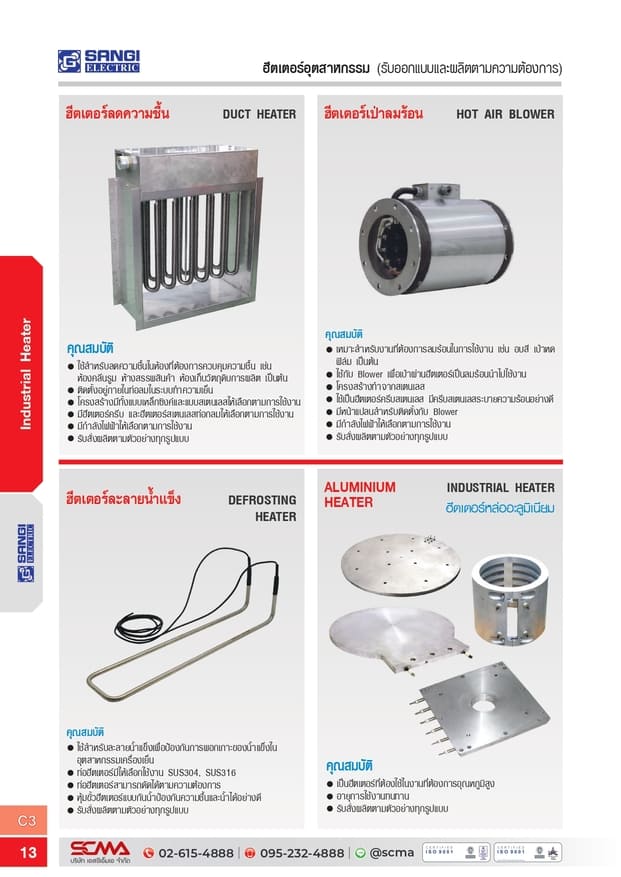
- The product is a Duct Heater designed for duct installation, not a Hot Air Heater that integrates directly with a blower.
- Metallic construction options include galvanized steel and stainless steel.
- Heater choices include fin-type heaters and stainless-steel tube heaters.
- Electrical power rating and production format must be specified according to the duct system.
- The catalog does not specify fixed values for voltage or operating temperature range.
- Heating reduces Relative Humidity but does not directly reduce water vapor content.
- Consider working in conjunction with a Dehumidification system if moisture removal from air is required.
- No confirmation yet on whether Temperature Controller, Humidity Controller, Sensor, or Airflow Switch are included in the standard set.
- Prepare duct design and airflow data before ordering production.
- Check the delivery equipment list and warranty details before purchasing.
Important Notes
Write Your Own Review
This website uses cookies
We use cookies to make the site work properly, to understand how it is used, and to show content that is relevant to you. You choose which types to allow; strictly necessary cookies are always on. Privacy Policy
🤖 AI Assistant
Ask about products, specs and replacement models
Hello 👋 Ask us anything — find products, compare specs, or troubleshoot.
🗑 Clear history