
SPECIAL PROMOTION — Up to 40% off across many product groups, until 31 December 2026 · Click to see all promotion itemsIFM, Sensor, Automation SystemMeasuring / Testing InstrumentsTemp Indicator, Control, T/C, RTD, TimerHeater, SCR Control, Solid State, Power Supply, Control CabinetField Measuring Instruments, Pressure Gauge, Level Control, Flow MeasurementEMC, Pneumatic, Solenoid ValveInspection Test Lamp, Head Light, Automotive Measuring InstrumentWeighing Scales, Marking Machine, PrintersEducational Training SystemsHot Line Tools & Equipment SPECIAL PROMOTION — Up to 40% off across many product groups, until 31 December 2026 · Click to see all promotion itemsIFM, Sensor, Automation SystemMeasuring / Testing InstrumentsTemp Indicator, Control, T/C, RTD, TimerHeater, SCR Control, Solid State, Power Supply, Control CabinetField Measuring Instruments, Pressure Gauge, Level Control, Flow MeasurementEMC, Pneumatic, Solenoid ValveInspection Test Lamp, Head Light, Automotive Measuring InstrumentWeighing Scales, Marking Machine, PrintersEducational Training SystemsHot Line Tools & Equipment View promotion items View all

DEFROSTING HEATER SANGI ELECTRIC
Price on request – please contact us
Out of stock
SKU
051023
Out of stock

Defrosting Heater, SANGI ELECTRIC, Defrost Heater, Industrial Defrosting Heater, Electric Defrost Heater, Refrigeration Defrost Heater, Refrigerator Defrost Heater, Freezer Defrost Heater, Evaporator Defrost Heater, Cooling System Defrost Heater, Industrial Refrigeration Heater, Stainless Steel Defrost Heater, SUS304 Defrost Heater, SUS316 Defrost Heater, Tubular Defrost Heater, Electric Tubular Heater, Custom Made Defrost Heater, Custom Bent Heater, Industrial Heating Element, Refrigeration Heating Element, Ice Melting Heater, Frost Removal Heater, Anti-Icing Heater, Defrost Heating Element, Moisture Protected Heater Terminal, Custom Shape Heater, Made to Order Heater, Refrigeration Equipment Heater, Cooling Equipment Heater, Industrial Electric Heater, Refrigeration Maintenance, Defrost Heating System, Defrosting Heater, Defrost Heater, Refrigerator Defrost Heater, Freezer Defrost Heater, Evaporator Defrost Heater, Cooling System Defrost Heater, Industrial Refrigeration Heater, Stainless Steel Defrost Heater, SUS304 Defrost Heater, SUS316 Defrost Heater, Electric Tubular Heater, Custom Made Defrost Heater, Custom Bent Heater, Industrial Heating Element, Refrigeration Heating Element, Ice Melting Heater, Frost Removal Heater, Anti-Icing Heater, Defrost Heating Element, Moisture Protected Heater Terminal, Custom Shape Heater, Made to Order Heater, Refrigeration Equipment Heater, Cooling Equipment Heater, Industrial Electric Heater, Refrigeration Maintenance, Defrost Heating System
*Price does not include VAT
SANGI ELECTRIC Defrosting Heater (Industrial Defrosting Heater)
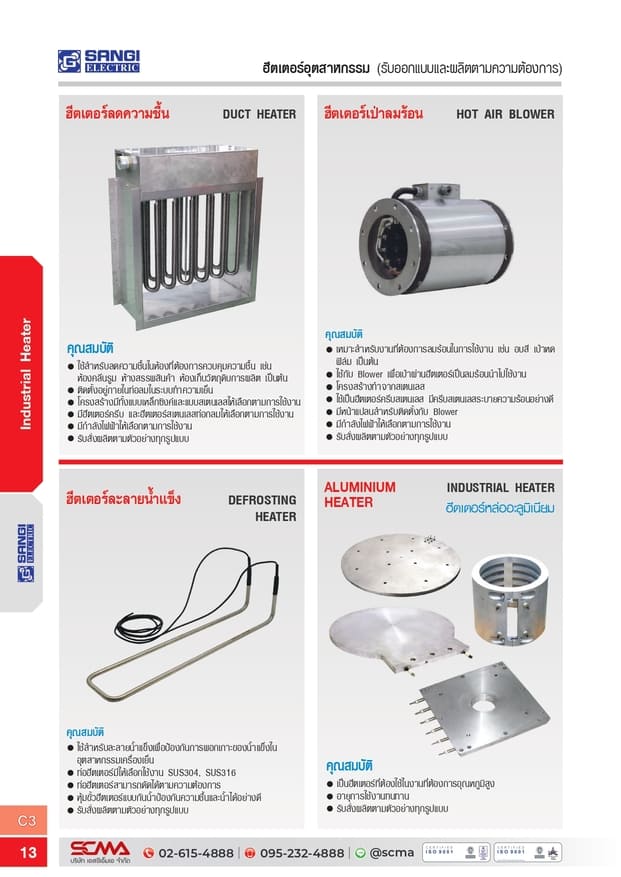
SANGI ELECTRIC Defrosting Heater is an electric heater designed for melting ice buildup in industrial refrigeration systems. It provides heat to the areas requiring defrosting and helps reduce ice accumulation on cooling equipment.
The heater comes with stainless steel tubes, available in both SUS304 and SUS316 options. The tubes can be bent into custom shapes according to specific requirements, and there is insulation around the heater terminals to minimize risks from water and moisture in the working environment.
The product supports customization based on samples or specifications to ensure appropriate sizing, shape, and electrical ratings for existing refrigeration systems or replacement equipment.
Features
- Brand: SANGI ELECTRIC
- Product Type: Defrosting Heater
- Electric heater for melting ice in refrigeration systems
- Suitable for industrial cooling applications
- Aids in melting ice and reducing ice buildup
- Offers stainless steel tube options of SUS304 and SUS316
- Tubes can be bent into custom shapes as required
- Insulates heater terminals from water and moisture
- Suitable for design according to installation area and system requirements
- Customizable based on samples or specifications
- Suitable for replacing existing heaters when specifications match
Technical Specifications
| Specifications | Details |
|---|---|
| Brand | SANGI ELECTRIC |
| Product Name | Defrosting Heater |
| Product Type | Industrial Electric Defrost Heater |
| Heating Principle | Electrical Resistance Heating |
| Application | Industrial Refrigeration / Ice Defrosting |
| Heater Tube Material | Stainless Steel SUS304 / SUS316 |
| Tube Shape | Custom Bent According to Requirements |
Note: The tube diameter, heater length, rated wattage, voltage rating, and operating temperature of the defrosting heater must be specified according to the design drawing. The catalog does not specify fixed standard values for this Defrosting Heater item.
How a Defrosting Heater Works
A defrosting heater operates by converting electrical energy into thermal energy through an electric resistance element inside the heater tube. The heat generated is transferred to the surface of the tube and then to the area where ice has accumulated, causing the ice to receive heat and melt.
The use in a refrigeration system must be coordinated with the defrost cycle sequence, considering the position of the heater, heating duration, and methods for draining water from melting ice.
Selecting an appropriate wattage requires consideration of the amount of ice, installation area, desired defrost time, and heat loss of the system.
Defrosting in Industrial Refrigeration Systems
In refrigeration systems with surface temperatures below freezing point, moisture in the air can accumulate and turn into ice on parts of the system, especially where it is exposed to humid air.
The accumulation of ice may affect airflow and the heat exchange efficiency of the refrigeration system. Using a properly designed defrosting heater helps melt ice according to scheduled cycles.
Check that the refrigeration unit structure can safely install a heater and choose a position that does not touch non-heat-resistant parts.
Heater Tube Material Options
| Material | Description |
|---|---|
| SUS304 | Stainless steel tube for general industrial applications requiring corrosion resistance in suitable environments. |
| SUS316 | Stainless steel tube with better corrosion resistance in certain conditions compared to SUS304, which should be selected based on the actual environment. |
The selection of tube material should consider water characteristics, humidity, chemicals that may come into contact with the heater, and working environment to ensure suitability for long-term use.
Heater Tube Shape Design
SANGI ELECTRIC Defrosting Heater can be bent to achieve desired shapes. The bending pattern should take into account installation space, mounting points, and areas requiring heating.
For heater replacement work, prepare drawings or sample parts for accurate inspection of bend length, overall length, and electrical terminal positions.
Bending after production must be confirmed by the manufacturer as it may affect the internal structure and insulation of the heater.
Water and Humidity Protection System at Heater Terminals
The catalog specifies that the heater has terminals wrapped to protect against moisture and water, suitable for refrigeration system environments where condensation or melting ice can occur.
However, the catalog does not specify an IP rating level, so it should not be assumed that the heater can withstand all conditions without manufacturer certification.
The terminal positions and wiring design should be appropriate for actual humidity and temperature conditions.
Selecting Electrical Power and Voltage
The power of the Defrosting Heater must match the amount of ice, heat transfer area, operating time, and cooling equipment temperature limitations.
Choose voltage to match existing power sources and check control systems for heater current capacity.
Selecting excessive power may cause nearby components to overheat, while insufficient power may result in longer than desired defrost times.
Usage with Defrost Control System
In use with refrigeration systems, the heater's operation should be synchronized with the defrost cycle by considering temperature and time control systems such as a Defrost Controller or an appropriate system for the refrigeration unit.
The continuous operation of the heater after the completion of the defrost process must be prevented, and consider shutting down when the temperature exceeds safe levels.
Details regarding control and accessories shipped with the heater must be verified from actual sales proposals.
Application Examples (Applications)
- Defrosting system in industrial refrigeration units
- Melting ice work around coils designed to accommodate it
- Refrigeration systems suffering from ice buildup issues
- Heating work to assist the defrost process
- Renovation and replacement of existing defrost heaters
- Designing a defrost system for specialized refrigeration units
Custom Order Information (Information for Custom Orders)
| Required Information | Description |
|---|---|
| Heater Type | Defrosting Heater |
| Tube Material | SUS304 or SUS316 |
| Tube Diameter | Tubular diameter (mm) |
| Heater Shape | Shape and bend length according to the model |
| Overall Dimensions | Total length, width, and height dimensions |
| Rated Wattage | Required power (W) |
| Rated Voltage | Operating voltage (V) |
| Working Environment | Temperature, humidity, and refrigeration system environment conditions |
| Terminal Protection | Water and moisture protection requirements for terminals |
| Lead Wire | Cable type and length according to requirement |
| Mounting Details | Mounting position and installation area |
| Defrost Control | Conditions for working with the Defrost control system |
| Drawing / Sample | Drawing or heater sample |
| Quantity | Desired production quantity |
Guidelines for Selecting a Defrost Heater
- Check the type and structure of the refrigeration unit
- Select SUS304 or SUS316 tubing material suitable for the environment
- Identify where ice melting is required
- Determine heater size and shape according to installation area
- Verify electrical voltage and power requirements
- Evaluate ice volume and defrosting time
- Check drainage after ice melts
- Inspect water and moisture protection around the heater terminals
- Consider Defrost control system and high-temperature safety devices
- Prepare drawings or samples for production order
Safety Precautions During Use
- Use electrical voltage as specified by the heater rating
- Avoid using the heater beyond its power capacity or temperature limits set by the manufacturer
- Check the integrity of insulation and terminals before use
- Avoid altering the shape of the heater tubing without permission from the manufacturer after production
- Install proper defrost cycle control systems
- Maintain a system to shut off power when temperature exceeds normal limits
- Ensure drainage from melted ice does not come into contact with unprotected electrical equipment
- Do not assume the heater is water-tight unless there is proof of protection level
- Provide appropriate grounding and safety devices for electricity
- Cut off power supply and wait until the heater cools down before maintenance
Important Notes Before Purchase
- The product is a Defrost Heater designed to melt ice in refrigeration systems
- Tubing material options include SUS304 and SUS316
- Piping can be bent into desired shapes
- Water and moisture protection around heater terminals as per catalog information
- Custom production based on drawings or samples is supported
Write Your Own Review
This website uses cookies
We use cookies to make the site work properly, to understand how it is used, and to show content that is relevant to you. You choose which types to allow; strictly necessary cookies are always on. Privacy Policy
🤖 AI Assistant
Ask about products, specs and replacement models
Hello 👋 Ask us anything — find products, compare specs, or troubleshoot.
🗑 Clear history