
SPECIAL PROMOTION — Up to 40% off across many product groups, until 31 December 2026 · Click to see all promotion itemsIFM, Sensor, Automation SystemMeasuring / Testing InstrumentsTemp Indicator, Control, T/C, RTD, TimerHeater, SCR Control, Solid State, Power Supply, Control CabinetField Measuring Instruments, Pressure Gauge, Level Control, Flow MeasurementEMC, Pneumatic, Solenoid ValveInspection Test Lamp, Head Light, Automotive Measuring InstrumentWeighing Scales, Marking Machine, PrintersEducational Training SystemsHot Line Tools & Equipment SPECIAL PROMOTION — Up to 40% off across many product groups, until 31 December 2026 · Click to see all promotion itemsIFM, Sensor, Automation SystemMeasuring / Testing InstrumentsTemp Indicator, Control, T/C, RTD, TimerHeater, SCR Control, Solid State, Power Supply, Control CabinetField Measuring Instruments, Pressure Gauge, Level Control, Flow MeasurementEMC, Pneumatic, Solenoid ValveInspection Test Lamp, Head Light, Automotive Measuring InstrumentWeighing Scales, Marking Machine, PrintersEducational Training SystemsHot Line Tools & Equipment View promotion items View all
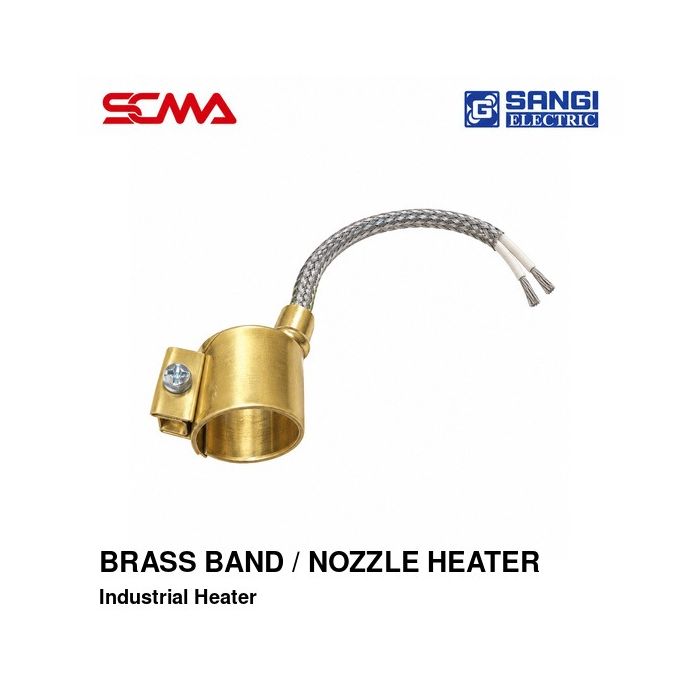
Copper Pipe Band Heater BRASS BAND NOZZLE HEATER SANGI ELECTRIC
Price on request – please contact us
Out of stock
SKU
051012
Out of stock

Brass Band Heater, Brass Nozzle Heater, Brass Band / Nozzle Heater, SANGI ELECTRIC, Industrial Brass Heater, Brass Heating Band, Brass Band Heating Element, Electric Band Heater, Nozzle Heating Element, Injection Molding Heater, Plastic Injection Heater, Injection Molding Machine Heater, Extruder Nozzle Heater, Barrel Heater, Industrial Nozzle Heater, Electric Resistance Heater, Circular Band Heater, Clamp Type Heater, Contact Heating Element, Metal Surface Heating, Custom Made Band Heater, Custom Nozzle Heater, Industrial Process Heating, Heating Band for Plastic Machine, Heater for Injection Nozzle, Heater for Cylindrical Parts, Industrial Temperature Control, Machine Heating Element, Made to Order Heater, Brass Pipe Heater, Brass Heater, Band Heater, Nozzle Band Heater, Plastic Nozzle Heater, Plastic Injection Molding Machine Heater, Plastic Extruder Nozzle Heater, Barrel Heater, Industrial Nozzle Heater, Electric Resistance Heater, Circular Band Heater, Clamp Type Heater, Contact Heating Element, Metal Surface Heating, Custom Made Band Heater, Custom Nozzle Heater, Industrial Process Heating, Heating Band for Plastic Machine, Heater for Injection Nozzle, Heater for Cylindrical Parts, Industrial Temperature Control, Machine Heating Element, Custom Order Heater, SANGI ELECTRIC Heater, Brass Band Heater, Nozzle Heater, Industrial Heating Equipment
*Price does not include VAT
SANGI ELECTRIC Brass Band / Nozzle Heater
SANGI ELECTRIC Brass Band / Nozzle Heater is an electric heater designed to wrap around brass tubes, providing heat to the outer surface of cylindrical parts. It is suitable for installation near nozzles and components of plastic injection machines as well as localized heating in industrial machinery.
This type of heater works on the principle of converting electrical energy into heat through resistive elements, transferring heat through the heater structure to the surface of the installed part, allowing targeted heating under appropriate temperature control systems.
When selecting a brass band heater, one should consider the outer diameter of the workpiece, installation area width, power requirements, voltage, and operating temperature to ensure proper adhesion to surfaces and efficient heat transfer.
Features
- Brand: SANGI ELECTRIC
- Product Type: Brass Band / Nozzle Heater
- Braided brass tube heater for industrial applications
- Heats using resistive heating principle
- Designed to wrap around cylindrical workpiece surfaces
- Suitable for nozzles of plastic injection machines
- Can be adapted for use in heating pipes and machine parts
- Aids in heat transfer through contact with the surface of the workpiece
- Select size and electrical rating according to manufacturer's specifications
- Suitable for maintenance and replacement of existing heaters on machinery
- Check model, size, and terminal configuration before ordering
Technical Specifications
| Specifications | Details |
|---|---|
| Brand | SANGI ELECTRIC |
| Product Name | Brass Band / Nozzle Heater |
| Heater Type | Electric Band Heater |
| Heater Construction | Brass Band / Nozzle Type |
| Heating Principle | Electrical Resistance Heating |
Note: The confirmed catalog verifies the type of product and application for Brass Band / Nozzle Heater; however, there is no specific numerical data available for wattage, voltage, maximum temperature, and standard size of this brass item. Therefore, details must be verified before ordering.
Principle of Operation of Brass Band / Nozzle Heater
The brass band heater operates by utilizing electrical resistance elements that generate heat when supplied with electric power. The heat is then transferred through the heater to the surface of the workpiece it contacts.
Adequate heat transfer depends on the tightness of the heater's fit against the pipe or nozzle surface, contact area size, wattage, and temperature control during operation.
The heater should be clamped tightly to the workpiece as per manufacturer specifications and checked periodically for secure mounting. Loose installation may result in poor heat transfer and overheating of the heater.
Usage with Plastic Injection Molding Machine
A plastic injection molding machine uses a heating system to control the temperature of plastic during production. The band heater can be used as a heating component at the nozzle or other parts designed for this type of heater installation.
The selection of heater size must consider the actual installation position, as plastic injection molding parts may have different diameters and mounting areas.
The desired temperature depends on the type of plastic and production process requirements; therefore, it is advisable to use heaters in conjunction with appropriate temperature control systems and temperature sensors.
Usage with Tubes and Cylindrical Parts
In addition to injection molding applications, Band / Nozzle heaters can be adapted for cylindrical parts or tube systems requiring external heating when properly selected and designed to suit the medium inside the tubes and operating conditions.
For oil or liquid transfer systems, maximum temperature, safety of the medium, and installation compliance with system requirements must be considered. It should not be assumed that all types of heaters are suitable for every type of fluid.
Selecting Heater Size (Heater Dimensions)
Critical information for selecting Brass Band / Nozzle Heaters includes the outer diameter of the tube or nozzle and the width of the area requiring heating.
| Required Dimension | Description |
|---|---|
| Inner Diameter (ID) | The inner diameter of the heater that must match the outer size of the part. |
| Band Width | The width of the heater along the tube axis. |
| Clamping Arrangement | The clamping and mounting device position arrangement. |
| Terminal Position | The terminal or wire exit position. |
| Installation Clearance | A clearance for installation and heater replacement. |
Use drawings or measure the actual part size, especially when ordering to replace existing heaters in machinery.
Electrical Power and Voltage (Wattage and Voltage)
The electrical power of the heater should be proportional to the system's thermal load and the heating surface area. Watt density on the heater surface must also be considered to avoid abnormally high temperature accumulation.
The voltage must match the actual operating electrical system, and it is advisable to check manufacturer specifications before connecting the electricity.
Do not use a heater with different voltage or wattage without engineering suitability verification.
Temperature Control
The use of band heaters should include a temperature control system, such as a Temperature Controller, along with an appropriate temperature sensor. Choose the power switch device to match the current capacity of the heater.
In high-risk applications from abnormal overheating, install a separate overheat protection system outside the normal control circuit to prevent damage to machinery and workpieces.
Order or Manufacturing Information
| Order Information | Required Details |
|---|---|
| Heater Type | Brass Band / Nozzle Heater |
| Inside Diameter | Inner diameter (mm) |
| Band Width | Band width (mm) |
| Rated Wattage | Rated power (W) |
| Rated Voltage | Voltage rating (V) |
| Working Temperature | Required working temperature (°C) |
| Electrical Connection | Terminal or wiring configuration as certified by the manufacturer |
| Terminal Position | Terminal position or wiring outlet location |
| Mounting Details | Mounting position and clamping method |
| Drawing / Sample | Drawings or heater sample |
| Quantity | Required quantity |
Applications
- To heat the nozzle of a plastic injection machine
- Heating work in plastic processing machinery
- To heat cylindrical parts
- To heat pipe systems designed to accommodate it
- To control temperature during manufacturing processes
- To upgrade or replace existing heaters on machines
- To design specialized heating systems
Installation and Usage Guidelines
- Ensure the heater size matches the outer dimensions of the workpiece
- Check cleanliness and surface condition of the installation area
- Position the heater snugly against the workpiece surface as per the manual
- Tighten the heater securely according to the manufacturer's specifications
- Avoid installation that causes excessive gaps between the heater and the workpiece surface
- Check voltage and electrical power supply to match the system requirements
- Position wiring away from hot surfaces as specified
- Verify grounding connections and electrical safety measures
- Use appropriate temperature control systems and overheat protection systems
- Periodically check the tightness of the heater installation
- Cut off power supply and wait for cooling before maintenance or replacement
- Avoid using incorrect voltage ratings
- Avoid operating the heater without proper heat dissipation
- Avoid loose clamping of the heater or uneven contact with the workpiece
- Check the tightness of clamping devices during maintenance intervals
- Select a temperature control system suitable for your manufacturing process
- Install overheat protection equipment according to job risk levels
- Avoid touching the heater when it is hot
- Inspect insulation and wiring before use
- Avoid bending or modifying pre-assembled heaters without manufacturer confirmation
- The product is a copper tube clamping heater, not a stainless steel or ceramic type heater
- Select the correct internal diameter size to fit your workpiece
- Determine the width of the heater suitable for installation space
- Check electrical power and voltage requirements before ordering
- The catalog does not specify a fixed maximum operating temperature range for this item
- Electrical connector or wiring configurations must be confirmed according to the offered product model
- A drawing or sample heater should be submitted for custom production orders or replacement parts
- The list of shipped items and warranty conditions must be verified with the supplier
Important Usage Precautions
Important Notes Before Purchase (Important Notes)
Write Your Own Review
This website uses cookies
We use cookies to make the site work properly, to understand how it is used, and to show content that is relevant to you. You choose which types to allow; strictly necessary cookies are always on. Privacy Policy
🤖 AI Assistant
Ask about products, specs and replacement models
Hello 👋 Ask us anything — find products, compare specs, or troubleshoot.
🗑 Clear history