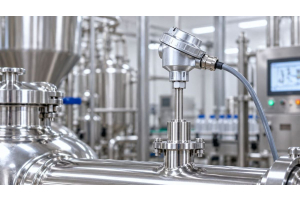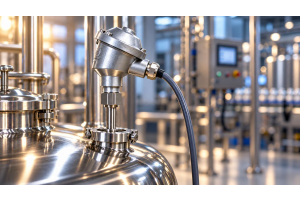

A thermostat is a crucial temperature control device in heating and cooling systems, used in homes, offices, and various industrial settings.SCMA Company specializes in thermostats and temperature control equipment, providing advice on selection, installation, and maintenance to ensure your heating and cooling systems operate efficiently and save energy.
What is a Thermostat?

A thermostat, or thermostat, is a temperature control device used in heating and cooling systems in homes, office buildings, factories, etc. It measures the ambient temperature and turns on or off the heating or cooling system to maintain the desired temperature.
What are the Benefits of Using a Thermostat?
The primary benefit of using a thermostat is its ability to control and maintain appropriate and consistent temperatures for user comfort. Additionally, it helps save energy by automatically adjusting the temperature when no one is present, such as at night or on weekends, without needing to run the system continuously for 24 hours, which significantly reduces energy costs.
Types of Thermostats
Thermostats have been around for a long time, starting as simple mechanical systems that use the expansion or contraction of metals or liquids with heat. Later, they evolved into digital systems using thermistors and electronic circuits, offering more advanced and versatile features. In this section, we will categorize thermostats into two main types.
Mercury Switch Thermostat
An old-fashioned mechanical thermostat that uses mercury to detect temperature changes; when the mercury expands or contracts with temperature changes, it opens or closes a switch. It is not commonly used nowadays due to several drawbacks such as low accuracy and inflexible settings.
Digital Thermostat
Modern thermostats use electronic sensors like thermistors to measure temperature, which is then processed by digital circuits. The advantages include high accuracy and the ability to program desired temperatures through a control screen.

What are Thermostats Used For?
Thermostats play a crucial role in controlling temperature to ensure comfort and functionality in various environments such as homes, offices, or industrial settings. They are widely applied across numerous temperature control systems, for example:
Heating, Ventilation, and Air Conditioning (HVAC) Systems
Thermostats are a vital component of HVAC systems, responsible for maintaining the desired room temperature by monitoring indoor air temperatures and turning on or off the air conditioning as needed. This ensures comfortable conditions during summer with cool temperatures and winter with warm ones.
Building Heating and Cooling Systems
In large buildings such as factories, hotels, hospitals, complex heating and cooling control systems are necessary to create suitable atmospheres and environments. Thermostats play a role in controlling the temperature of each area differently according to its use, such as meeting rooms, bedrooms, reception halls, etc., ensuring maximum comfort for different user groups.
Water Heaters
Thermostats are not only used to control air temperature but also water temperature, especially in water heaters whether gas or electric. They ensure the hot water remains at a safe temperature by preventing overheating and saving energy by turning off the heating element when the set temperature is reached.
Refrigerators and Freezers
In other cooling systems such as refrigerators and freezers, thermostats are equally important in maintaining constant internal temperatures as required to extend the preservation period of food. This is particularly crucial for retail businesses and restaurants that need to store large quantities of fresh ingredients.
Ovens and Kitchen Ranges
For kitchen appliances such as ovens and stoves, thermostats are typically designed to set temperatures according to the menu requirements. This allows for precise heat control, ensuring that food is cooked perfectly without burning or becoming too soggy. Some models of ovens may have programmable thermostats to make baking complex dishes easier.
Temperature Control Chambers for Research and Medical Use
In scientific and medical laboratories, highly accurate temperature control chambers are crucial. They rely on thermostats to maintain a constant temperature at precise decimal points of 1 or 2 degrees, which is essential for cell culture, vaccine storage, drug storage, as well as various chemical and biological tests that require specific temperatures.
Moreover, thermostats are also used in other temperature control systems such as humidifiers, pool heaters, and greenhouse temperature control systems. It is evident that thermostats play a significant role in daily life, business activities, and research and development of new technologies. Choosing and designing thermostat systems appropriately will help improve the efficiency of temperature control and optimize energy usage.

How a Thermostat Works
When a thermostat detects that the ambient temperature is higher or lower than the setpoint, it sends signals to the heating or cooling system to start operating until the temperature returns to the desired range and turns off the system when reaching the preset point.
This type of operation is called "Closed loop control," which aims to reduce the difference between the measured temperature and the desired temperature. The thermostat may perform both temperature measurement and system control simultaneously or separately.
Moreover, a good thermostat should have an anticipation feature that predicts how long it will take for the system to reach the setpoint so that the system can be turned off accurately without overshooting or exceeding the desired temperature too much.
For systems requiring higher accuracy, a PID controller or MPC controller may be used as well, but these are typically industrial systems such as electronic component manufacturing plants.
What is the Difference Between Thermostat and Temperature Controller?
Thermostats and temperature controllers both serve to control temperature but differ in details as follows:
- Thermostats are suitable for residential and general building use, controlling temperatures within a relatively narrow range of approximately 0-80 degrees Celsius. The operation is not complex and easy to set up.
- Temperature controllers are widely used in industrial applications requiring high accuracy, capable of handling a wide temperature range from below zero to several hundred degrees. The setup is more complex and can connect with various types of sensors and have multiple operating modes.
Consult SCMA for More Details About Thermostat Today!
If you are looking for thermostats and temperature control equipment for your home, office, or industrial plant, SCMA is ready to advise on selecting products that suit your needs, including installation and maintenance services. We are leaders in importing anddistributing Thermostat products from leading brands worldwide. You can trust our quality and international safety standards.
Our team is happy to provide advice, starting with initial guidance such as selecting the right type of Thermostat for your system, proper installation positioning, all the way to in-depth recommendations for high-precision work. Contact us today for more information and a quoteSCMA offers comprehensive services nationwide.

Summary
Thermostat is a fundamental yet crucial device for various temperature control systems, from home use to industrial plants. Thermostats help ensure efficient temperature control and energy savings. Selecting the right Thermostat that fits your needs and system is very important. SCMA is an expert consultant in both technical advice and product selection tailored to your requirements. Do not hesitate to contact us for more information.
Frequently Asked Questions
What is the function of a thermostat?
A thermostat's main function is to measure environmental temperature and send control signals to heating or cooling systems to maintain desired temperatures.
What does thermostatic mean?
Thermostatic refers to automatic control by a thermostat, such as a thermostatic valve which opens and closes according to the thermostat's control.
What is the function of a thermal switch?
A thermal switch or thermoswitch is simply an easy-to-use type of thermostat that operates circuits on and off based on temperature detection to prevent damage from excessive heat.
What does normally closed mean for a thermostat?
A normally closed (NC) thermostat will maintain the circuit when the temperature is below the set point and break the circuit when it rises to the specified level. In contrast, a normally open (NO) thermostat works in reverse.