
Are you facing insufficient installation space in your production line to fit standard air cylinders? SCMA understands that every inch of space in a machine is valuable. We are the leaders in pneumatic systems, providing high-quality Compact Cylinders for applications requiring high force output in limited spaces. This article will guide you through the types of usage and how to select the most cost-effective air cylinders for your investment.
What Are Compact Cylinders?
A compact pneumatic cylinder is a device that creates linear motion using compressed air, characterized by its shorter length compared to standard cylinders. This makes it easier to install in mechanisms with limited space. Currently, materials are being developed to be lighter yet stronger, such as the use of technopolymers or nylon reinforced with glass fibers which offer better corrosion resistance than aluminum.
Selecting compact air cylinders that adhere to standards like ISO 6432 ensures easy replacement parts availability in the future. Cylinders designed for high durability reduce the likelihood of on-site damage. These devices are widely used in industries such as food, textiles, and electronics assembly requiring high precision.
How Do Compact Cylinders Work?
The mechanism relies on compressed air pressure flowing into the cylinder chamber to push the piston rod out over a specified stroke length. When retraction is required, the system controls air flow into the opposite side of the piston while exhausting the original air to atmosphere. This movement creates either pushing or pulling force to drive machine components.
The key to its operation lies in precise control through pneumatic distributors or Solenoid Valves. The airflow must be consistent for smooth piston rod movement. Designing these compact cylinders focuses on reducing internal friction to achieve maximum efficiency despite their small size.
How Many Types of Compact Cylinders Are There?
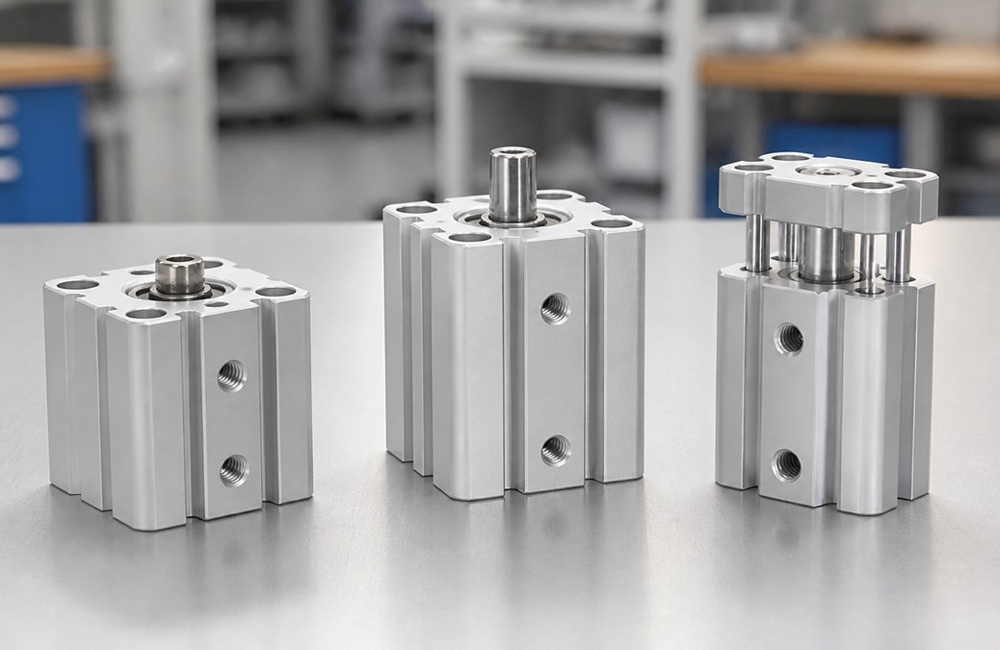
Currently, there are several designs of compact air cylinders available to accommodate different job requirements. These can be categorized based on their structure and primary operating systems as follows:
Piston Cylinder (Piston Type)
This model operates by the reciprocating motion of the piston rod when compressed air is applied, creating pulling and pushing forces to convert pneumatic energy into mechanical work in automatic systems.
Membrane Cylinder (Diaphragm Type)
Favored for specialized control applications requiring high speed or extremely limited installation spaces. The internal membrane helps regulate flow and provides excellent leak prevention for certain industrial tasks.
Single Acting (Single-Direction Type)
This mechanism applies air pressure to one side only to extend the rod, while retraction uses a spring or external force. Suitable for simple pressing or clamping jobs that do not require much return pulling force.
Double Acting (Bi-directional Type)
This model accepts air pressure from both sides to allow the piston rod to move in and out freely. It offers high efficiency and is most commonly used where continuous operation and speed are required on production lines.
What Are Compact Cylinders Used For?
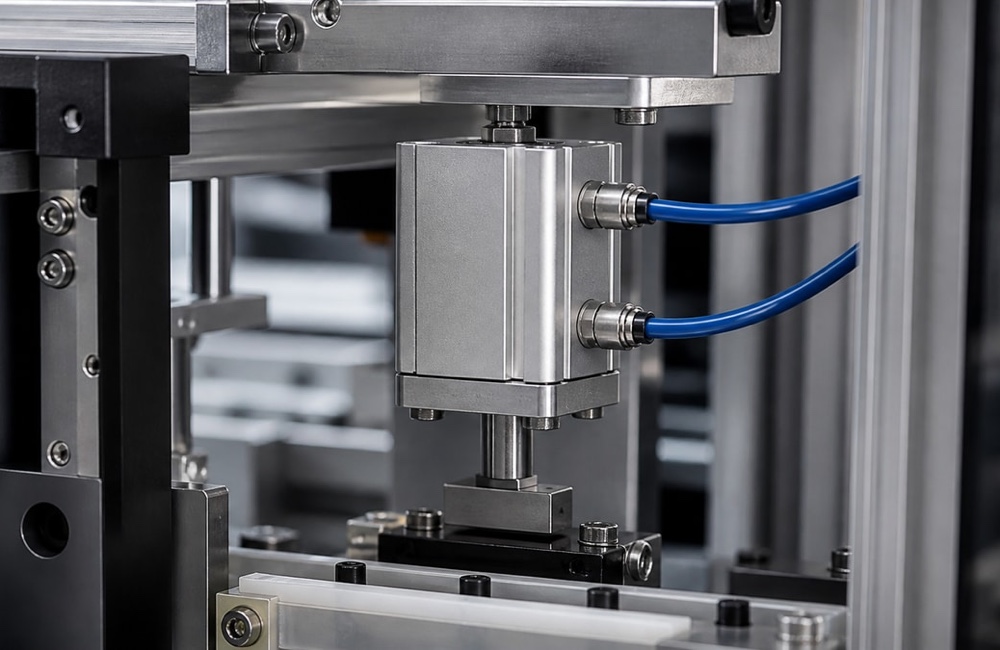
Despite their small size, they offer control and linear actuation performance that is no less than larger models. Real-world applications in factories include:
- Belt Conveyor Systems: Used to stop or change the direction of workpieces
- Food Industry: Used for bottle packaging and handling materials requiring high cleanliness
- Automated Assembly: Used to sort electronic components or automotive parts
- Specialized Machinery: Drilling, lifting, or shaking for material grading
- Robotic Technology: Serve as small Actuators in joints or grippers
The compact double-acting pneumatic cylinder is chosen for tasks requiring the lifting or lowering of loads and work that requires constant pressure during both forward and reverse strokes.
Advantages of Small Compact Cylinders
Moving to use smaller pneumatic cylinders greatly enhances design flexibility, reduces overall structural weight, and increases installation versatility in multiple directions. This allows manufacturers to arrange equipment in limited spaces without sacrificing driving power.
When workspace is constrained, using standard cylinders may make machinery bulky and less efficient. Using Compact Cylinders can reduce the machine's footprint by up to half, resulting in denser production lines and higher profitability per square meter.
Maintaining Compact Cylinders for Long-Term Use
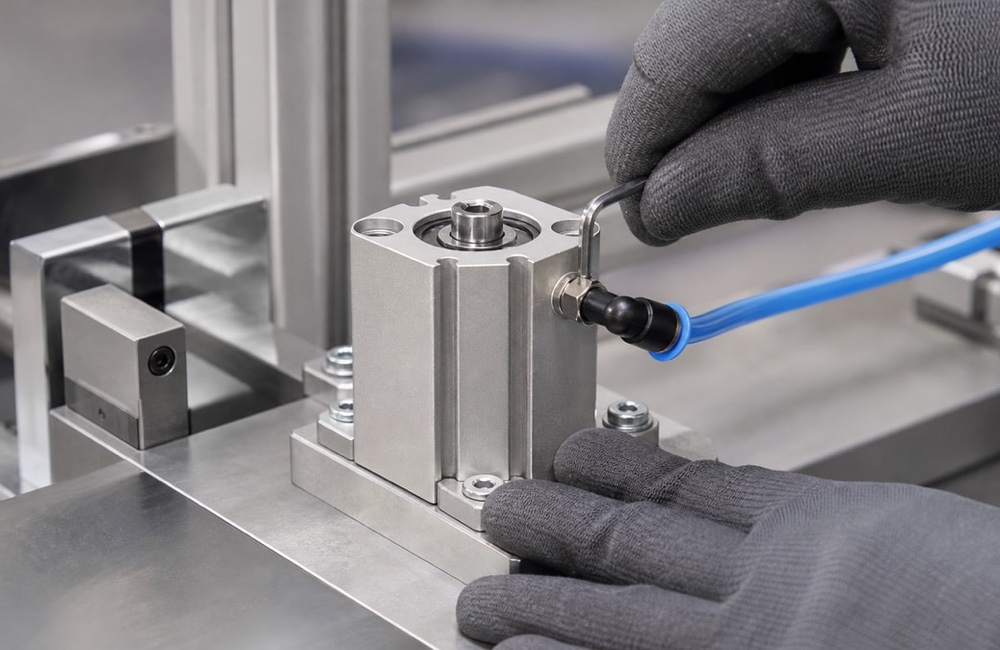
To ensure stable operation of pneumatic systems and reduce downtime, it is important to focus on the following maintenance:
- Air Quality: Install an air quality improvement kit to filter out water and dust that could damage internal rubber seals.
- Lubrication: Check that there is sufficient and appropriate lubricant for the type of cylinder.
- Installation: Inspect mounting brackets and screws to ensure they are tight, preventing vibrations that may cause bending of the piston rod.
- Leak Checking: Regularly listen for air leaks at joints and seals around the cylinder head.
If you want to purchase Compact Cylinders, SCMA is now available!
If you are looking for reliable pneumatic equipment, SCMA is the answer. We have a team of experts ready to provide consultation through online channels to help you select cylinders that best match your machine specifications. Every item is carefully selected from global brands, ensuring that your production line will operate smoothly without interruption.
We offer comprehensive services ranging from product recommendations to quick online technical support Our Services, ready to meet all your needs. Our range of Compact Cylinders comes in a variety of diameters and stroke lengths, delivered directly to factories nationwide to help you solve space and performance issues.
Summary
Compact Cylinders are excellent tools for addressing spatial limitations in industries. They are lightweight and highly durable. Choosing the right type whether it is Single Acting or Double Acting, can truly enhance production efficiency. For precise solutions and quality spare parts, contact SCMA immediately for online technical advice.
Frequently Asked Questions
How do Compact Air Cylinders differ from Standard Air Cylinders?
The main difference is the length of the body; Compact cylinders are much shorter to fit in tight spaces while still providing the same pushing force according to the piston size.
When should Single Acting Air Cylinders be used?
They are suitable for applications requiring one-way pushing force and limited space, such as locking workpieces or lifting light loads that can return by a spring.
Which material is most resistant to corrosion?
We recommend air cylinders made of stainless steel or reinforced glass nylon (Technopolymer) which offer better resistance to chemicals and moisture compared to aluminum.
Why should you choose brands with ISO standards?
To ensure that replacement parts or accessories, such as mounting brackets, can be immediately sourced without the need for machine modifications.
Does SCMA offer fast shipping when purchasing air cylinders?
We have an efficient inventory management system and are able to deliver products quickly to your factory, reducing downtime waiting for spare parts.




