
SPECIAL PROMOTION — Up to 40% off across many product groups, until 31 December 2026 · Click to see all promotion itemsIFM, Sensor, Automation SystemMeasuring / Testing InstrumentsTemp Indicator, Control, T/C, RTD, TimerHeater, SCR Control, Solid State, Power Supply, Control CabinetField Measuring Instruments, Pressure Gauge, Level Control, Flow MeasurementEMC, Pneumatic, Solenoid ValveInspection Test Lamp, Head Light, Automotive Measuring InstrumentWeighing Scales, Marking Machine, PrintersEducational Training SystemsHot Line Tools & Equipment SPECIAL PROMOTION — Up to 40% off across many product groups, until 31 December 2026 · Click to see all promotion itemsIFM, Sensor, Automation SystemMeasuring / Testing InstrumentsTemp Indicator, Control, T/C, RTD, TimerHeater, SCR Control, Solid State, Power Supply, Control CabinetField Measuring Instruments, Pressure Gauge, Level Control, Flow MeasurementEMC, Pneumatic, Solenoid ValveInspection Test Lamp, Head Light, Automotive Measuring InstrumentWeighing Scales, Marking Machine, PrintersEducational Training SystemsHot Line Tools & Equipment View promotion items View all
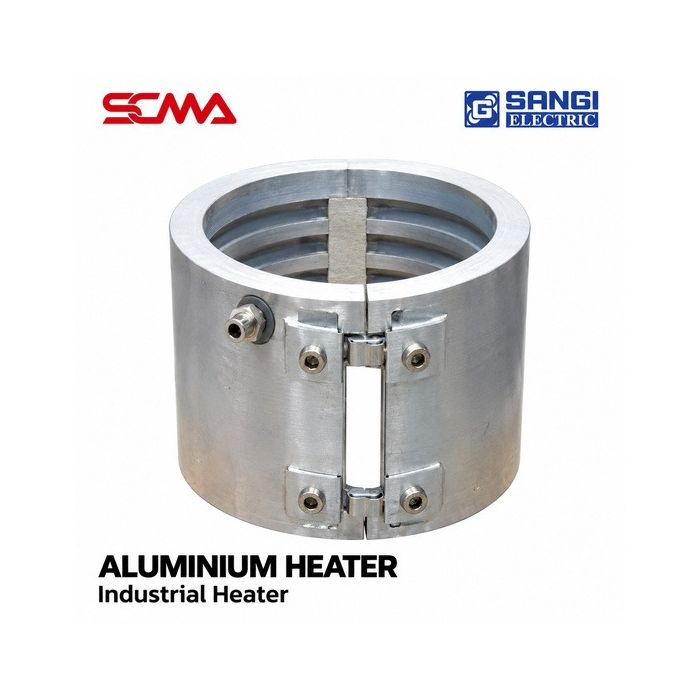
ALUMINIUM HEATER INDUSTRIAL HEATER SANGI ELECTRIC
Price on request – please contact us
Out of stock
SKU
051024
Out of stock

Aluminium Industrial Heater, SANGI ELECTRIC, Aluminum Industrial Heater, Cast Aluminium Heater, Cast Aluminum Heater, Aluminium Heater, Aluminum Heater, Industrial Aluminium Heater, Cast-In Heater, Cast Aluminium Heating Element, Industrial Electric Heater, Electric Resistance Heater, Industrial Heating Element, High Temperature Industrial Heater, Cast Metal Heater, Aluminium Heating Block, Aluminum Heating Block, Industrial Process Heating, Machine Heating Element, Industrial Temperature Heating, Contact Heating Element, Custom Made Aluminium Heater, Custom Cast Heater, Custom Industrial Heater, Made to Order Heater, Industrial Surface Heating, Aluminium Heater Assembly, Machinery Heater, OEM Industrial Heater, Industrial Heating Equipment, Process Temperature Control, Cast Aluminium Electric Heater, Heater Cast Aluminium, Heater Cast Aluminum, Heater Aluminium, Heater Aluminum, Electric Heater, Industrial Heater, Cast Aluminium Heater, Heater for High Temperature, Machine Heating Heater, Workpiece Heating Heater, Heater for Production Process, Industrial Machine Heater, Custom Heater, Heater Made to Order, Heater Made to Sample, Cast Heater Made to Order, SANGI ELECTRIC Heater, Aluminium Industrial Heater Heater, Cast Aluminium Heater, Industrial Heating Equipment
*Product price does not include VAT
SANGI ELECTRIC Aluminium Industrial Heater (Aluminium Industrial Heater)
SANGI ELECTRIC Aluminium Industrial Heater is a cast aluminium heater designed for high-temperature heating applications in industrial machinery and manufacturing processes. It is specifically engineered to meet the requirements of high temperature and durability.
This type of heater uses an aluminum casting structure to transfer heat from the heating element to the desired area, with shapes and sizes that can be customized according to production specifications to fit specific machine components or structures.
The SANGI ELECTRIC product supports custom manufacturing in various forms, suitable for machinery design projects, maintenance work, and replacement of existing heaters requiring specific dimensions and shapes.
When selecting this product, consider factors such as electrical power, voltage, required temperature, heat transfer area size, and installation methods to ensure proper and safe operation.
Features
- Brand: SANGI ELECTRIC
- Product Type: Aluminium Industrial Heater
- Cast aluminium electric heater
- Suitable for industrial heating applications
- Designed for high-temperature work requirements
- Has a structure that emphasizes durability
- Uses an aluminum casting structure to transfer heat
- Can be applied to machine and industrial component heating tasks
- Supports custom manufacturing in various forms
- Size and shape can be determined according to installation requirements
- Suitable for machinery design projects and heater replacement work
- Custom production is possible based on user needs within the limits of manufacturing capabilities
Technical Specifications
| Specifications | Details |
|---|---|
| Brand | SANGI ELECTRIC |
| Product Name | Aluminium Industrial Heater |
| Alternative Name | Cast Aluminium Heater / Cast Aluminum Heater |
| Product Type | Industrial Electric Heater |
Note: The catalog specifies that it is a heater for high-temperature applications requiring durability, but does not specify the maximum temperature, rated wattage, voltage or standard dimensions numerically. These must be confirmed according to the approved design or product details provided.
Principle of Operation of Cast Aluminium Heater
The cast aluminium heater operates on the principle of converting electrical energy into thermal energy through resistive elements within the heating unit. The heat is then transferred via the aluminum structure to the area or workpiece requiring heating.
Aluminum is a material with excellent thermal conductivity properties, making it suitable for use as a heat transfer structure in heaters designed to distribute heat across contact surfaces according to installation requirements.
The efficiency of heat transfer depends on the size of the contact area, internal structure, electrical power, operating temperature, and installation conditions of the heater with the workpiece.
Cast Aluminium Construction
A key feature of this type of heater is the use of cast aluminium as part of its construction, allowing for design customization to fit specific production requirements of parts or machinery.
The casting structure is suitable for applications requiring heaters with unique shapes, enabling consideration of installation positions, contact areas, and wiring spaces from the design stage onwards.
However, the ability to produce shapes, wall thicknesses, and heating element placements must be verified by the manufacturer before confirming the design.
Industrial Process Applications
The Aluminium Industrial Heater can be applied to industrial machinery heating systems that require heat transfer through metal parts or direct contact areas as per design specifications.
Examples of applications include heating machine components, maintaining equipment temperature, and heating processes requiring heaters with specific shapes.
For use with molds, plastic processing machines, or specialized heating units, the structure and coordinates of the heater must be checked for suitability before selection.
Heater Wattage Selection
The determination of heater wattage should consider the thermal load of the system, which depends on the mass of the workpiece, initial temperature, target temperature, desired heating time, and heat loss to the environment.
In addition, the heat density (Watt Density) over the heat transfer area must be considered to ensure that the electrical power is appropriate for the size of the heater and its installation characteristics.
Selecting a wattage higher than the heat dissipation capability may result in abnormal temperature accumulation and affect the lifespan of the heater.
Rated Voltage Selection
The rated voltage of Aluminium Industrial Heater must match the power supply system of the machinery and the design specifications by the manufacturer.
Do not replace heaters with different voltages without verifying electrical power, current, and control system compatibility.
Casting Aluminium Heater Installation
The installation should consider the smoothness of the contact surface, mounting position, and material expansion when heated to ensure that the heater can properly transfer heat to the workpiece.
The electrical terminal positions and wiring should be designed to be away from areas with excessive heat beyond the insulation rating, as well as accessible for maintenance or replacement safely.
Temperature Control
The use of a heater in machinery systems should include a Temperature Controller along with an appropriate temperature sensor to control the workpiece or system temperature according to specifications.
For tasks that pose risks from abnormally high temperatures, an overheat shutdown system should be installed separately from the normal temperature control circuit based on process risk levels.
The catalog does not confirm that a Temperature Controller and Temperature Sensor are included in the heater set, so it is necessary to check the equipment list before ordering.
Custom Order Information
| Required Information | Description |
|---|---|
| Heater Type | Aluminium Industrial Heater |
| Heater Shape | The desired shape to be produced |
| Overall Dimensions | Total length, width, height, and thickness (mm) |
| Contact Surface | Nature of the surface area in contact with the workpiece |
| Rated Wattage | Rated power (W) |
| Rated Voltage | Operating voltage (V) |
| Working Temperature | Required operating temperature (°C) |
| Mounting Details | Mounting hole positions and installation method |
| Electrical Connection | Terminal type and wiring position |
| Operating Environment | Environmental conditions and usage limitations |
| Temperature Control | Temperature control system requirements |
| Drawing / Sample | Drawing or heater sample |
Applications
- Heating industrial machinery parts
- Surface heating systems for equipment
- Metal part temperature control applications
- Heat generation in manufacturing processes
- Designing heating systems for specific machines
- Replacing existing heaters according to specifications
- Research and development of industrial heating systems
Selecting an Aluminium Industrial Heater Guide
- Determine the operating temperature and maximum system temperature
- Check the size and shape of the installation area
- Calculate electrical power based on heat load requirements
- Verify Watt Density to match the heating surface area
- Select voltage that matches the power supply system
- Determine mounting hole positions and installation patterns
- Consider material expansion due to heat
- Specify terminal positions and wiring routes
- Design temperature control and overheat protection systems
- Prepare drawings or sample parts for manufacturer review
Safety Precautions
- Use the specified voltage as per the manufacturer's rating
- Avoid operating the heater beyond its certified temperature range
- Install temperature control and overheat protection systems based on job risk
- Verify aluminum material suitability for the working environment
- Avoid impacts or structural modifications without confirmation from the manufacturer
- Ensure proper grounding system and electrical safety equipment are in place
- Avoid touching the heater when it is hot
- Inspect wiring, terminals, and insulation during maintenance checks
- Cut off power supply and wait for the heater to cool down before removal or repair
Important Notes Before Purchase
- This item is an Aluminum Industrial Heater of aluminum casting type
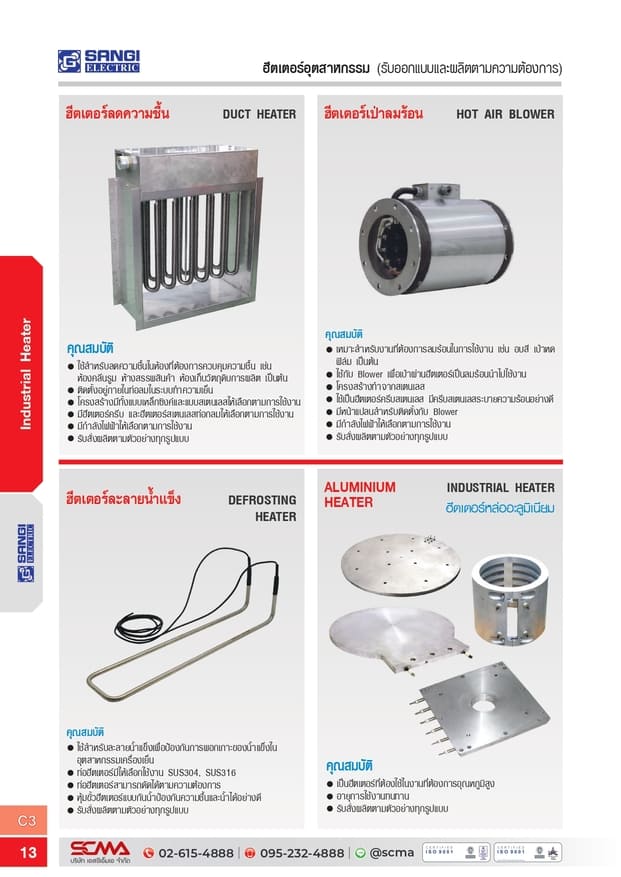
- Different from Duct Heater and Hot Air Blower, though in the same product category
- The catalog specifies high-temperature applications but does not provide maximum temperature values
- Product durability matches the information provided in the catalog
- Multiple custom manufacturing options are supported
Write Your Own Review
This website uses cookies
We use cookies to make the site work properly, to understand how it is used, and to show content that is relevant to you. You choose which types to allow; strictly necessary cookies are always on. Privacy Policy
🤖 AI Assistant
Ask about products, specs and replacement models
Hello 👋 Ask us anything — find products, compare specs, or troubleshoot.
🗑 Clear history