
Flow Meter measures water or a device for measuring the flow rate of water is an important tool that helps industrial plants manage and control water efficiently. In this article, we will introduce you to Flow Meter Water from its working principle, types, to how to choose it appropriately based on business needs. The information presented here is based on standard flow measurement principles.
What is a Flow Meter that measures water?
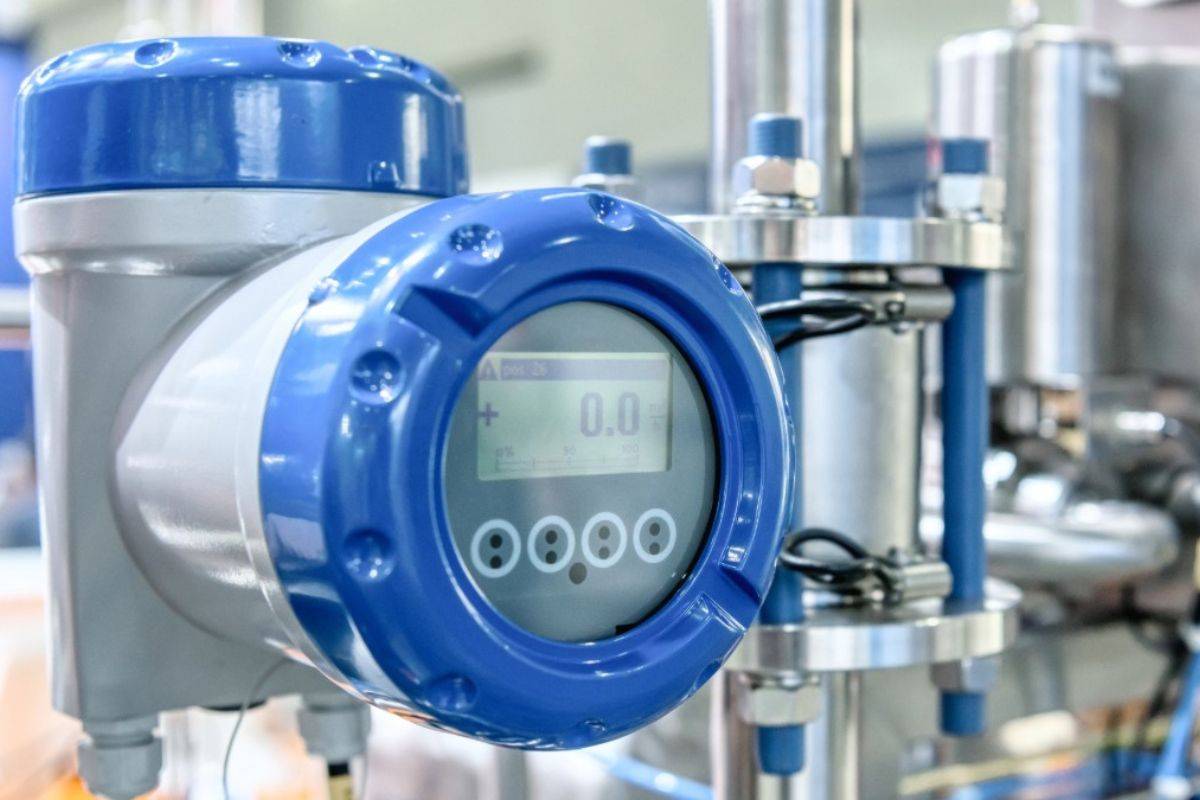
A Flow Meter that measures water, or Water Flow Meter in English, is a tool designed to measure the volume, quantity, or rate of movement of water flowing through pipes or various pipe systems in factories. This meter provides important information such as flow rates per minute, hourly flow rates, or total water usage.
The main function of a Flow Meter is to measure and track water usage in factories to appropriately allocate water resources, reduce costs, and increase production efficiency. Additionally, it helps detect leaks and maintain the water system.
How does a Water Flow Meter work?
The operation of a Water Flow Meter varies depending on the type and technology used, but the basic principle lies in measuring the speed or rate of movement of water passing through the measurement point.
General principles of flow meters:
-
Measure the speed of water flow
-
Calculate volume from pipe cross-sectional area and velocity
-
Display results as flow rate (e.g., liters per minute) or cumulative quantity
For volumetric flow measurement, units of m³/s (cubic meters per second) are used and can be calculated from the equation Q = V × A where Q is the flow rate, V is the velocity, and A is the cross-sectional area of the pipe.
Types of Water Flow Meter
Water flow meters come in various types, each with its own strengths and suitability for different applications. The following are the main types commonly used in industries:
1. Electromagnetic Flow Meter (Electromagnetic)
This type of meter operates on Faraday's law of electromagnetic induction. When electrically conductive water flows through a magnetic field, it generates an electrical voltage that is directly proportional to the flow velocity. For more details about Electromagnetic Flow Meter, please refer to the link.
Advantages of Electromagnetic Water Flow Meters:
-
High accuracy
-
No pressure drop
-
Suitable for wastewater and dirty water
-
Works with liquids that have electrical conductivity
Limitations:
-
Only suitable for electrically conductive water (conductivity not less than 5 microsiemens)
-
Water must always be full in the pipe
2. Ultrasonic Flow Meter (Ultrasonic)
This type of meter uses high-frequency sound waves to measure water velocity, with two main operating principles: Doppler and Transit Time.
Advantages of Ultrasonic Water Flow Meters:
-
No pipe cutting or production stoppage required
-
No contact with water
-
Suitable for large pipes
-
Easy to install and maintain
Suitable for:
Measuring water in large pipes
-
Jobs that require easy installation
-
Temporary measurement or inspection
3. Turbine Flow Meter (Turbine)
The Turbine Flow Meter is one of the most commonly used types for measuring water. This meter uses a spinning turbine that rotates with the flow of water, and its speed varies proportionally to the flow rate.
Advantages of Turbine Flow Meters:
-
Cost-effective
-
High accuracy
-
Suitable for measuring clean water
-
Fast response time
Limitations:
-
Not suitable for water with sediment or debris
-
Requires periodic maintenance of the turbine blades
4. Positive Displacement Meter
This meter works by dividing water into fixed volume segments and counting the number of segments that pass through.
Advantages:
-
Very high accuracy
-
Suitable for precise volume measurement
-
Independent of flow pattern
5. Differential Pressure Flow Meter
This meter uses the principle of measuring pressure difference before and after a restriction point, such as an orifice plate.
Advantages:
-
Durable and robust
-
Cost-effective
Suitable for high-temperature use
6. Vortex Flow Meter
This type of flow meter uses the principle of vortex generation or swirling motion of fluid when passing through an obstruction.
Suitable for:
-
Hot water
-
Water with low electrical conductivity
-
Measurement requiring durability
Factors Affecting the Selection of Water Flow Meter
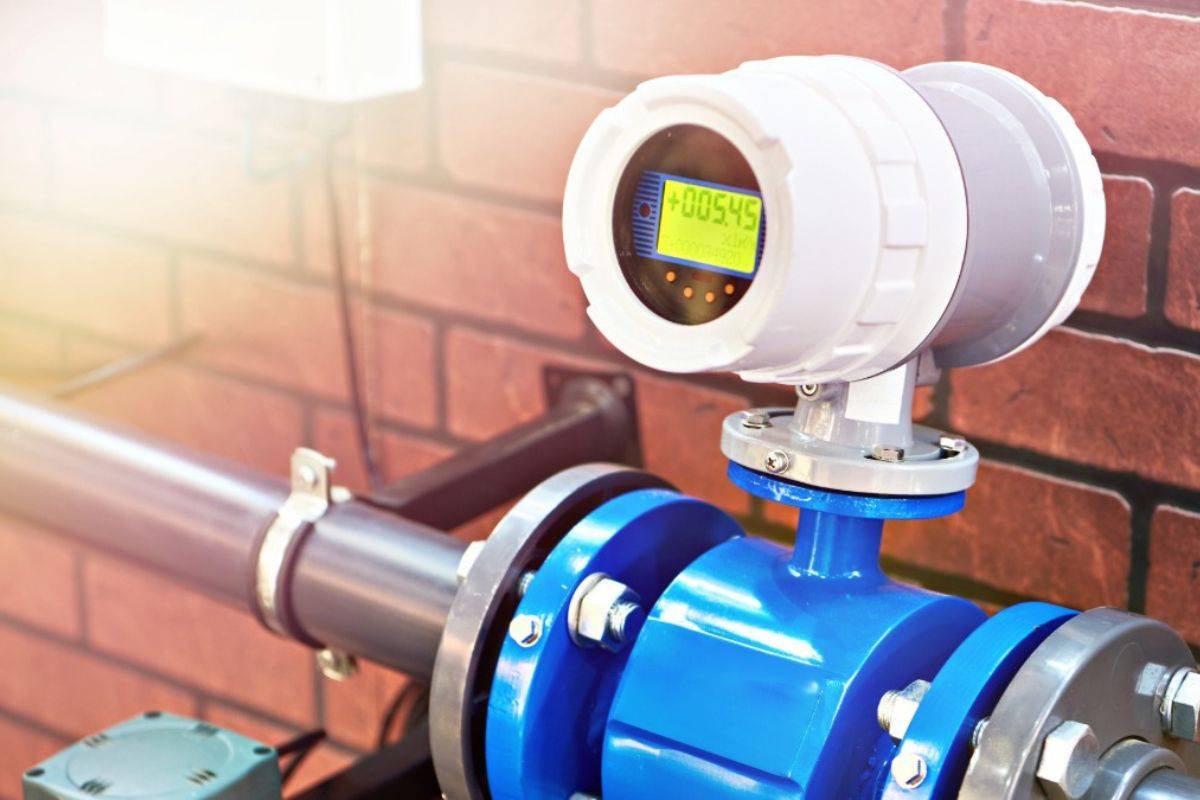
Selecting an appropriate water flow meter requires considering various factors that may affect the performance of the measuring device:
Temperature of Water
Water temperature affects viscosity, density, and other properties of water, which can impact measurement accuracy. Some meters can operate at high temperatures, while others have limitations.
Viscosity of Water
The viscosity or thickness of the water will affect flow resistance. If the water has a high viscosity, more pressure may be required to make it flow compared to normal conditions, and this can influence the choice of flow meter type.
Cleanliness of Water
Water containing sediment, foreign objects, or chemical mixtures may not be suitable for certain types of meters. It is necessary to choose a meter that can operate under such water conditions.
Usage of Water Flow Meter in Industries
Water flow meters play a crucial role in various industries as follows:
Production Process Control
-
Measure the amount of water used in production
-
Control the ratio of mixtures
-
Maintain product quality consistently
Water Resource Management
-
Monitor water usage in each department
-
Analyze water consumption for planning purposes
-
Reduce water costs
System Inspection
-
Detect leaks in the pipe system
-
Monitor pump efficiency
-
Maintain water piping systems
Wastewater Treatment
-
Measure incoming and outgoing wastewater
-
Control chemical dosing in treatment processes
-
Check the efficiency of the treatment system
Industries Using Flow Meters to Measure Water
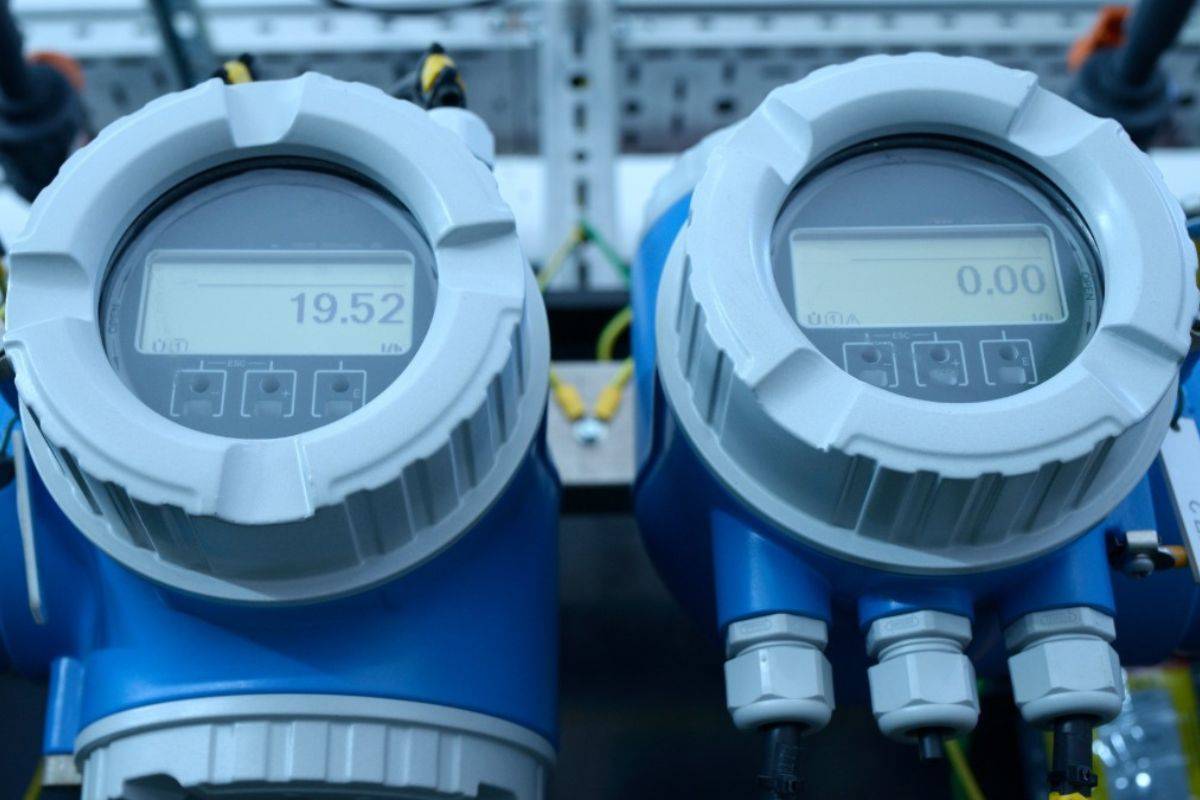
Water flow meters are used in a variety of industries:
Food and Beverage Industry
-
Control water quantity during production
-
Maintain quality and taste
-
Equipment cleaning
Chemical and Petrochemical Industry
-
Chemical mixing
-
Cooling systems
-
Safety systems
Paper Manufacturing Industry
-
Pulp production process
-
Cleaning and washing systems
-
Humidity control
Automotive Industry
-
Cooling systems
-
Component cleaning
-
Quality testing system
Power Plants
-
Boiler feedwater systems
-
Cooling systems
-
Steam production
How to Choose the Right Flow Meter for Water Measurement
Choosing an appropriate Water Flow Meter requires considering several factors to ensure you get a measuring device that meets your needs and provides the best value:
Consider the Type of Water
-
Clean water, tap water, or distilled water
-
Wastewater or contaminated water
-
Water with chemical additives
-
Hot or cold water
Determine the Desired Measurement Range
-
Minimum and maximum flow rates
-
Required accuracy
-
Response time of the measuring device
Usage Environment Conditions
-
System temperature and pressure
-
Acidic or alkaline environment conditions
-
Installation area and accessibility
Budget and Value for Money
Each type of flow meter has different pricing:
-
Cost of the measuring device and accessories
-
Installation costs and maintenance fees
-
Service life and warranty coverage
Maintaining Water Flow Meters
To ensure the efficient operation of water flow meters, regular maintenance is necessary:
Regular Inspection
-
Check measurement accuracy
-
Clean sensors and measuring heads
-
Inspect wiring and connections
Calibration
-
Perform calibration at specified intervals
-
Use standard equipment for calibration
-
Record calibration results as evidence
Problem Solving
-
Identify and quickly resolve issues
-
Replace damaged parts
-
Adjust settings appropriately
Which Flow Meter is Right for Your Application?
Selecting the right flow meter depends on your specific application:
For clean water: Turbine Flow Meters are a good choice due to their affordability and accuracy.
For wastewater: Electromagnetic Flow Meters are ideal as they have no moving parts and can withstand contaminants.
For large pipes: Ultrasonic Flow Meters are a great option because of easy installation without production downtime.
For high-accuracy measurements: Positive Displacement Meters or Coriolis Flow Meters provide the most accurate results.
Flow Meter from SCMA for High-Quality Water Measurement
SCMA Company Limited is ready to be your trusted technical partner at every step of selecting and installing Flow Meters. With over four decades of experience in the automation industry, we understand the needs of customers across all industries. We offer comprehensive services from consultation to maintenance.
Service Beyond Sales
Consultation and system design, SCMA's team of expert engineers will analyze and design automation systems specifically for each industry, including recommending Water Flow Meters that fit your budget and production goals.
Installation and after-sales service, we provide installation services for Industry 4.0 and Smart Factory production control systems, along with comprehensive after-sales services covering maintenance, system updates, and timely problem-solving.
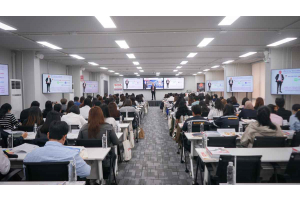
Training and technology transfer, with a seminar room of 600 square meters that can accommodate over 200 trainees, we organize free seminars for customers and conduct specialized group training (In-house Training) to enhance automated production levels.
Quality Products from Leading Brands
SCMA is the official sole distributor of ifm electronic products from Germany in Thailand, as well as other carefully selected world-class brands. Our product range covers all types of sensors, highly accurate measuring instruments, IO-Link control and communication systems, to complete automation equipment.
Customers Trusting SCMA
We have customers in leading industries across the country, including automotive, food and beverage, cement, paper, steel, plastic and rubber, alternative energy, packaging, water industry, chemical, and wood industries. This reflects our expertise and reliability.
Summary
A water flow meter is a crucial tool that helps control and manage water usage in industrial plants. The main types commonly used include Electromagnetic, Ultrasonic, Turbine Flow Meter, and Positive Displacement meters. Each type has its own unique advantages. Selection should consider the type of water, measurement range, and environmental conditions. Regular maintenance will help maintain accuracy and extend service life. For consultation on water flow meters, SCMA is ready to provide comprehensive services with over 4 decades of experience.
Frequently Asked Questions
Which type of water flow meter is suitable for wastewater?
An Electromagnetic Flow Meter is the most appropriate choice for wastewater because it has no moving parts that can be obstructed by foreign objects, is resistant to chemicals, and provides high accuracy even in turbid water. It also does not affect system pressure.
What is the price range of a water flow meter?
Prices vary depending on type and size. A Turbine Flow Meter starts at approximately 15,000-50,000 THB, an Ultrasonic Flow Meter ranges from 80,000-200,000 THB, and an Electromagnetic Flow Meter costs between 100,000-500,000 THB depending on pipe size and required accuracy.
How often should a water flow meter be calibrated?
It is recommended to calibrate once or twice a year, or as per industry standards. For high precision work, calibration every 6 months may be necessary. Regular calibration helps maintain accuracy and extend the life of the measuring instrument.