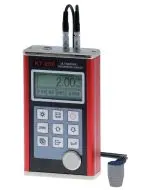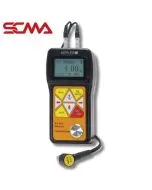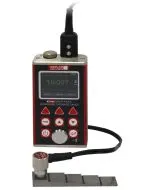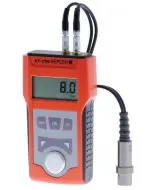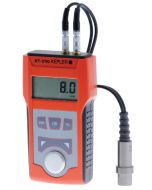

The Ultrasonic Thickness Gauge is a highly efficient measuring tool for various industries, allowing users to accurately measure the thickness of materials without damaging them. This article SCMA will explain how it works, its types, and benefits to help you understand and use it appropriately.
What is an Ultrasonic Thickness Gauge?
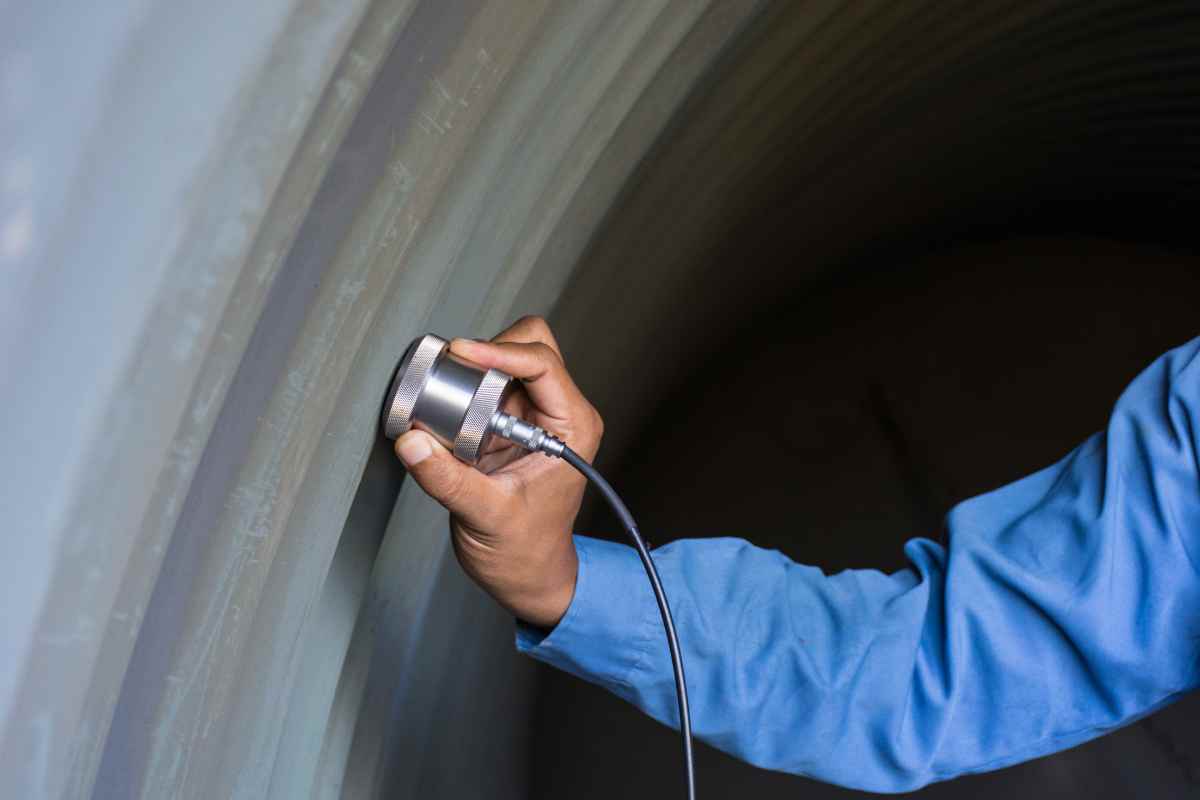
A thickness gauge is a measuring tool that uses ultrasonic technology for non-destructive testing, enabling users to accurately measure the thickness of materials without cutting or drilling into them. This makes it an efficient tool for maintenance and quality control in various industries such as petrochemicals, electricity, refrigeration systems, steel and metal production, as well as automotive industry.
The Importance of Measuring Thickness?
Measuring the thickness of materialsis crucial in many industries because:
- Safety: Helps to check the wear and tear or corrosion of critical structures such as oil pipelines, chemical storage tanks, or ships. If they become too thin, it may lead to serious accidents.
- Quality Control: During the manufacturing process, measuring thickness ensures that products meet the specified standards.
- Predictive Maintenance: Helps in planning maintenance before severe damage occurs.
- Remaining Useful Life Assessment: Can use the data of decreasing thickness to assess the remaining useful life of equipment or structures.
- Cost Savings: Non-destructive testing helps reduce losses from cutting out samples for inspection.
What Materials Can an Ultrasonic Thickness Gauge Measure?
An ultrasonic thickness gauge is capable of measuring the thickness of various materials without damaging the workpiece, making it a highly useful tool for quality control and structural integrity inspection in various industries.
1. Testing Plastic Thickness
Currently, plastics and non-metallic materials are increasingly used in engineering applications, which makes controlling thickness to ensure quality even more important. Ultrasonic gauges can be used on bottles and packaging, plastic pipes, and fiberglass boats to check that products meet specifications and are safe for their intended use.
2. Testing Metal Thickness
An ultrasonic thickness gauge can measure a variety of metal products including pipes, tanks, metal sheets, and wire coils. This measurement is crucial for quality control during production to ensure that the product meets industry standards and has sufficient strength for use, especially in industries requiring high safety.
3. Corrosion Testing
Checking corrosion on metallic structures is one of the most important applications of an ultrasonic thickness gauge. Over time, corrosion can reduce the integrity of metal structures such as beams, steel piles, oil pipelines, and chemical storage tanks. Regular thickness measurements help identify corroded areas before severe damage occurs.
4. Other Materials
In addition to metals and plastics, ultrasonic thickness gauges can also be used on a variety of other materials including rubber products, ceramics, glass, and composite materials. This is particularly useful when access to both sides of the material is not possible or when measuring thickness without damaging the integrity of the workpiece is required.
How Does an Ultrasonic Thickness Gauge Work?
Ultrasonic Thickness Gauge operates based on the physics principle of sound waves traveling through various materials. The device sends high-frequency ultrasonic waves via a probe (transducer) to the surface of the material being measured, then measures the time it takes for the wave to travel from one side and reflect back. Once the speed of sound in that particular material is known, the gauge calculates thickness using the formula: Thickness = (Speed of Sound × Measured Time) ÷ 2, allowing accurate measurement without accessing both sides of the material.

What Types of Ultrasonic Thickness Gauges Are There?
There are various types of ultrasonic thickness gauges designed to meet specific needs in different industries. Each type has its own unique features and capabilities, and selecting the appropriate gauge for a particular job will ensure accurate and highly efficient results.
- Basic Ultrasonic Thickness Gauge: A simple and easy-to-use tool with basic functions, suitable for measuring the thickness of common materials such as metal and plastic. It is often used in general maintenance work or for quick inspections.
- Precision Ultrasonic Thickness Gauge: A highly accurate thickness gauge capable of measuring down to the level of 0.001 millimeters, with a variety of functions suitable for high-precision work such as medical equipment, electronic components, or product research and development.
- Coating Ultrasonic Thickness Gauge: A specialized thickness gauge designed to measure the thickness of coatings and base materials. It can separate the coating thickness (such as paint, plastic) from the base material. This is commonly used in automotive industries, painting processes, and corrosion protection.
- High Temperature Ultrasonic Thickness Gauge: A gauge designed to withstand high-temperature environments with special probes that can operate up to 500°C. It is ideal for measuring the thickness of pipes or tanks in petrochemical plants, power stations, or other heavy industries working under high temperatures.
What are the Benefits of an Ultrasonic Thickness Gauge?
An ultrasonic thickness gauge plays a crucial role in manufacturing and maintenance industries as it provides accurate data without affecting the workpiece. This technology helps reduce inspection costs and extends equipment lifespan while maintaining safety and quality standards efficiently.
- Non-destructive Testing: It can measure thickness without cutting, drilling, or damaging the workpiece. This allows ongoing equipment inspection without halting operations, reducing downtime and maintenance costs.
- High Accuracy and Precision: It provides accurate measurements down to the micrometer level, capable of detecting minor thickness changes. This makes it ideal for high-precision work such as medical equipment or aircraft components.
- Multi-material Compatibility: It can measure various materials including metals, plastics, glass, ceramics, and composite materials. This versatility makes it a valuable tool across multiple industries.
- Speed and Efficiency: It measures thickness in just seconds, allowing for quick inspection of large quantities of workpieces. This is suitable for production lines requiring rapid quality control.
- Single-sided Access: It can measure thickness from a single side of the workpiece, making it possible to inspect structures with limited or difficult access areas such as pipes, tanks, or enclosed walls.
- Portability: Portable models are compact and lightweight, powered by batteries, making them easy to use in remote locations. This is ideal for field inspections or distant sites.
Usage of Ultrasonic Thickness Gauge in Industries
The Ultrasonic Thickness Gauge is widely used across various industries due to its ability to accurately measure thickness without damaging the workpiece.
- Oil and Gas Industry: Used to check the thickness of oil pipelines, storage tanks, and pressurized equipment to detect corrosion and thinning of walls, preventing leaks that could lead to severe accidents and environmental damage.
- Construction and Manufacturing Industry: Used to check the thickness of steel structures, columns, beams, and critical metal parts to assess structural strength and safety, as well as control quality in manufacturing processes according to specified standards.
- Automotive and Coating Industry: Used to measure the thickness of paint layers, coatings, and anti-corrosion materials on vehicle bodies and parts to control manufacturing quality, prevent wear and tear, and extend product lifespan.
- Aerospace Industry: Used to check the thickness of aircraft components, wing structures, and critical parts that must withstand high pressure and severe temperature changes, which are crucial for the safety and operational efficiency of aircraft.

Interested in Ultrasonic Thickness Gauge? You can now purchase from SCMA!
SCMA is a high-quality supplier of internationally certified Ultrasonic Thickness Gauges. We offervarious models of thickness gauges to choose from based on your usage requirements, including portable options for field work and advanced function models for in-depth analysis. Our expert team is available to provide consultation on selecting the appropriate equipment for your specific needs. Additionally, SCMA offers calibration services and usage guidance to ensure you get the maximum benefit from our Ultrasonic Thickness Gauges.
Summary
Thickness Gauge is a crucial tool for quality inspection and control in various industries. With its ability to measure material thickness without damaging the workpiece, it becomes an efficient instrument for corrosion detection, wear assessment, and product quality control. Selecting the right measuring device that fits your job characteristics and material type will help achieve accurate and highly effective measurements. SCMA is ready to provide services andconsultation on selecting the appropriate Ultrasonic Thickness Gauge that meets your needs, ensuring your business has efficient quality control tools and reduced maintenance costs.
Frequently Asked Questions
How does a UTM measure thickness?
A UTM (Ultrasonic Thickness Meter) measures thickness by sending high-frequency sound waves through the material and measuring the time it takes for the wave to travel back after reflecting from the opposite surface. The device calculates the thickness using the formula: thickness = (sound speed × time) ÷ 2.
What is an ultrasonic gauge?
An ultrasonic gauge is a tool that uses high-frequency sound waves (ultrasound) to measure or inspect the properties of materials. There are various types depending on their intended use, such as thickness gauges, crack detection devices, or internal structure inspection tools. They work non-destructively and are popular in quality control and maintenance tasks.
What is an ultrasonic thickness gauge?
An ultrasonic thickness gauge is a device that uses high-frequency sound waves to measure the thickness of materials non-destructively by measuring the time it takes for sound waves to travel through and back from the material. It can measure metals, plastics, glass, and other materials that sound waves can penetrate. This tool is crucial in corrosion inspection and quality control.
What does the thickness value mean?
The thickness value refers to the thickness of a material, measured from one surface to the other side. It is usually expressed in millimeters (mm) or inches (inch). This measurement is important for product quality control, structural strength calculations, and material wear or corrosion inspection during maintenance.