
A Thermal Imager is a thermal imaging camera that can "see" the temperature of various objects, even in darkness or places where the human eye cannot see, as it uses infrared waves instead of visible light.
A Thermal Imager or thermal imaging camera is a smart tool that helps you see what the naked eye cannot, by detecting temperature and displaying it in thermal image form. This is useful across various industries such as building inspection, electrical systems, machinery, firefighting, and predictive maintenance. It also enhances safety, reduces accident risks, and saves costs over the long term.
A thermal imaging camera is a technology that revolutionizes inspection and problem diagnosis in various industries by its ability to see heat that humans cannot detect with their naked eyes. This tool helps us identify hidden issues, prevent potential damage, and greatly enhance work efficiency. Check out high-quality thermal imager services from SCMA here to elevate your inspection and problem diagnosis in your business.
What is a Thermal Imager?

A Thermal Imager or infrared thermal imaging camera is a device used to measure the temperature of an object's surface without contact, working on the principle of detecting infrared radiation emitted from objects. This tool can measure temperature in areas, making it clear how heat distributes across the surface of an object. The advantage is that it measures non-destructively and provides an overall view of heat for accurate measurement, so regular calibration of the equipment is necessary.
What are the benefits of a Thermal Imager?
Infrared cameras or Thermal imaging camera is a technology that uses infrared radiation to display temperature differences in the form of images. This tool is very useful for identifying and diagnosing thermal abnormalities in objects and various environments without direct contact, making it applicable in many fields.
1. Building Inspection
Thermal imaging cameras help experts find heat leaks in buildings, check insulation efficiency, and identify areas damaged by moisture or water leakage, helping to save energy and prevent long-term damage.
2. Electrical and Mechanical Inspection
In the industrial sector, Thermal Imager Cameras help detect abnormal hot spots in electrical systems, circuit boards, and other equipment before severe damage occurs. They can quickly identify issues with motors, transformers, and mechanical devices, reducing the risk of short circuits and production downtime.
3. Firefighting Operations and Rescue
Firefighters use temperature measurement cameras to see through smoke and darkness to locate trapped individuals or pets in buildings, identify the source of fire and hot spots that may reignite, making rescue operations more efficient and safer.
4. Surveillance and Safety
Security systems using thermal imaging technology can detect human and animal movement even in complete darkness or bad weather conditions. They are used for monitoring critical areas, border surveillance, or searching for missing persons in forests or large areas, providing superior security compared to standard CCTV cameras.
5. Predictive Maintenance
Using Thermal Imager Cameras for predictive maintenance helps reduce repair and maintenance costs and prevent unexpected production downtime by detecting equipment abnormalities early before severe damage occurs. Planning maintenance ahead based on data from thermal imaging inspections also extends the lifespan of equipment and improves overall operational efficiency.
How a Thermal Imager Works
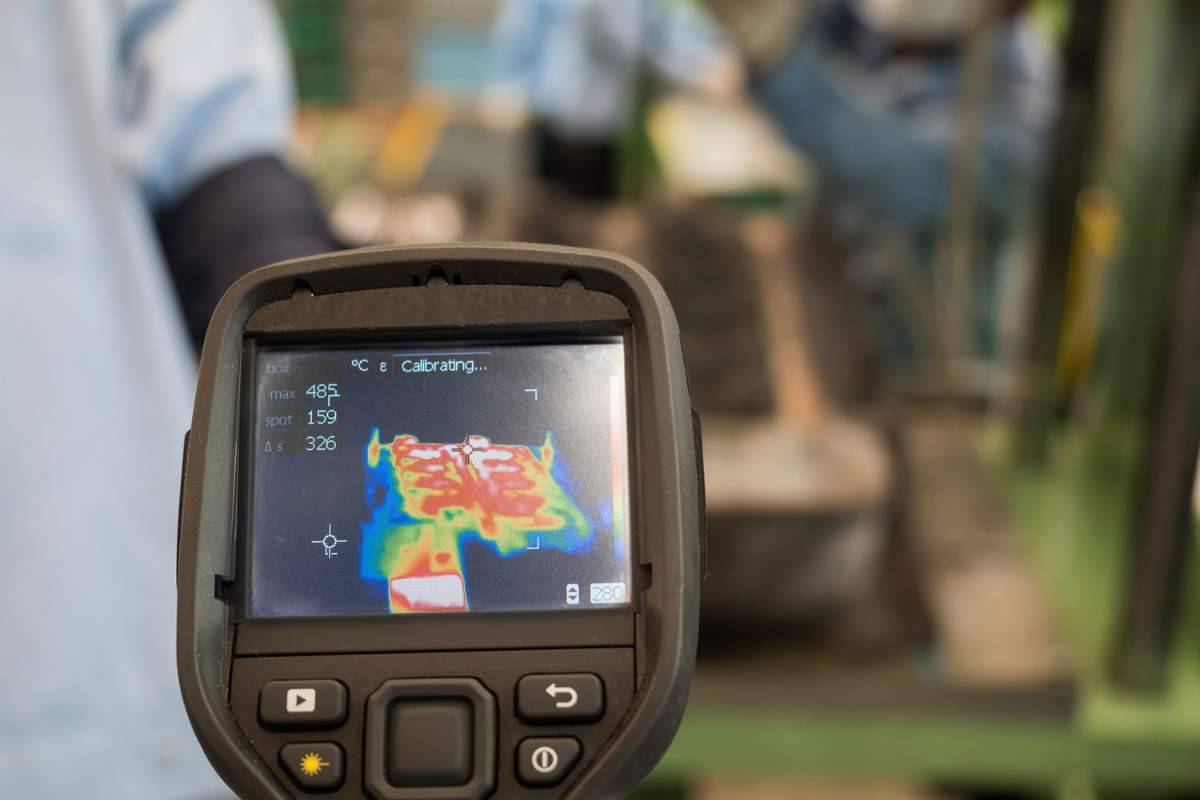
The operation of a thermal imager or infrared camera begins with an infrared radiation detector that captures radiation from the target object through the lens of the camera, then converts it into electrical signals. The detected radiation comes both from the radiation emitted by the object itself and from environmental radiation reflected off the surface of the object. Then electronic circuits process the signal and display it in a form of an image with different colors according to temperature levels. Generally, red or bright tones indicate areas with high temperatures, while blue or dark tones indicate areas with low temperatures. The conversion of infrared radiation into temperature relies on physical principles based on Planck's law and Stefan-Boltzmann law.
Why is Emissivity Important in Choosing a Thermal Camera?
Emissivity is crucial for the accuracy of temperature measurement with an infrared camera, as different objects have varying abilities to emit infrared radiation. Typically, infrared thermometers are set at an emissivity value of 0.95 as a standard. Selecting a thermal camera that can adjust the emissivity setting is highly beneficial because it allows adjusting the value to suit the target object being measured, such as water (0.93) or paper (0.95), which results in more accurate temperature measurements. Choosing a camera with this adjustable feature is an important factor for tasks requiring precise temperature measurement of various materials.
How does a thermal imager work? The camera detects infrared radiation emitted by the object, processes it through electronic circuits, and then displays it in a color image format such as: • Red/orange: Hot areas • Blue/gray: Cold areas Based on the radiation emission principles of objects (Stefan-Boltzmann and Planck’s Law)
How to Use a Thermal Imager

Using a thermal imager, or infrared camera, is not difficult if you understand the basic steps. This tool allows you to measure the temperature of objects and create accurate heat distribution images quickly without direct contact with the object. Simply follow these easy steps:
- Turn On - Press and hold the power button until the FLIR logo appears on the screen, then wait for the device to start up.
- Aim - Point the camera at the object or area you want to check the temperature of and adjust the distance appropriately for a clear image.
- Set Measurement Point - Press the Laser button to project a laser onto the specific point you want to measure, helping you accurately target your measurement.
- Capture Image - Once you have the desired image, press the capture button to record temperature data and heat images for further analysis.
If you are interested in Thermal Imagers, SCMA is now available for purchase!
SCMA is a high-quality distributor of internationally certified thermal imager equipment. We offervarious models of thermal camerasfrom leading brands, covering all usage needs whether it's building inspection, electrical work, maintenance, or security. Our team of experts is ready to provide consultation and recommendations for selecting the right thermal imager that fits your requirements and budget. Additionally, we offer after-sales service, training on how to use the equipment, and calibration services to ensure you get the most efficient and cost-effective usage.
SCMA offers high-quality infrared cameras from leading brands along with standard after-sales service, training on how to use the equipment, and tool calibration services to maximize your operational efficiency.
We specialize in consulting and helping you choose the right thermal imager for your business regardless of which industry you work in. We are here to help increase safety, reduce risks, and save both time and costs.
Summary
A thermal imager or infrared camera is a highly effective tool for detecting heat and displaying it as visible images, allowing users to identify invisible issues such as heat leaks, hot spots in electrical systems, or hidden moisture within building structures.
This equipment has wide applications across various industries including building inspection, electrical system and machinery checks, firefighting and rescue operations, security, and predictive maintenance. It enhances work efficiency, reduces risks, and saves long-term costs.
Selecting the right thermal imager and using it correctly is crucial for achieving accurate and reliable results. Key factors to consider include sensor resolution, temperature detection sensitivity, emissivity adjustment capability, and analysis functions provided.
SCMA offers high-quality thermal imagers and technical support to all customers to ensure you receive the right tools that meet your needs and can be used effectively. Contact us today to receive consultation and special offers for thermal imagers tailored to your business.
Frequently Asked Questions
What is Thermal Imaging?
Thermal imaging, or thermal photography, is a technology used to capture and analyze the distribution of heat on the surface of objects by detecting infrared radiation emitted from them and converting it into visible images that show different temperatures with varying colors.
What are Industrial Standard Infrared Thermal Cameras?
Industrial standard infrared thermal cameras refer to cameras that have features and accuracy in measurement according to industry standards, such as IEC, ASTM or ISO. They typically offer high measurement accuracy (e.g., ±2% or better), high image resolution, and special features like precise emissivity adjustment for use in engineering applications requiring high precision.
Advantages and Disadvantages of Infrared Thermal Cameras?
Advantages:
- Can see heat that is invisible to the naked eye
- Detect anomalies before damage occurs
- Non-destructive testing method
- Can quickly inspect large areas
- Operates in dark or low visibility conditions
Disadvantages:
- Relatively expensive, especially high-resolution and accuracy models
- Requires knowledge and understanding to interpret results and set appropriate parameters
- Performance may decrease when used with materials that have low emissivity values
- May be affected by environmental factors such as humidity, reflections or heat from other sources
What are Thermal Cameras?
Thermal cameras are electronic devices used to detect infrared radiation emitted from objects and convert it into visible images that humans can see. These cameras use infrared detectors instead of film or light sensors used in regular cameras, allowing them to visualize the temperature distribution on object surfaces. They are used for thermal problem diagnosis, building and electrical equipment inspection, as well as security and military applications.
Summary of Popular Thermal Imaging Cameras Used in Industrial Applications
- FLIR E-Series (e.g., FLIR E6-XT, E8-XT)
- Suitable for: Electrical inspection, machinery, and maintenance work
- Highlights: Compact size, touch screen, high image resolution
- Resolution: 320x240 (E8-XT), MSX® function enhances image clarity
- FLIR T-Series (e.g., FLIR T540, T640)
- Suitable for: Electrical engineering work, in-depth thermal analysis
- Highlights: Rotatable screen up to 180° for difficult angles, interchangeable lenses supported
- Resolution: 640x480, on-screen analysis function
- Fluke Ti Series (e.g., Fluke Ti300+, Ti480 PRO)
- Suitable for: Factory and maintenance center inspections
- Highlights: Automatic laser focus LaserSharp®, durable, supports Fluke Connect software
- High accuracy
- HIKMICRO (e.g., HIKMICRO G60, M30)
- Suitable for: Beginners to mid-industrial level
- Highlights: Cost-effective, full-featured, Wi-Fi supported
- Easy to use and portable
- Testo Thermal Cameras (e.g., Testo 872, Testo 883)
- Suitable for: HVAC work, energy inspection, electrical tasks
- Highlights: Lightweight, clear display, multi-point temperature measurement function
- Supports Bluetooth, real-time data transmission
- GUIDE SENSMART E2+
- Suitable for: General use
- Highlights: Good features, affordable price
Features to Consider:
- Infrared Resolution (the higher, the more detail visible)
- Temperature Range Measured
- Ability to Adjust Emissivity Value
- On-Device Image Analysis Functionality
- Wi-Fi, USB or Bluetooth Connectivity
- Durability (IP Rating for Dust/Water Resistance)
Summary: Industrial Thermal Imaging Cameras come in various models that cater to different application needs, such as electrical heat inspection, machinery monitoring, or deep thermal analysis. When choosing a model, consider your specific usage requirements, resolution, and features like connectivity and image analysis capabilities.