
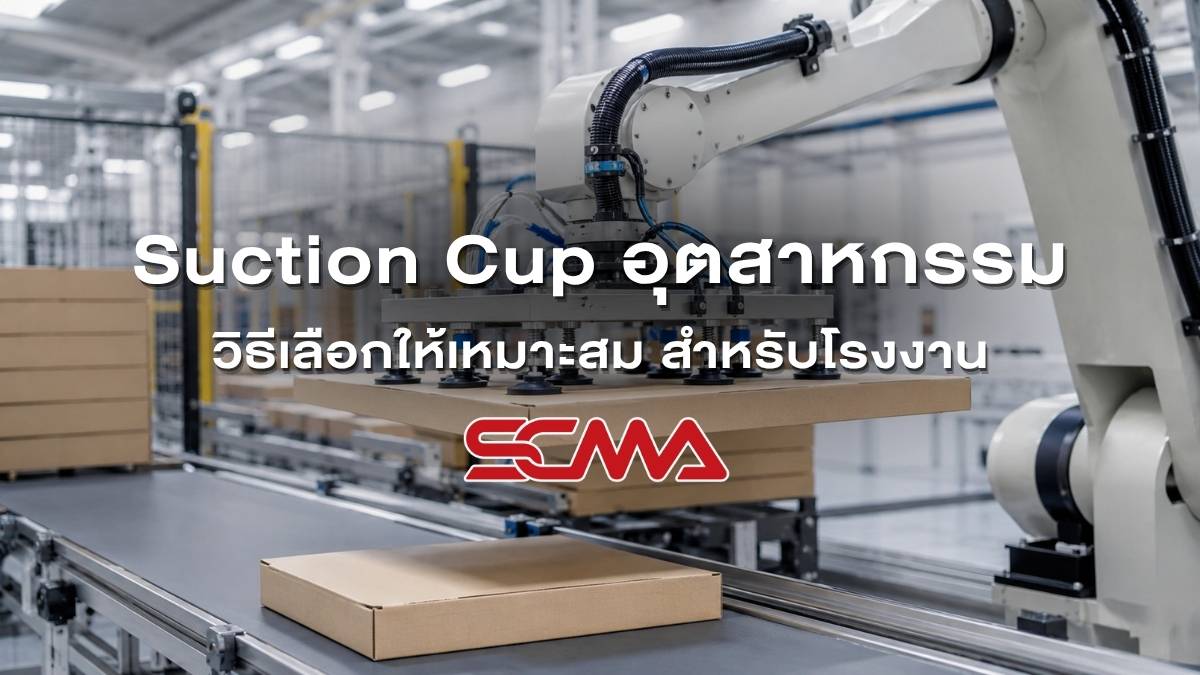
Suction Cup is the equipment you are looking for to enhance the efficiency of your robotic arm, right? This article will introduce you in depth to workpiece suction pads, so that you can choose a vacuum pad or vacuum cup that best suits your specific application. You'll learn everything from suitable materials to basic problem-solving techniques. If you need a high-quality vacuum suction cup, you can consult with our design and consulting service at SCMA.
What is a Suction Cup? Understanding Vacuum Pads and How They Work
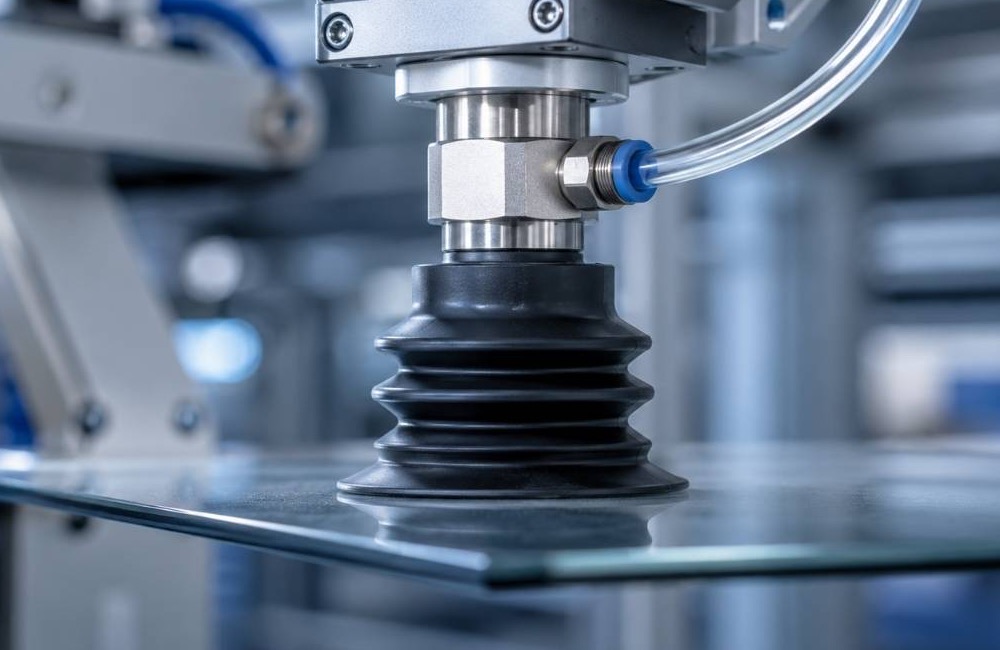
Understanding how a Suction Cup works is crucial in engineering. The basic principle relies on creating a vacuum inside the rubber cup to generate lower pressure than the external atmosphere, causing atmospheric pressure to press the suction pad firmly against an object. The difference between a vacuum pad and a regular cup lies mainly in interchangeable terminology used within the industry. Key components of a vacuum cup include the rubber cup that contacts the workpiece, metal connectors for attachment. You can study more about the working principle of vacuum suction cups to gain a deeper understanding.
Popular Types of Suction Cups Used in Factories
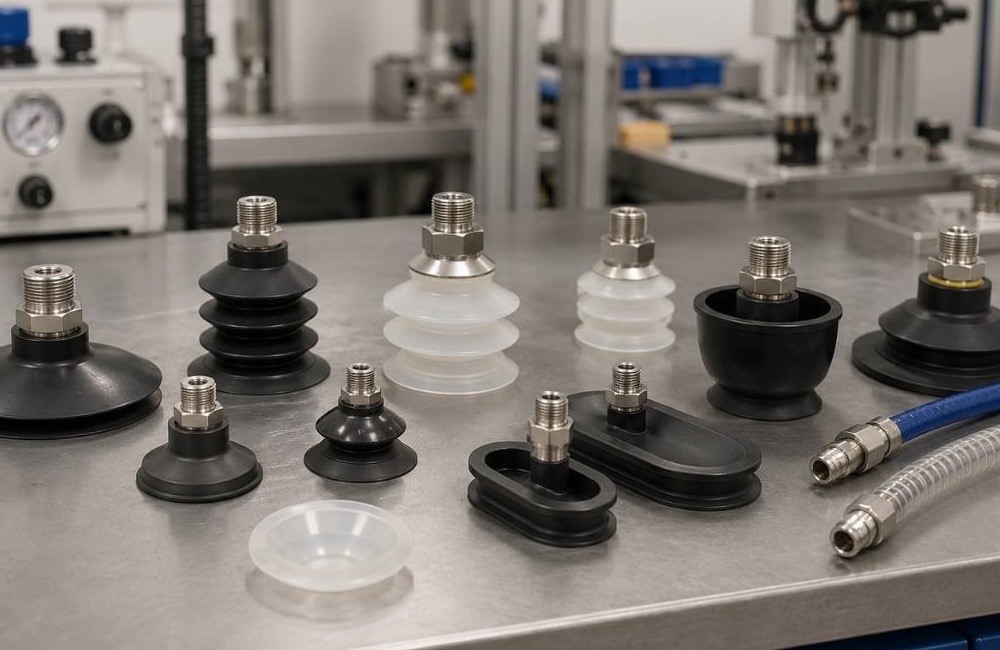
The choice of shape for Suction Cups directly affects their gripping ability. We recommend the following types of vacuum pads that engineers commonly use.
Flat Type - Suitable for Smooth Surfaces
The flat suction cup is designed to be flat, maximizing contact area. This type of vacuum suction cup works well with smooth surfaces such as glass, steel sheets, and cardboard boxes, providing a very stable grip.
Bellows Type - For Uneven or Curved Surfaces
The bellows shape allows the suction cup to flexibly adapt to curved or uneven surfaces. Using rubber gripping cups of this type helps absorb impact when robotic arms move to pick up parts.
Oval Type - For Long-Shaped Parts
When dealing with narrow and long parts such as plastic tubes, electronic circuit boards, using an vacuum cup in an oval shape is the best choice. This design helps achieve maximum suction efficiency without spilling over part edges.
Special Types for Specific Applications
Certain industries require special types of vacuum pads, such as mark-free cups for lens glass work, and sponge cups for very rough surfaces. Consulting with experts will help you find the most suitable Suction Cup.
Selecting Durable Material for Suction Cups: What to Consider
Selecting the material of a Suction Cup that can withstand environmental conditions helps significantly reduce maintenance costs. The SCMA team summarizes the properties of each type of suction cup material as follows:
- NBR (Nitrile Rubber) - Oil Resistant: This is the most common standard material found in vacuum cups, offering excellent resistance to lubricating oils, making it suitable for general machinery applications.
- Silicone - High Heat and Food Grade Suitable: If you need to handle high temperatures or food products, using silicone is the safest option. However, it may not be as resistant to scratches as other materials.
- Urethane - Abrasion Resistant: For sharp-edged parts, corrugated cardboard, choosing a vacuum pad made of urethane will extend its lifespan several times longer than other materials.
- Anti-Static Material: In electronic component production lines, preventing static electricity is crucial to avoid circuit board damage.
- Materia Comparison Table: Comparing this information with actual working conditions will help you make the most cost-effective decision when purchasing a vacuum suction cup.
5 Key Factors in Choosing Suction Cups for Your Workpieces
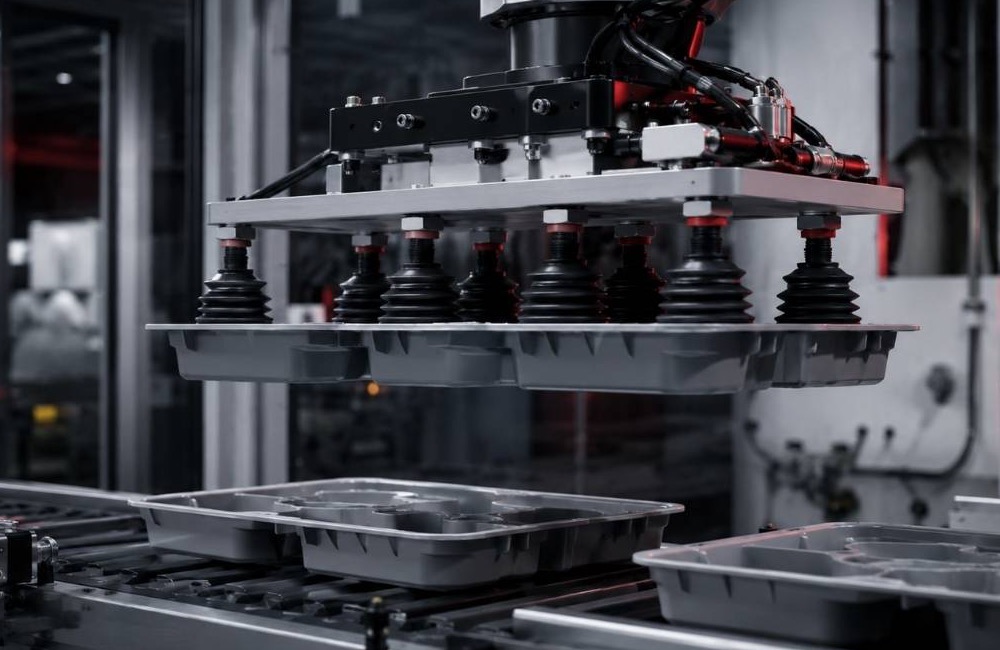
Before deciding to purchase Suction Cups, there are engineering factors that you must carefully calculate. Analyzing these data helps ensure the vacuum pad operates at maximum efficiency.
- 1. Shape and surface characteristics of the workpiece: You need to investigate whether the workpiece is smooth, rough, curved, or porous in order to determine the shape of the workpiece gripping rubber that matches it.
- 2. Weight and size of the object to be lifted: The suction force must safely overcome the weight of the object. Overlooking a safety factor (Safety Factor) is something you should not do.
- 3. Working environment conditions (temperature, chemicals): Heat, chemicals, UV rays all affect the aging of vacuum cups. Properly selecting sealing materials is crucial.
- 4. Speed of robotic arm movement: The faster the robotic arm moves, the higher the centrifugal force will be. You may need to increase the number of vacuum suction cups to distribute gripping points more securely.
- 5. Initial calculation of required suction force: You can integrate with non-contact object detection sensors (Proximity Sensor) to control the workpiece pickup position as accurately as possible.
How to Install and Use Suction Cups for Maximum Efficiency
Proper installation helps protect workpieces from falling and getting damaged. Our engineering team has guidelines on how to set up Suction Cup.
Installation Steps with Suction Stem or Holder
When assembling the workpiece suction cup onto the stem, tighten it securely by hand to prevent air leaks. It is recommended to choose a model with shock-absorbing springs to reduce pressure when the cup touches the workpiece.
Setting Appropriate Air Pressure
The creation of vacuum relies on the air pressure supplied to the Ejector. Adjusting it properly can significantly save compressed air energy. You can learn more from the basic physics principles of Barometer: What is it? An important tool for measuring atmospheric pressure in industry.
Precautions to Extend Service Life During Use
Avoid letting the vacuum pad come into direct contact with sharp edges of workpieces. Regularly check that air hoses are not kinked. Consistent maintenance can clearly reduce vacuum system malfunctions.
Maintenance and Initial Troubleshooting for Suction Cups
Cleaning Suction Cup should be done using alcohol-soaked cloth to wipe off light dust; do not use harsh thinners that may damage the rubber. Signs indicating a need to replace the vacuum cup include cracks around the edges or frequent slipping of workpieces. If you encounter issues with the vacuum suction cup failing to hold, start by checking for blockages in air exhaust holes and inspecting for leaks at hose connections. Having spare vacuum pads available in your factory can help quickly resolve machine downtime.
Summary
In summary, the Suction Cup is a crucial component for picking up workpieces in automated systems. Choosing the right shape and material of vacuum pad can significantly reduce losses on production lines. If you need an engineer to design your part-handling system, SCMA's design services and consultations are ready to provide professional advice.
If you want to buy, you can purchase from SCMA today!
Selecting high-standard vacuum equipment is a worthwhile investment. SCMA Co., Ltd. (SCMA) is the distributor of Suction Cup and workpiece suction rubber of international quality standards. You can visit our full product catalog of SCMA to contact our team for a quote on vacuum cup immediately through the SCMA website.
Frequently Asked Questions
How do you identify Food Grade Suction Cup?
You can check from the material certificate (Material Certificate). They are mostly made of white or clear silicone that is safe for direct food contact.
Why does Vacuum Pad not stick to porous workpieces?
This is because external air can seep through the pores and disrupt the vacuum inside the cup. It's recommended to switch to a clamping mechanism instead.
What are the advantages of Bellows-type suction rubber?
It provides excellent flexibility to absorb impacts, adjusts angles perfectly with inclined, curved, or uneven surfaces.
Can one vacuum cup handle heavy objects?
No, it's not recommended. Multiple cups should be used to distribute the center of gravity to prevent workpiece swinging and reduce stress to avoid premature wear and tear on the rubber.
How long is the lifespan of a suction cup?
This depends on frequency of use, surface condition of the workpiece, environmental temperature. If the rubber edges start to wear or crack, it should be replaced immediately.