

Spectrum Analyzers, or spectrum analyzers, are highly important electronic measurement and analysis tools in the era of advanced communication and electronics technology. They serve to measure, analyze, and display the frequency components of electronic signals. This article will guide you through understanding this crucial tool, from its working principles, types, advantages, and applications across various industries.
What are Spectrum Analyzers?
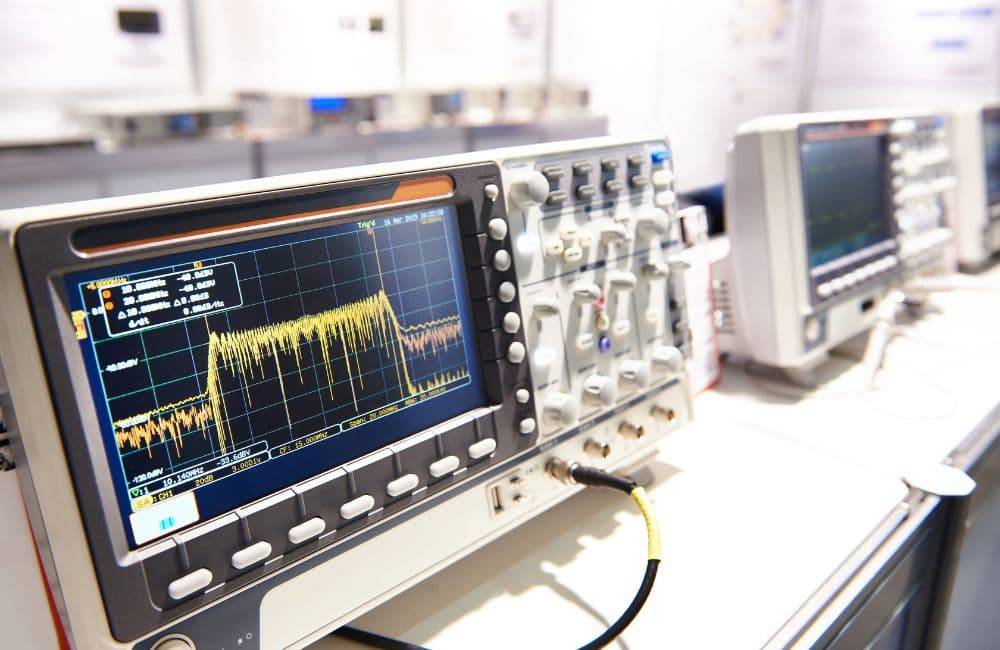
Spectrum Analyzers are devices capable of measuring high-frequency signals, such as those from antennas or VCOs, and have the special ability to adjust IQ levels accurately, which is something that general tools cannot do. This advanced tool helps engineers and scientists visualize the world of invisible frequency waves by displaying them in a graph format showing the relationship between frequency and signal strength.
What are the main functions of Spectrum Analyzers?
Spectrum Analyzer's primary function is to convert the time domain of signals into the frequency domain, allowing for a view of all frequency components that make up the signal. This highly accurate device can measure and analyze signals from microvolts to volts and cover wide frequency ranges from kilohertz to gigahertz.
Spectrum Analyzer also has the ability to analyze signal quality, detect unwanted interference signals, and diagnose communication system problems. This makes it an indispensable tool for designing, testing, and maintaining wireless systems and high-frequency electronic devices in today's era.
Types of Spectrum Analyzers
Spectrum analyzers are categorized into three main types based on design technology. Each type has its own strengths and applications, with technological advancements improving capabilities and efficiency to meet diverse engineering frequency requirements.
Scanning Spectrum Analyzers (SA)
This type of analyzer uses traditional superheterodyne technology that works by sweeping a bandpass filter through the desired frequency range, point-by-point, to measure signal energy at each frequency. SAs are known for their wide dynamic range, high sensitivity, and precise measurement of single-frequency signals, making them ideal for analyzing stable signals and tests requiring high accuracy.
Vector Signal Analyzers (VSA)
VSAs enhance the ability to measure both amplitude and phase of a signal using digital signal processing. This tool captures RF waveforms, demodulates them for analysis and display. They are particularly suitable for analyzing modern digital communication signals that use complex modulation schemes. However, VSAs have limitations in detecting transient events and signals with large power level differences.
Real-Time Spectrum Analyzers (RSA)
RSAs are the latest technology that processes digital signals in real-time before recording data, enabling detection and analysis of transient events or infrequent occurrences that other types of equipment might miss. Important data is stored for deep cross-domain analysis later on, making RSAs ideal for checking temporary interference, frequency spikes, and signal quality monitoring in modern communication systems.
Advantages of Spectrum Analyzers

Spectrum Analyzers have the ability to measure signals in very high frequency bands, such as those from antennas or VCOs. They also have special capabilities for adjusting IQ levels correctly, allowing them to detect and analyze signals that general measurement tools cannot handle. This high-performance tool enables engineers to see interfering signals, harmonic signals, and frequency deviations occurring in wireless communication systems, which helps in efficient design, testing, and problem-solving.
How do Spectrum Analyzers Work?
Spectrum analyzers work by separating the various frequency components of a signal and displaying them as graphs with the X-axis representing frequency and the Y-axis representing amplitude, making it clear to see and analyze. Inside the device is a complex processing system that converts signals from the time domain into the frequency domain through processes such as fast Fourier transform (FFT) or frequency sweeping techniques. This advanced technology allows engineers to observe hidden behaviors of frequency waves within signals, including harmonics, interfering signals, and defects that may not be detectable with other measurement tools.
Applications of Spectrum Analyzers
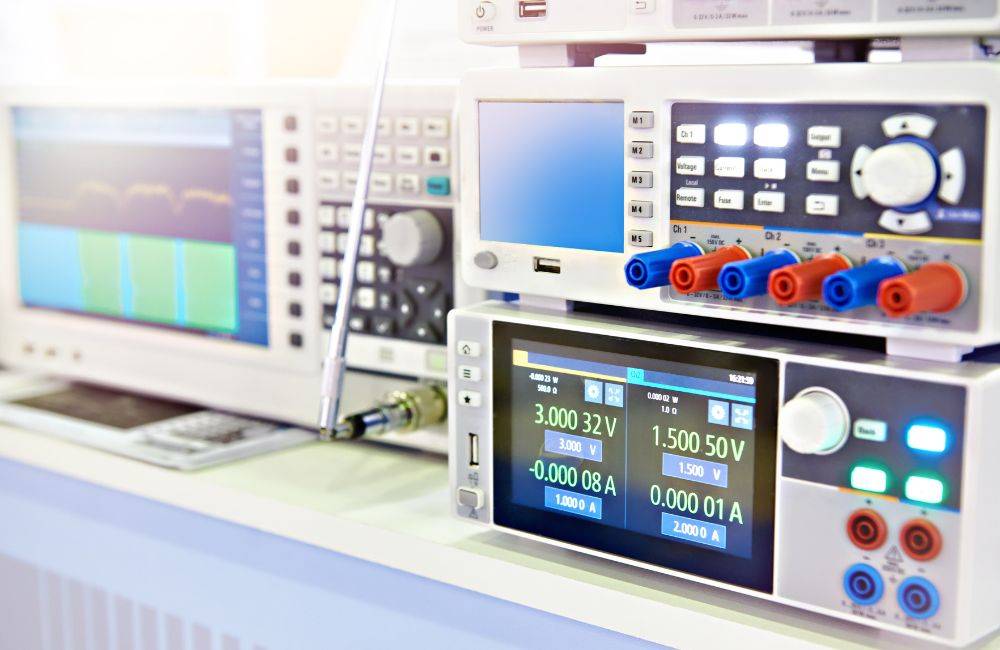
Spectrum analyzers are crucial tools in various industries related to frequency waves, displaying signals as vertical lines (pips) on the screen. This allows engineers to check if wireless transmitters operate within authorized frequency bands. These devices play a vital role in RF design and testing, electronic circuit development, and communication system maintenance. With their wide-ranging measurement capabilities covering both radio frequencies and various electrical parameters, scientists and engineers can develop more efficient and stable communication technologies to meet digital era demands.
Interested in Spectrum Analyzers? You Can Buy from SCMA Today!
SCMA is a leading distributor of high-quality Spectrum Analyzers from top global brands. We offer products covering all types of applications, ranging from basic models for educational and general use to advanced models for research and development.
Our team of experts is ready to provide consultation to help you choose the best Spectrum Analyzer that fits your needs and budget. We also offer comprehensive after-sales services including installation, user training, calibration, and maintenance.
SCMA also provides rental services for Spectrum Analyzers suitable for short-term projects or specific tests, helping you save costs while still accessing high-quality equipment.
Summary
Spectrum Analyzers are crucial electronic measurement tools in the digital and wireless communication era. With their ability to analyze signal frequency components, engineers and researchers can efficiently develop, test, and resolve issues in electronic and communication systems.
Spectrum Analyzer technology has evolved from the original swept (Swept) type to advanced technologies such as Vector Signal Analyzers and Real-time Spectrum Analyzers, which can analyze signals more accurately and quickly. This meets diverse needs across various industries.
SCMA is ready to be your reliable partner in providing high-quality Spectrum Analyzers andcomprehensive services, from consulting to select the appropriate product to high-quality after-sales service. This ensures that you will maximize your investment in high-quality Spectrum Analyzers from SCMA.
Frequently Asked Questions
What is Motion Detection?
Motion Detection, or movement detection, is a technology used to detect the movement of objects or people in designated areas using various types of sensors such as infrared (PIR) sensors, microwave sensors, or image analysis from cameras. In some systems, Spectrum Analyzers may be used to analyze signals from these sensors for increased accuracy.
What are Motion Sensors?
Motion Sensors, also known as movement detectors, are devices designed to detect movement or changes in the environment. There are several types such as PIR (Passive Infrared), ultrasonic sensors, microwave sensors, and hybrid sensors. These sensors typically operate at different frequency ranges and may require signal analysis with Spectrum Analyzers during design and testing.
Which type of Motion Sensor is best?
Choosing the right Motion Sensor depends on the intended use, environment, and budget. Generally:
- PIR Sensor: Suitable for detecting humans in buildings, cost-effective, energy-efficient.
- Microwave Sensor: Can penetrate materials and suitable for areas with obstructions.
- Ultrasonic Sensor: Suitable for confined spaces requiring high accuracy.
- Dual-Technology Sensor: Combines multiple technologies, such as PIR+Microwave, providing high accuracy and reducing false alarms.
Selecting the appropriate sensor may require analysis with Spectrum Analyzers to check performance in real environments and prevent interference from other devices.
How does a PIR Sensor work?
A Passive Infrared (PIR) sensor works by detecting changes in infrared radiation within the detection area. All objects with temperatures above absolute zero emit infrared radiation, particularly human bodies at around 37°C.
When a person moves through the detection area, the sensor detects changes in the pattern of infrared radiation through Fresnel lenses that divide the detection area into zones and sends signals to processing circuits to determine if movement has occurred.
In advanced design and testing of PIR sensors, Spectrum Analyzers are often used to analyze frequency responses and filter out interference signals to ensure high accuracy and reduce false alarms.