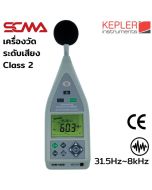
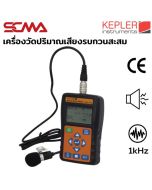
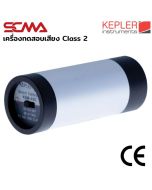
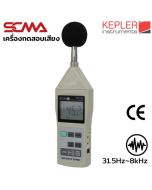
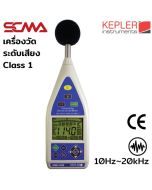
Sound level meters are important tools that help prevent hazards from noise pollution in both work environments and daily life, especially as noise levels continue to rise. Choosing accurate and suitable equipment is essential. SCMA Company would like to present in-depth knowledge about sound measuring devices and selection techniques to help you make confident decisions.
What is a Sound Level Meter?

A decibel meter is a device used to measure the level of sound intensity in dB (decibels). It is designed to analyze and record sound levels in various environments. This tool integrates multiple functions into one unit, allowing users to adjust settings as needed, such as A and C weighting circuits, along with Slow/Fast response modes, which enhance measurement accuracy. Proper use involves holding the device at arm's length or using a tripod for long-term measurements. The standard measuring range is between 30dB to 130dB, covering general environmental conditions.
How Sound Level Meters Work
The operation of sound level meters relies on measuring the sound pressure level (SPL), which is an assessment of sound intensity at a specific point in space. The system converts sound waves through a microphone into electrical signals, then amplifies them via a preamplifier. Filters separate desired frequencies and eliminate noise frequencies while detectors calculate the RMS value of the signal over a specified period to provide an average sound level converted to decibels displayed on the screen. This process yields accurate and reliable data for analyzing sound quality in various environments.
Benefits of Sound Level Meters
Measuring sound levels is crucial for human health and safety, as prolonged exposure to high noise levels can lead to hearing damage, tinnitus, and other health issues. Using a sound level meter helps monitor and control noise levels in work environments and living spaces appropriately, preventing potential harm from noise pollution.
Types of Sound Level Meters

Sound level meters come in various types designed for specific applications, each with different features and capabilities:
- Sound Level Meter Basic sound level meter that converts sound signals into electrical signals and displays decibel values.
- Impulsive/Impact Noise Meter A peak noise meter capable of capturing the highest sound levels immediately upon sudden sounds.
- Noise Dosimeter An accumulated noise measuring device for recording and calculating average sound levels over a specified period.
- Frequency Analyzer A frequency analyzer that can finely dissect sound frequencies and energy distribution at various frequencies.
What Should You Consider When Buying a Sound Level Meter?
When purchasing an appropriate sound level meter, you need to consider various features and standards to meet your specific usage requirements:
- Accuracy of at least Class 2 according to IEC61672 standard for reliable measurement results
- Display Leq values for continuous sound level averaging measurements
- Support frequency weighting (Frequency Weighting) A and Z types
- Have time weighting (Time Weighting) Slow, Fast, Impulse options
- Capable of measuring over 130 dB levels, especially LPeak values
- Cover frequency range from 20-20,000 Hz for human audible sound measurement
- Frequency measurement resolution of at least 1/3 octave (more useful with 1/12 and FFT)
- Compare pre- and post-measurement results on the same screen
- (Optional) Measure speaker polarity for sound system checks
- (Optional) Measure THD+N to analyze audio signal quality
- (Optional) Measure speaker impedance for sound system installation
- (Optional) Measure RT and STI values to evaluate room acoustics quality
- Have pink noise and STI signal generators for testing and calibration purposes
Maintenance and Care for Sound Level Meters
Proper maintenance of sound level meters will extend their lifespan and maintain the accuracy of the equipment:
- Clean the device and microphone area from dust and dirt before and after use
- Store in a dry place with appropriate temperature, avoid moisture and direct sunlight, apply a thin layer of rust preventive oil
- Use proper pressure when handling the equipment, avoid pressing too hard or dropping which may cause damage
Interested in Sound Level Meters? Purchase from SCMA Today!
SCMA is ready to supply high-quality sound level meters from leading global brands, certified with international standards. We provide consultation on selecting the right equipment for your needs. Our expert team offers technical information and specifications of each model to ensure you get a sound meter that meets your real-world requirements. Additionally, we offer after-sales service and calibration to maintain accuracy, ensuring product quality and customer satisfaction in every transaction. SCMA is a reliable partner for comprehensive sound measurement solutions.

Summary
Sound level meters are essential tools for monitoring and controlling sound quality in various environments. Selecting an accurate and feature-rich device will help ensure reliable measurement results, coupled with proper maintenance to extend the lifespan of use. Company SCMA is ready to advise and sellhigh-quality sound level meters that meet all customer needs, offering comprehensive services from consultation and sales to after-sales support, ensuring the best experience for professional use of sound measurement tools.
Frequently Asked Questions
How many types of sound level meters are there?
Sound level meters can be categorized into four main types, namely Sound Level Meter for general measurement, Impulsive/Impact Noise Meter for sudden noise measurement, Noise Dosimeter for cumulative sound exposure measurement, and Frequency Analyzer for frequency analysis. Each type has specific applications based on the nature of the sounds being measured.
What are the benefits of using a sound level meter?
Sound level meters help prevent hearing loss from prolonged exposure to loud noise, control acoustic pollution in working environments, and assist in designing high-quality audio systems. Regular use of these devices helps maintain auditory health and create suitable living and working conditions.
What are the standards for sound level meters?
The primary standard for sound level meters is IEC61672, which specifies accuracy classes of Class 1 and Class 2, with Class 1 being more accurate. Additionally, there is the ANSI S1.4 standard for the American market. Instruments certified to these standards ensure measurement accuracy and reliability.
What is sound level measurement (SLM)?
Sound Level Measurement (SLM) is a process of using scientific instruments to measure and record the loudness of sounds in decibels. It can be conducted in various ways, such as immediate measurements, average value measurements, or cumulative measurements. This process is crucial for assessing the impact of sound on health and environment.