Are you facing unexpected machine downtime or worried about accidents on the production line? Choosing safety sensors, including certified safety light curtains (Safety Light Curtain), is crucial to addressing these issues. SCMA's automatic system design solutions are ready to assist with installation to ensure your factory operates at maximum safety. This article delves into all technical details you need to know to enhance the reliability standards of your production line sustainably.
What is a Safety Sensor?
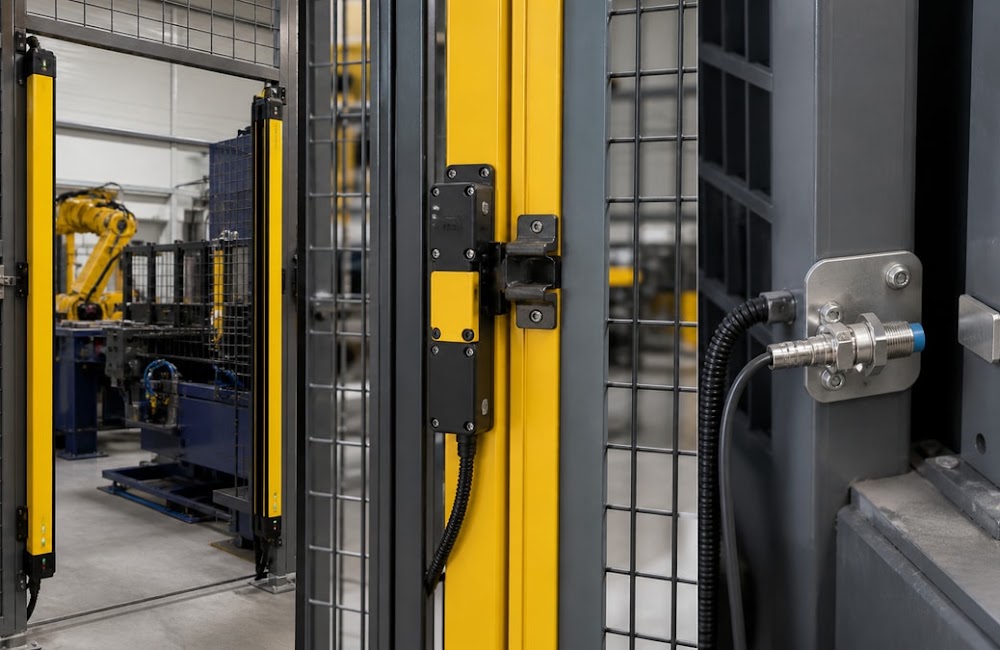
A safety sensor is a security detection device designed for industrial plants to effectively prevent hazards. The system works by assessing foreign objects or individuals entering high-risk areas; upon detecting abnormalities, the sensor immediately sends signals to stop machines to prevent severe accidents.
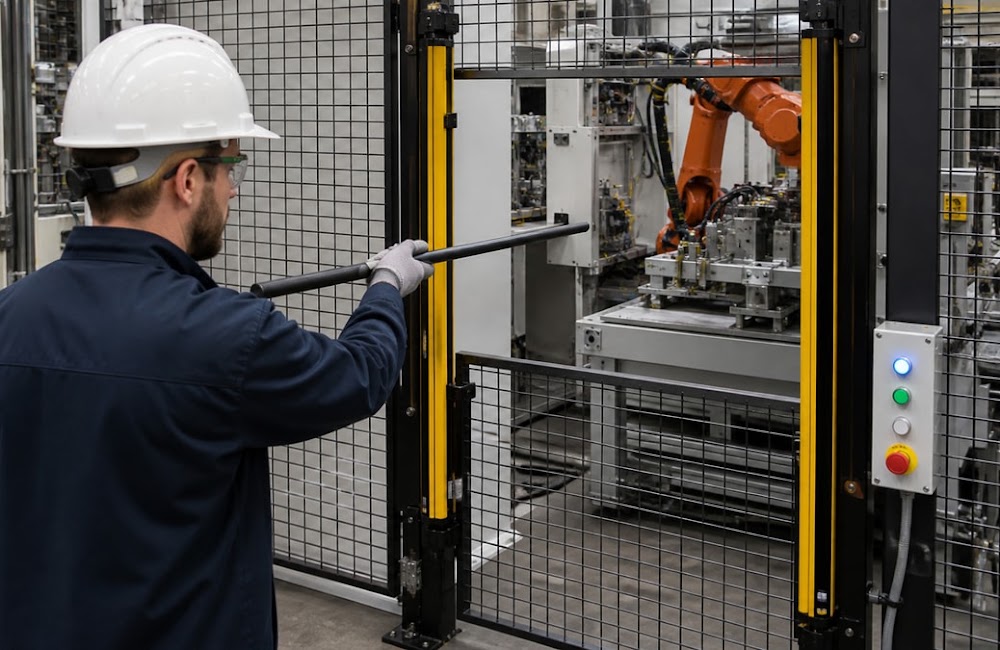
How Safety Sensors Work
Based on the experience of the SCMA engineering team, each type of safety sensor operates differently according to technology. Understanding these basic principles will help plant managers make appropriate and correct decisions when choosing equipment.
Failsafe Inductive Safety Metal Detection Sensors
This type of device uses electromagnetic field principles to evaluate moving metal parts within a specified range. The system generates an induced current to continuously check the safety status. If the target object moves out of the safe zone, the circuit will immediately stop the machine without requiring contact.
Safety Light Curtains/Area Sensors
The operation of Safety Light Curtain relies on communication between a light emitter and receiver that shoots infrared beams to form a network. If any body part or workpiece interrupts the light curtain, the receiver will not receive a return signal; the system processes this as an order to stop operations to cut off production in milliseconds.
Magnetic & RFID Coded Safety Switches
This group of sensors communicates with actuators installed on machine gates through high-frequency waves. The use of RFID technology for coding ensures the most accurate confirmation of gate closure positions. If a door is opened during operation, the system will cut off the circuit to ensure safety.
Safety Controller System
All safety sensors must be connected to a central control system with continuous self-checking processes (Cyclic Diagnostics). A parallel circuit design helps assess errors in case one device fails; if the system detects a broken wire, it will immediately stop the machine to prevent failure.
How Many Types of Safety Sensors Are There?
Safety technology has been developed in various forms to address different levels of risk in industrial areas. Engineers should assess the type of equipment that aligns with the on-site environment for maximum efficiency.
Safety Light Curtain
This is a technology that uses infrared beams to create an invisible barrier around hazardous areas. If an operator walks through or reaches into the risk zone, machinery will immediately stop working. This solution is popularly installed in front of metal presses or conveyor belt lines.
Motion Sensors
This type of technology relies on microwave waves to accurately analyze movement within a defined radius. The system can assess the direction of an approaching target object. These devices are suitable for use with automatic doors in warehouse areas.
Safety Mats/Edges
These safety detection equipment come in the form of industrial rubber mats that respond to physical pressure. When personnel step on the rubber mat, the internal circuit sends a signal to cut off the operation of large machinery.
Safety Switches
Safety switches are basic devices used to check the status of machine covers being open or closed. The system locks out the machine from starting if the door is not properly shut. Using this equipment helps securely control access to risk points.
Maintenance of Safety Sensor
In a case study that SCMA handled for an automotive parts manufacturing plant, it was found that preventive maintenance clearly reduces downtime. Properly maintaining the safety sensor system is a crucial step that repair and maintenance teams should not overlook.
Cleaning the Surface of the Sensor
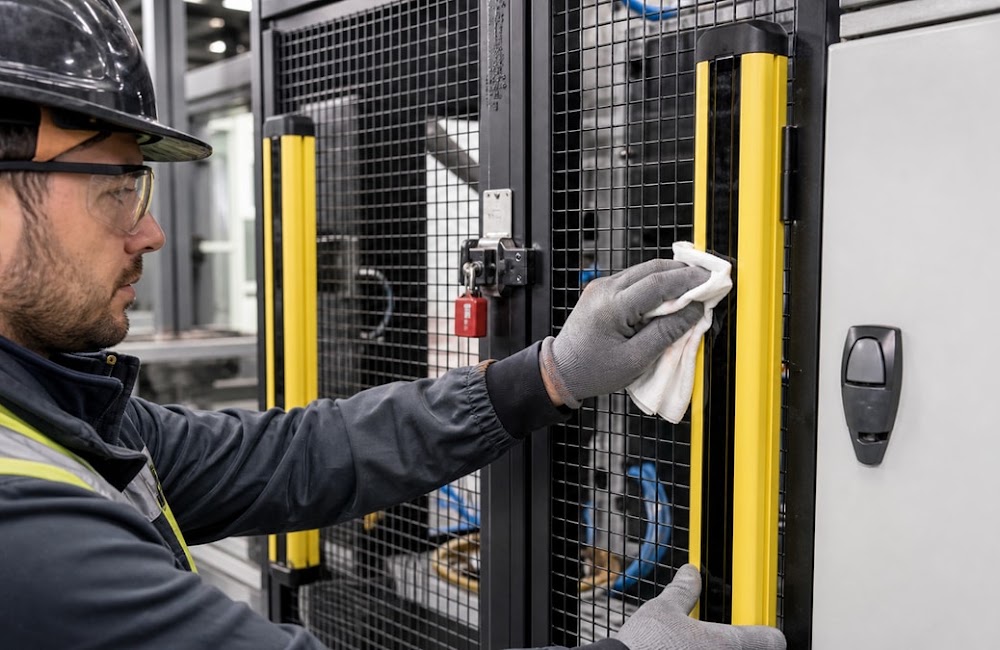
The technicians should regularly use clean cloths to wipe the lens surface of the light curtain safety equipment. Dust or oil residue accumulation may obstruct the beam, causing incorrect evaluations. Consistent cleaning helps extend the system's operational life.
Checking for Obstructions
Maintenance engineers must frequently clear the area in front of the sensor to prevent debris or leftover products from accumulating. Foreign objects on the conveyor belt may trigger the system to unnecessarily stop machinery. Organizing the space around machines helps maintain the stability of safety systems.
Function Test (System Testing)
Simulating risk scenarios to test the sensitivity of the system is a measure that must be carried out according to maintenance schedules. You can test by interrupting the light beam to see how quickly the relay breaks the circuit. Proactive testing confirms readiness before starting actual production lines.
Checking Electrical Wires
Vibration in factories may cause signal connection wires to deteriorate or become loose. Maintenance teams must regularly check and tighten sensor wire connections to prevent wiring issues that could lead to machinery malfunctions.
Usage of Safety Sensors
Safety technology from leading brands is widely applied across various industries, from automotive manufacturing to electronic component production. Understanding the highlights of Safety Light Curtains as well as other sensor types will help ensure a smooth system setup.
Safety Light Curtain
Most metal stamping factories opt for light curtains to delineate workpiece feeding areas instead of physical barriers. Infrared beams enhance operator convenience and flexibility in operation. If hands enter the hazardous zone, the press will immediately stop to ensure safety.
Area Sensor
This type of equipment is particularly suitable for use in industrial robot cells. The system creates a two-dimensional detection network to monitor the area around the robot. If someone enters the machine's radius, it will slow down or stop to prevent collision.
Safety Controller
This component acts as the decision-making center for the entire safety system in production lines. Engineers can set complex operating conditions to control multiple machines simultaneously. This solution efficiently integrates all risk points into a single system.
Benefits of Safety Sensors
A tip from the real workplace is to view a safety technology system as a worthwhile investment. Using these devices helps elevate factory standards for long-term reliability.
Automatic Shutdown to Prevent Accidents
The safety system responds to abnormal events much faster than human reflexes can react. Upon detecting intrusion into hazardous areas, circuit-breaking commands are sent out in milliseconds. This level of accuracy is crucial for safeguarding the lives of personnel.
International Standard Safety Levels
Equipment from reputable suppliers all undergo high-level engineering certification. Installing certified systems helps your factory pass legal compliance inspections. Good solutions reflect a professional image of your organization.
Convenient and Flexible Installation
New sensor technology is developed to be compact with robust environmental durability. This design allows the installation team to easily find mounting positions in limited spaces, leading to time savings when setting up new systems.
How to Choose Safety Sensors
Selecting equipment for industrial use requires a comprehensive analysis of factors for maximum value. The engineering team recommends initial evaluation criteria as follows:
- Analyze Usage Patterns: Assess whether the work area is suitable for safety light curtains or general-purpose safety switches.
- Select Appropriate Resolution: For manual part feeding, a 14 mm beam spacing should be used to protect against operator finger level.
- Check Industry Standards: Specify the desired risk assessment performance level, such as SIL 3 or PL e standards.
- Evaluate Installation Environment: Areas with heavy dust or oil residue should opt for models with IP67 protection rating or higher.
- Verify System Compatibility: Consider whether the new sensor can fully connect to existing safety controllers in the factory.
Caution in Installing Safety Systems
Purchasing high-quality equipment to install without proper understanding may result in an incomplete system. The design of the safety structure is as important as acquiring the equipment. SCMA team would like to share some key precautions.
- Evaluate risks beforehand: Engineers must identify all hazards in the production line before planning to install Safety Sensors every time.
- Parallel wiring: Should design independent dual-channel circuits to prevent risk of signal failure if one wire breaks.
- Select compatible equipment: Matching transmitter and receiver devices must meet emergency machine stop criteria.
- System testing before operation: Maintenance teams need to perform real-time checks to confirm that machines can come to a complete halt within the specified time frame.
Summary
Safety Sensors as well as Safety Light Curtains are the core of creating a safe and uninterrupted working environment. Considering and properly maintaining standard-compliant technology will help your business grow steadily Our Services cover from problem analysis to comprehensive solution delivery by our expert team.
If you want to buy Safety Sensors, SCMA is available today!
Investing in a trusted technical partner is the most worthwhile decision. SCMA Co., Ltd. is the distributor of Safety Controller and high-quality global sensor systems. We have a team of expert engineers ready to advise on integrating the best system for you. You can browse All Products, or contact SCMA to elevate your production process into the future together.
Frequently Asked Questions
How does a Safety Sensor differ from a regular sensor?
The safety sensor is designed with real-time self-checking systems. If the device malfunctions, it will immediately shut down the machinery to ensure maximum safety.
What is the detection range of a safety light curtain?
The detection range varies depending on the specifications of the unit and can range from just a few centimeters for close proximity up to several dozen meters for large warehouse protection areas.
Is it necessary to use with a controller?
Using a central control system enhances processing stability. This device manages data from all safety sensors to ensure coordinated machine shutdown operations.
Does dust in the factory affect the sensor?
A dirty environment may obstruct the lens, causing errors in infrared light readings. Engineers must therefore choose models with IP67 standards to protect against dust and water.
Does SCMA offer on-site installation services?
Our company provides comprehensive engineering solution services, from consultation and design of safety circuits to professional team on-site system installations.