
What is a PLC, and why is it important for modern industrial factories? Many people may have heard the term PLC before but do not fully understand its meaning. In this article, SCMA will introduce you to PLCs from their history, how they work, types, features, and why PLCs are crucial components of modern automated control systems. We also recommend our PLC design and installation services from SCMA, which is ready to provide consultation for all businesses.
What is the history of PLCs?

In the past, industrial factory machine and production process control systems used relay electrical circuits that required many wires. This made changing operation sequences or expanding the system difficult, time-consuming, and costly. PLCs were developed to solve these problems by using computer systems and control programs instead of traditional relay circuits. This reduced size, increased reliability, saved energy, and allowed for easy changes in operations simply by modifying the program. Therefore, they became widely popular in modern industries.
What is a PLC?
PLC, or Programmable Logic Controller, is an automated control system that uses specialized industrial computers to control the operation processes of machines and various equipment instead of traditional relay circuits. A PLC has input sections (Input) from measuring devices such as sensors and switches, and output sections (Output) to control end devices like motors and solenoid valves according to pre-written programs. This allows for precise, fast, and flexible production process control, making it suitable for modern industrial automated systems.
How does a PLC work?
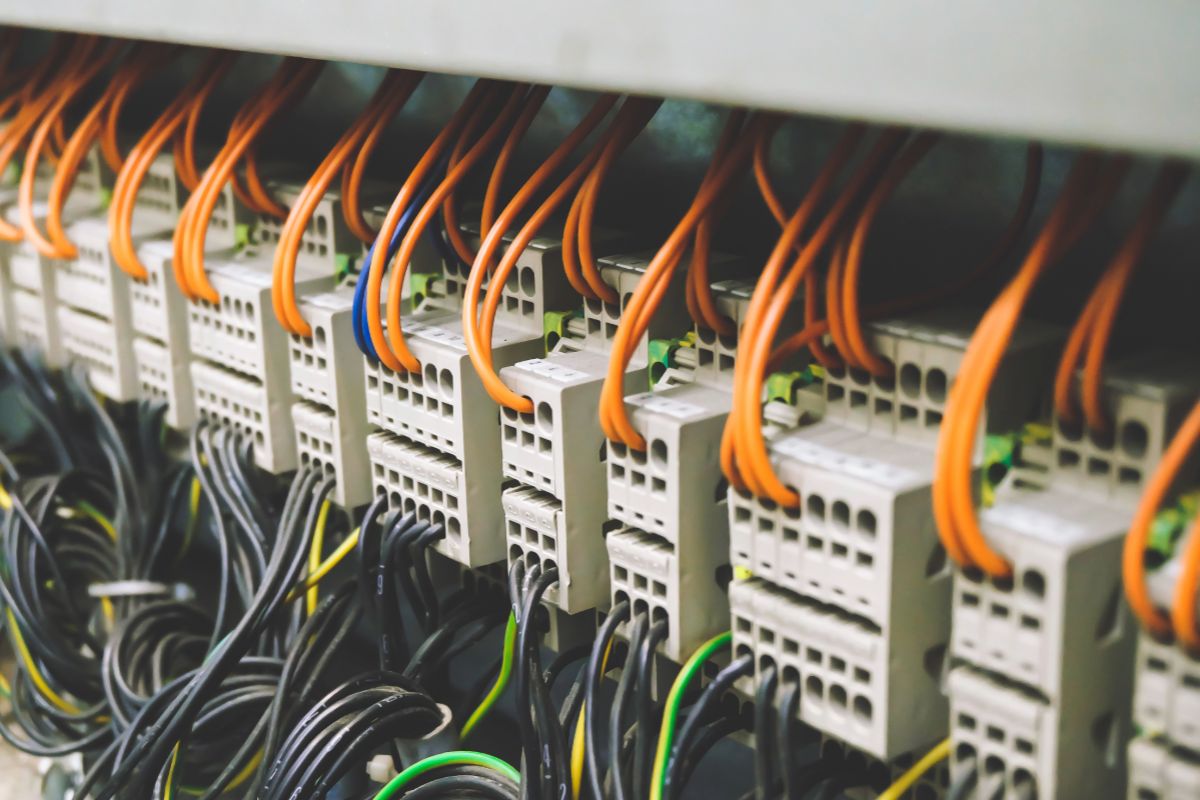
A PLC control system works by continuously reading the status of input devices such as sensors and switches, then processing them according to the program that has been written to send control signals to output devices like motors and valves to perform tasks as specified. PLCs are suitable for work requiring accuracy and quick response times, such as assembly lines, quality checks, temperature-controlled rooms. They can easily change the order of operations by simply modifying command programs, making them more flexible than traditional control systems.
What types of PLC (Programmable Logic Controller) are there?
There are two main types of PLC to choose from:
Modular PLC
This is a modular PLC that can increase or decrease the number of sub-modules according to system requirements. It's suitable for complex work or systems with future expansion potential, although it may be more expensive, it offers better flexibility in system design.
Compact PLC
This is a single-unit compact PLC that is smaller and cheaper. It's suitable for basic control work or where installation space is limited, but its ability to expand the system will be less than modular models.
What are the main components of a PLC?
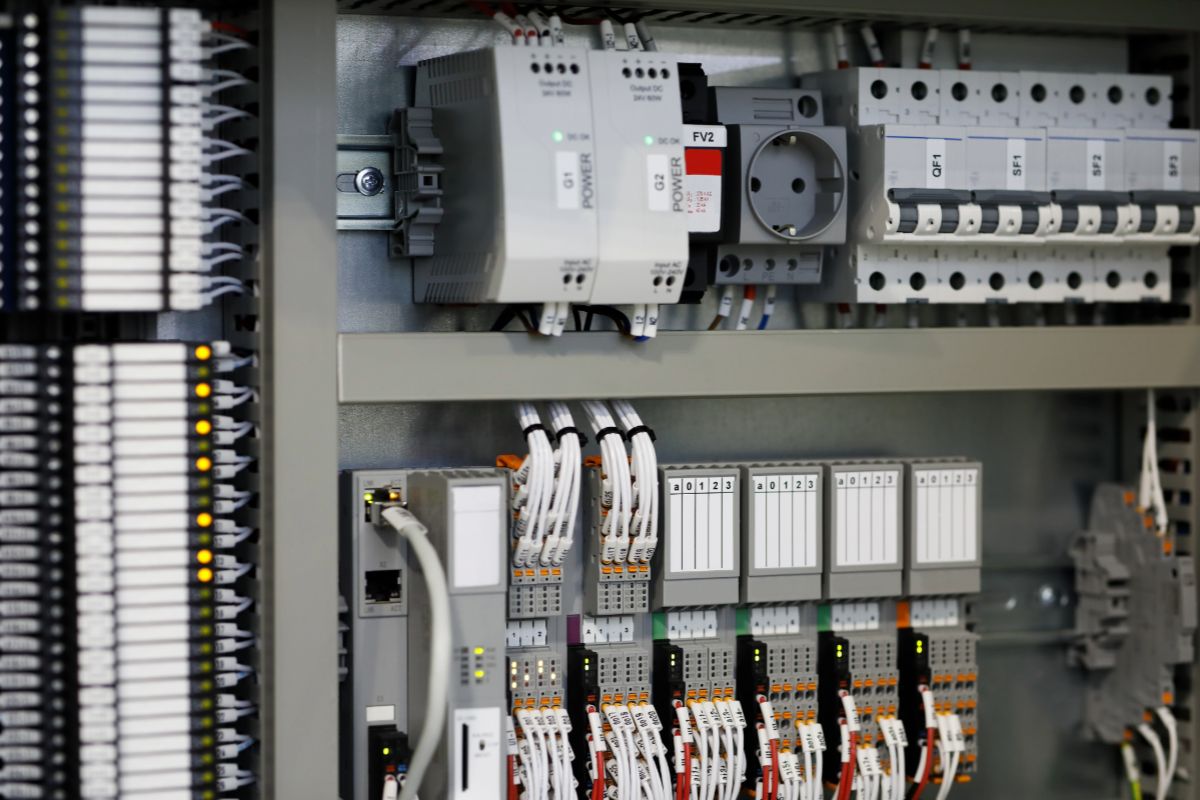
All types of PLCs have basic equipment similar to that of a computer, which includes:
- CPU or microprocessor, responsible for processing programs and controlling operations
- RAM memory to store data and temporary programs during operation
- ROM memory to store permanent program and data even when power is off, divided into EPROM erased by UV light and EEPROM erased by electricity
- Input and output ports to connect with sensors and control devices
- Communication ports to connect with computers or other devices through a network
- Power supply unit to convert AC power into DC for use
- Programming suite used to input and edit control commands
What are the advantages of a PLC (Programmable Logic Controller)?
PLC systems offer numerous benefits, leading to the development of automated work in industries, including:
- Easy programming, using understandable language, easy system modifications
- High reliability, continuous operation for long periods, good environmental tolerance
- Low power consumption, energy savings, minimal heat and dust generation
- Compact size, installation in narrow spaces possible, easy system expansion
- Available in various models and price levels, suitable for a wide range of applications
- Continuous technological development, supported by extensive research
- Precise control, suitable for high-accuracy work requirements
- Long service life, cost-effective investment
How to Choose a PLC?
When you want to apply a PLC, it is important to choose one that suits your needs by considering the following:
- The number of input and output ports must be sufficient for the connected devices
- Processing speed should match the complexity and response time required
- Memory must be adequate for storing data and programs used
- Type of I/O module should match the signals being used, such as digital or analog
- Communication must support protocols for connecting to other devices
- System scalability should be considered in light of future needs as well
- Protection standards such as dust and water resistance must match the installation environment
In addition, it is advisable to choose a PLC from a reputable brand with good after-sales service and cost-effective pricing for smooth operation and worthwhile investment.
If you are interested in installing a PLC system, contact SCMA today!
SCMA is a leading expert in the design and installation of automatic control systems, ready to provide comprehensive consultation on PLCs. This includes selecting appropriate equipment, system setup, programming, and after-sales service by professional teams with high experience, understanding different business needs, and providing services with heart to ensure customer satisfaction. You can contactSCMA Company Limited today for advice.
Summary
What is a PLC? It is a control system that uses computers and software to replace traditional relay circuits, enabling precise, fast, and flexible control of machinery and various equipment. Therefore, it is the core component in developing modern industrial automation systems. PLCs come in both Modular and Compact types for selection based on suitability, offering numerous advantages such as ease of use, reliability, energy efficiency, long service life, and continuous advancement.
If your business needs to upgrade or install an automated control system with PLCs, you can contact the expert team at SCMA for consultation anytime. We are happy to provide comprehensive advice on selecting and designing PLC systems tailored to meet your business requirements, thereby enhancing operational efficiency and competitive advantage.
Frequently Asked Questions
What are the PLC processing steps?
The basic working process of a PLC consists of 4 steps:
- Read input signals from sensors or switches.
- Process signals according to the programmed instructions.
- Update output values to control end devices.
- Return to the first step and repeat continuously.
How many types of PLC systems are there?
There are two main types of PLC systems: Modular PLC and Compact PLC. The Modular type is divided into smaller modules that can be added or removed as needed, suitable for large complex projects. The Compact type integrates everything into a single unit, compact in size, ideal for basic tasks or where space is limited.
What is a PLC?
A PLC stands for Programmable Logic Controller. It is a control device used to manage the operation of machinery and production processes using computer systems. By programming, it determines the sequence of various operations, allowing for precise, flexible, and easily adjustable system control.
What is PLC training?
PLC training involves setting topics, content, formats, and steps for teaching about PLCs to ensure learners have a theoretical and practical understanding of PLCs that can be applied in real-world scenarios. Training usually follows industry standards and the specific needs of related organizations.