

Has your production line been affected by sudden machine downtime? Motor Monitoring Sensors are the key to solving this problem. The SCMA engineering team is ready to present a comprehensive solution for motor control systems. This article will introduce you to types, maintenance methods, and techniques for selecting equipment suitable for your industry.
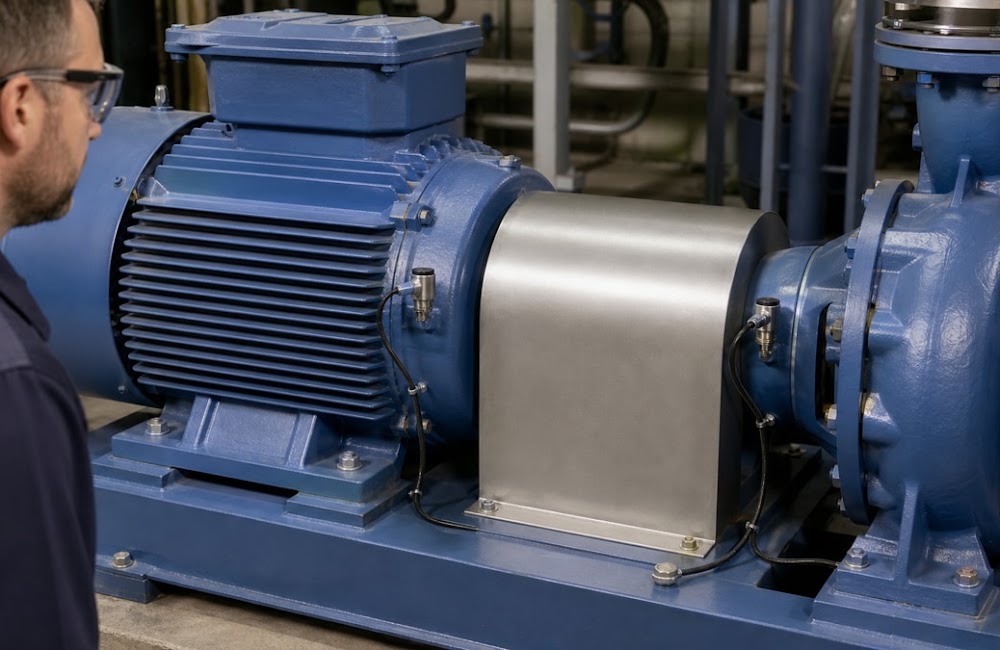
What are Motor Monitoring Sensors?
Motor Monitoring Sensors are electronic devices in the group of Industrial Sensors, used to measure and monitor the operating status of electric motors such as speed, direction, temperature, vibration. These devices help prevent sudden damage, save energy, and control machine operation with maximum accuracy.
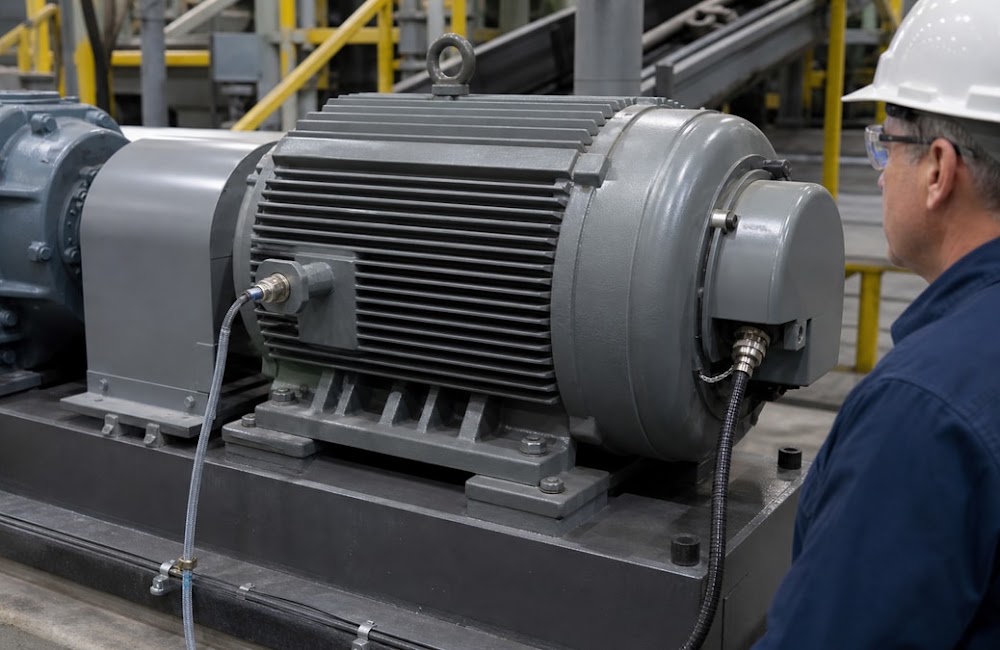
How Motor Monitoring Sensors Work
The operation of Motor Monitoring Sensors in the group of Condition Monitoring Systems starts with measuring physical parameters such as vibration or temperature. Then, the sensor converts this data into electrical signals and sends them to a central processing system for analysis to detect abnormalities before the machine stops working.
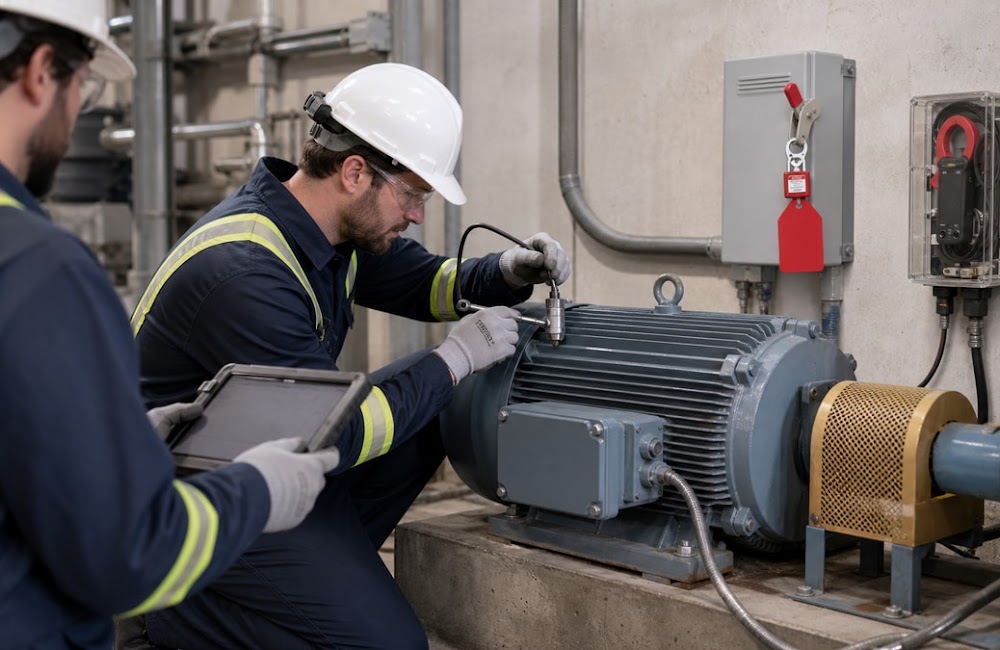
How many types of motor monitoring sensors are there?
To select the appropriate sensor for specific needs, it is necessary to understand the type of equipment first. Motor monitoring sensors can be divided into 4 main categories based on their operational characteristics to track status and prevent damage as follows:
Speed Sensors & Encoders (RPM Sensors)
This type of sensor is responsible for checking the speed and rotation of electric motors. It can be further classified into magnetic (Electromagnetic) or optical types. The operation of these devices helps ensure high accuracy in production line speed control systems.
Vibration Sensors / Accelerometers
This type of equipment is used to detect abnormalities in machinery by measuring vibration. Based on the experience of SCMA's engineering team, the data obtained can effectively predict bearing wear or loose components.
Temperature Sensors
The temperature sensor measures heat accumulation around the motor windings or bearings. The system continuously monitors to prevent motor burnout due to overload conditions, which is a major cause of production line downtime.
Current & Voltage Sensors (Load Monitoring Sensors)
The operation of these sensors focuses on continuous electrical load monitoring in the system. If there is a sudden surge in current or abnormal system operation, the device will immediately signal to shut down operations to prevent further damage.
Motor Monitoring Sensor Maintenance
Proper motor monitoring sensor maintenance is crucial for extending the lifespan of equipment. Regular upkeep ensures that measurement systems operate accurately, following these guidelines:
Comprehensive Inspection
Operators should frequently check for cracks, dirt, or moisture on the sensor and its wiring to prevent severe damage to the machine condition monitoring system.
Cleaning the Sensor
Dust, oil stains, or other contaminants around the equipment can affect heat dissipation. Maintenance teams must carefully clean to maintain an environment suitable for accurate measurements.
Checking Mounting Stability
The sensor mounting base, such as a magnetic base (Magnetic Base) or screw mount, needs to be checked for secure attachment. Loose installation can significantly skew vibration measurement readings from reality.
Calibration
Scheduled calibration of the sensors is an essential step. This process ensures that measurements such as temperature and vibration monitoring (Vibration Monitoring) are reliable and meet engineering standards.
Cable Management
The sensor cables must be inspected for bends, breaks, or interference signals. Proper cable storage prevents common issues like cable breakage in factory environments.
Software Update and Review
If the sensors work with diagnostic and service units (Diagnostic & Service Units), system administrators should always update firmware. Evaluating software performance ensures that predictive alert functions operate at maximum efficiency.
Motor Monitoring Sensor Usage
The application of motor monitoring sensors primarily aims to monitor machine damage. Selecting the appropriate type of sensor based on the inspection characteristics has interesting details as follows:
Vibration Monitoring / Accelerometers
This device is installed directly onto the motor housing to detect imbalance (Unbalance), shaft misalignment, or bearing damage. If the motor vibrates beyond normal levels, the system will immediately send an alert signal.
Temperature Sensors
The use of these sensors focuses on measuring heat accumulation around the motor windings or bearings. The system will immediately shut down the motor if the temperature rises abnormally to prevent motor burnout from overloading (Overload).
Speed Sensors / Encoders
The main function is to detect the rotational speed (RPM) of the motor for consistency. Data from the sensor helps control systems operate accurately, and it also checks for slipping or sudden stops in production lines.
Lubricant Quality Sensors
This type of sensor is suitable for large motors with built-in lubrication systems. It functions to check contaminants, metal particles, or moisture in the oil, helping assess the condition of the lubricant to prevent internal component damage.
Advantages of Motor Monitoring Sensors
The installation of motor monitoring sensors enables system operators to monitor machine health in real-time. Early detection of temperature or vibration data reduces the risk of sudden damage, resulting in reduced downtime and increased production efficiency over the long term.
How to Choose Motor Monitoring Sensors
Selecting a motor monitoring sensor requires considering the motor parameters and the working environment primarily, for accurate data analysis. Here are 5 key criteria to consider:
- Select the right type of sensor: Use Accelerometers for vibration measurement, Temperature Sensors (PT100) for temperature measurement, and Current Sensors (CT) for load measurement.
- Check the Measurement Range: The maximum supported temperature range or frequency range of vibrations must cover your motor specifications.
- Output Signal: The signal should be compatible with existing PLC/SCADA systems such as Analog (4-20 mA), Digital (Relay Output) or Modbus RTU.
- Protection Level (IP Rating & Environment): For dusty or wet environments, choose IP65 and above. In hazardous areas, use explosion-proof models (Ex-Proof).
- Mounting Style: Magnetic mounting is suitable for temporary work, while threaded mounting is ideal for permanent installation to measure long-term values.
Causes of Abnormal Motor Operation in Factories
Before deciding to installMotor Monitoring Sensors, understanding the causes of problems will help you choose the right measuring tools. Based on SCMA's engineering team experience, the issues with electric motors are mainly due to the following factors:
- Mechanical Issues: Misalignment, rotor imbalance, or bearing wear can be quickly detected by vibration sensors.
- Electrical Issues: Low voltage, unbalanced current, or internal coil short circuits can be checked and prevented from causing further damage with Current Sensors.
- Thermal Issues: Inefficient heat dissipation causes motor overload. Installing temperature sensors around the coils will accurately prevent this issue.
- Environmental Factors: Dust, humidity, or chemicals in the production line that accumulate inside the motor are critical factors causing premature malfunction of internal components.
Summary
Motor Monitoring Sensorsare essential tools for enhancing factory efficiency and reliability. Choosing appropriate industrial sensors along with proper maintenance clearly reduces downtime. If you're looking for precise control system solutions, SCMA is ready to provide consultation and design systems tailored to your needs.
If you want to buy Motor Monitoring Sensors, you can purchase them from SCMA today!
Investing in high-qualityMotor Monitoring Sensorsis the most cost-effective long-term damage prevention. SCMA Co., Ltd., as experts in measuring tools, are distributors of leading global brands such as ifm and provideProject & Solutions. We design and install comprehensive technical service systems. You can browse our All Products to find equipment that meets your factory's needs.
Frequently Asked Questions
What is the most important type of motor monitoring sensor?
Vibration sensors and temperature sensors are considered the most critical basic equipment. Data from these two types of sensors provide the broadest coverage for early warnings on mechanical and electrical issues.
Is it necessary to stop machinery to install a sensor?
Certain types of sensors support external installation with magnetic bases, so there is no need to shut down the machine. However, installing screw-in type sensors requires planning for temporary production line downtime for safety reasons.
What is 4-20 mA signal?
The 4-20 mA signal is an analog standard that transmits data from a sensor to a PLC control system. The advantage of this type of signal is its resistance to interference and ability to transmit data over long distances.
How often should sensors be calibrated?
The appropriate frequency depends on industry standards as well as the operating environment. Generally, SCMA recommends sending equipment for calibration at a certified laboratory at least once a year.
Does SCMA offer sensor installation services?
The SCMA engineering team provides comprehensive services from consultation and system design to installation and after-sales service. We are committed to delivering ready-to-use solutions for your factory.