
A hygrometer is a crucial measuring tool in an era where environmental control has become a key factor for success across various industries, from product storage to food production and healthcare. SCMA, as a specialist in high-quality measurement tools, presents comprehensive information about moisture meters to help you understand their operation principles, types, and how to choose the right one that suits your needs.
What is a Hygrometer?
A hygrometer is an instrument used for measuring the amount of water vapor in the air, displaying results as relative humidity (RH) in percentage. This indicates the ratio between the actual moisture content present in the air at a given temperature compared to the maximum moisture that the air can hold at the same temperature. This tool is crucial for controlling production quality, storing raw materials, and creating suitable environments across various industries, including everyday use such as humidity control in homes, hospitals, or museums.

How Hygrometers Work
The working principle of hygrometers varies depending on the technology used. The oldest type is the hair hygrometer, which relies on the property of human hair or organic material that expands when absorbing moisture and contracts in dry air. This length change is transmitted through mechanical mechanisms to a needle gauge on the dial. In modern times, digital atmospheric humidity measuring devices use electronic sensors such as capacitive or resistive sensors with electrical resistance or capacitance values changing according to moisture levels, resulting in much more accurate and faster measurements than traditional methods, along with easy-to-read digital displays and additional functions.
4 Steps to Use a Hygrometer
Using a hygrometer is not complicated and can be done in just a few simple steps. However, it's important to thoroughly study the user manual of each model to fully utilize all its functions.
- Turn on the device and wait for display - Press the power button to start. The device will take a moment to adjust to its environment, after which temperature and humidity readings will appear on the digital screen. The sensor at the end of the probe continuously detects these values.
- Select desired measurement units - Use the °C/°F/DP button to switch between Celsius, Fahrenheit temperature units or display Dew Point (the temperature at which water vapor in air begins to condense into droplets). This information is useful for assessing the risk of condensation.
- Check maximum and minimum values - Press the MAX/MIN button to view the highest and lowest recorded values since turning on. This function is useful for tracking environmental changes over a period of time, such as monitoring warehouse humidity throughout the day.
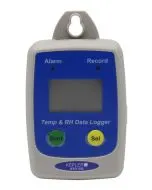
- Record and analyze data - New models of air moisture sensors come with a Data Logger function that can automatically record measurements at specified intervals, exporting the data for trend analysis or report generation. This is particularly useful for quality control in industries.
Types of Hygrometers
Hygrometers are primarily classified into two types based on their display characteristics, each with its own advantages and suited for different applications. The choice should be made considering the requirements and environmental conditions of use.

1. Analog Thermo-Hygrometer
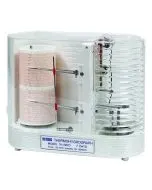
Analog hygrometers use a dial with needles to display the readings. They have the advantage of not requiring batteries, are durable in various environmental conditions, and can be read from a distance. Suitable for permanent installation in areas where quick visual checks are needed, such as greenhouses, warehouses, or storage rooms. Although less accurate than digital models, they suffice for general use that does not require high precision.
2. Digital Thermo-Hygrometer
Digital hygrometers display readings as numbers on an LCD or LED screen, offering high accuracy and easy readability. They often come with various additional functions such as maximum-minimum recording, alarm settings, computer connectivity, and displaying other parameters like dew point. Suitable for applications requiring high precision, data logging for analysis, or use in laboratories and industries with strict quality control standards.
What Should You Consider When Buying a Hygrometer?
Choosing the right hygrometer involves considering several factors to ensure you get a tool that meets your needs and is worth the investment. It's important to clearly define your requirements and limitations before making a purchase.
- Purpose and Usage Environment - Determine whether it will be used indoors or outdoors, in areas with dust, humidity, or chemicals. Also consider the temperature range to choose a device with an appropriate protection level (IP Rating) and material.
- Measurement Range and Accuracy - Check if the measurement range of relative humidity covers the values you need, and whether the accuracy is acceptable. Generally, ±2-3% RH is sufficient for general use, but laboratory work may require an accuracy of ±1% RH or better.
- Additional Functions and Display of Other Parameters - In addition to humidity and temperature, you might need dew point calculation atmospheric pressure measurement or even air quality monitoring such as CO2 levels or VOCs for office buildings or clean rooms.
- Data Logging and Export Capabilities - For applications requiring trend tracking, choose a model with an integrated Data Logger that can be set to automatically log data at specified intervals. The device should also support exporting data via USB, Bluetooth, or Wi-Fi for further analysis or reporting.
Maintaining a Hygrometer Properly
Proper maintenance of a hygrometer will help ensure accurate performance and extend its lifespan. Follow the manufacturer's instructions and perform regular maintenance.
- Regularly clean the device and sensor - Use a soft, damp cloth to wipe down the unit. Clean air vents around the sensor with a soft-bristled brush. Avoid using harsh chemicals that could damage the sensor.
- Remove batteries when not in use for extended periods - Prevent battery leakage which can damage internal circuits and prolong battery life.
- Avoid high temperatures and direct sunlight - Leaving the unit in direct sun or near heat sources will cause plastic to degrade, damage displays, and affect sensor accuracy.
- Keep away from flammable objects and ignition sources - Especially in hazardous areas or near chemicals, choose models with explosion-proof standards (Explosion Proof).
- Prevent water exposure beyond the limit - Even if some models have waterproof ratings, do not submerge or allow water to enter the unit as it can cause electrical short circuits.
- Be cautious of impacts and drops - Sensors and internal components are delicate. A hard impact may result in irreparable damage.
- Carefully clean the external sensor head - For models with an external sensor, gently wipe with alcohol to remove dust and dirt that may interfere with measurements, especially in dusty environments.
- Calibrate the instrument as per specified intervals - Send for calibration at least once a year or according to industry requirements to ensure measurement accuracy.
Interested in Hygrometers? You Can Buy from SCMA Today!
SCMA, a leading hygrometer supplier, offers high-quality products from world-renowned brands, covering both analog and digital models with various price ranges. From budget-friendly options for general use to professional-grade models for precision work, our expert team is ready to advise you on selecting the right hygrometer that meets your needs, along withafter-sales servicesthat are comprehensive, including training, calibration, and spare parts procurement. Every item comes with a warranty certificate and fast nationwide delivery.

Summary
A hygrometer is an important tool for measuring humidity, playing a crucial role in maintaining appropriate conditions across various industries. From product storage to production process control and creating healthy environments, choosing the right hygrometer involves considering both intended use and required accuracy as well as additional features. Proper maintenance ensures efficient operation and extends the lifespan of the equipment. SCMA is ready to be your reliable partner for high-quality hygrometers, providing comprehensive consultation and after-sales services to ensure you receive products that truly meet your needs.
Frequently Asked Questions
What are the units of measurement for a hygrometer?
The primary unit of measurement for a hygrometer is percent relative humidity (%RH), which indicates the ratio of water vapor in the air compared to its maximum capacity. Additionally, there are supplementary units such as g/m³ for absolute humidity and °C or °F for dew point temperature.
What is a psychrometer?
A psychrometer is a type of hygrometer that uses the principle of measuring the difference in temperature between a dry bulb thermometer and a wet bulb thermometer. The evaporation of water from the wet bulb causes cooling, and this difference can be used to calculate relative humidity. This method is accurate and commonly used in meteorology.
What are the differences between a wet bulb and a dry bulb?
A dry bulb is a regular thermometer that measures actual air temperature, while a wet bulb is a thermometer wrapped in cloth soaked with water. As the water evaporates, it absorbs heat causing the temperature to drop; the more arid the air, the greater the evaporation and thus the larger the difference in temperature. This difference can be used to accurately calculate relative humidity.
What is the function of a hygrometer?
A hygrometer's main function is to measure and display the relative humidity in the air. It is used to control environmental conditions in warehouses, manufacturing plants, laboratories, or areas requiring specific levels of moisture. Additionally, it helps prevent issues caused by excessive or insufficient humidity such as mold growth, material cracking, or health problems from overly dry air.
Which models are worth considering?
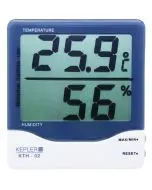
1.KEPLER Digital Thermo-Hygrometer Model KTH-02 Big Display Thermo-Hygrometer
https://scma.co.th/kepler-kth-02.html
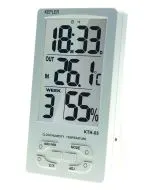
2.KEPLER Digital Thermo-Hygrometer Model KTH-05 Temperature&Humidity Indicator
https://scma.co.th/kepler-kth-05.html
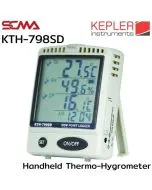
3.KEPLER Temperature & Humidity Meter Model KTH-798SD Handheld Thermo-Hygrometer
https://scma.co.th/kepler-kth-798sd.html
4.KEPLER Temperature & Humidity Meter Model KTH-799SD Temperature&Humidity Data Logger