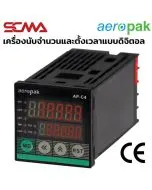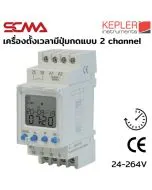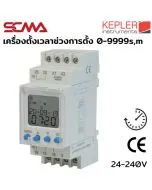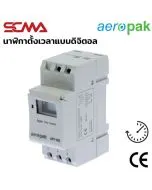

A counter is a crucial device for controlling and monitoring production processes in industrial factories, especially as digital technology plays an increasingly important role in all systems. This tool helps to accurately check and collect quantitative data, reduce errors from manual counting, and significantly enhance the efficiency of automated systems. For SCMA, which is a specialist in control systems and industrial measuring tools, counters are one of the products developed alongside services that meet the needs of all industry sectors.
What is a Counter?

A counter, or Counter, is an apparatus used to count events, objects, or units of work in industrial systems. It can process and display results accurately in real-time. Modern digital counters can connect with sensors or other detection devices to start the counting process automatically, whether it's counting parts on a production line, measuring machine rhythms, or tallying movements in complex control systems. This versatility makes counters an essential tool in modern manufacturing processes.
What are the features of a Counter?
Counters have various functions that cater to different applications such as production systems, quality control, and automation. The main features to consider before selecting one include:
-
Ability to count up or down based on set conditions
-
Preset value setting for comparison points
-
High accuracy in processing, supporting multi-digit values
-
Accumulation and reset functions
-
Status checking and alerting through input/output
-
Support for looping processes
-
Digital display, making values clear to the user
-
Easy connectivity with other systems such as PLC, SCADA or IoT
How to Use a Counter Machine?

To use a counter machine efficiently, it must go through appropriate setup and verification processes that suit the nature of the work. The general steps for usage include:
-
Set initial parameters such as counting mode and default values
-
Specify the operating pattern, such as counting up or down
-
Connect inputs to sensors or detection devices
-
Start operation, the system will begin counting according to stimulation
-
Check the results displayed on the digital screen
-
Reset values or change settings according to each usage cycle
Applications of Counters

Counters are widely used in various industrial and business sectors with the aim of enhancing efficiency in controlling, monitoring, and analyzing quantitative data. This tool can meet diverse application needs, from production lines to service work and automated systems.
Manufacturing Plants
Counters help check the quantity of products passing through each stage of the manufacturing process, reduce quality control errors, and analyze the efficiency of production lines in real-time.
Automation Industry
In automation systems, digital counters play a role in signaling control or shutdown based on preset quantities, such as stopping a conveyor belt when the number of parts reaches its target.
Time Tracking
Some models of counters can function like timers to track machine operation time or high-precision system processing times.
Testing
In laboratories or R&D, counters are used to count the number of tests or cycles in testing processes to measure component efficiency or durability.
Retail/Hotel Business
Used to count customer traffic entering and exiting areas such as automatic doors in hotels, shopping malls, or event spaces for service planning and density control.
Construction Industry
Can be used to count material transport cycles, measure equipment usage volume, or even the number of parts assembled each day for reporting and cost control.
Access Control
Used in security systems such as automatic entry doors or turnstiles to control the number of people entering and exiting restricted areas.
Benefits of Counters
Counters are tools that help industrial processes become more systematic and accurate, reducing errors caused by human labor and enabling the collection of data for analyzing work efficiency in a systematic manner.
-
Increase accuracy in controlling quantity and count
-
Reduce time spent on checking and collecting data
-
Help track and evaluate production processes
-
Support integration with automated systems or IoT
-
Adaptable across various industries, from manufacturing to services
-
Enhance security in access control systems
The Importance of Counters
Counters are not merely basic tools for counting objects, but crucial instruments that impact the overall accuracy and stability of a system, especially in processes relying on quantitative data to control production, measure efficiency, or accurately plan resource allocation. Choosing an appropriate counter can help reduce costs, increase productivity, and promote sustainable quality control systems.
Why Buy Counters from SCMA?
SCMA is a provider of measurement and control tools with extensive experience in the industrial sector. By choosing to purchase counters from SCMA, customers can be assured of receiving high-quality equipment, along with expert advice from our engineering team. We offer services ranging from requirement analysis to system design and comprehensive after-sales service and calibration. Most importantly, we select counters that can efficiently integrate with automated systems and IoT, addressing the needs of industrial development at all levels.
Summary
Counters are essential components in industrial control and data management systems. With their accuracy and ability to connect with digital systems, these tools clearly enhance the quality and efficiency of production processes. If you're looking for reliable SCMA services, they provide professional support from product selection through to after-sales service.
Frequently Asked Questions
What is a Counter?
A counter is an equipment that helps count quantities or events in various systems such as production, control, or services by using signals from sensors or preset inputs. This allows for real-time tracking of numerical data.
How does a Counter work?
A counter starts working when it receives a signal from the source device, such as a sensor or switch. It then processes according to the settings, such as counting up by one each time an object is detected, or resetting after reaching a set number, and sends out values through display screens or control systems.
What does a Counter do?
The main functions of a counter include:
-
Counting the number of objects or events in processes
-
Displaying real-time quantitative data
-
Sending control signals to other systems when preset values are reached
-
Storing data for analysis and evaluation
Why is a Counter important?
Counters play a crucial role in quality control, production assessment, and resource planning across all industries. They help operations run accurately, efficiently, and reduce errors from estimation or visual evaluation.