
Brix Refractometers are high-precision tools that will revolutionize your quality control methods forever! When sweetness is the heart of a product, accurate measurement is essential. SCMA offers high-quality Brix measuring solutions that industry experts in food, beverage, and agriculture have trusted for a long time. Discover professional tips on sweetness control with us.
What are Brix Refractometers?

Refractometer is a tool for measuring sweetness based on the principle that sweetness is measured by the refraction of light to determine the concentration of sugar in water, expressed as "degrees Brix" (°Bx), where 1 degree Brix means a solution containing 1 gram of sugar in 100 grams of water. This instrument has gained widespread popularity in food and beverage industries, agriculture, whether for checking fruit ripeness at harvest time or controlling the quality of high-concentration products such as jam, honey, and concentrated fruit juice.
How Brix Refractometers Work
Brix Refractometers use the refraction of light through a prism to read values on a scale. The degree of light refraction changes according to the amount of sugar in the liquid. The principle of operation is that when light travels through a sugar solution, it changes direction or "refracts" at a specific angle related to the concentration of the solution. The measuring instrument measures this refractive angle and converts it into an index of refraction (nD), which has a direct relationship with Brix values, making it easy to read the concentration of sugar or the amount of solids dissolved in the solution.
How to Calibrate Brix Refractometers

Calibrating (Calibration) Brix Refractometers, a sweetness measuring instrument, is an important step that should be done before each use, especially when changing environments with different temperatures. Proper calibration will ensure accurate and reliable measurements. Follow these steps:
- Drop 2-3 drops of distilled water onto the prism surface, then lower the plate to spread the water evenly across the glass. Be careful not to create air bubbles which can interfere with readings.
- Allow the water to remain on the glass surface for about 15-30 seconds, so that the temperature of the water balances with the instrument's temperature. This will help ensure accurate readings.
- Look through the eyepiece and observe the line separating the bright (white) area from the dark (blue) area. If this line is not at the zero level, use a screwdriver to adjust the calibration screw until the line aligns with the zero mark.
- After calibrating, you can test accuracy by using a standard solution of known Brix value, such as a 10% sugar solution which should read 10 degrees Brix.
How to Measure with Brix Refractometers

Measuring with a Brix Refractometer is not complicated. Start by placing the solution you want to measure on the prism plate, close the plate, and look through the viewing window in well-lit conditions. You will see a scale line; read the number according to the scale, which is measured in %Brix. For samples with solid content, such as fruits, juice should be squeezed out and filtered before placing it on the prism for accurate measurement. After each use, clean the prism thoroughly with clean water and dry it gently with a soft cloth.
Types of Sweetness Meters
Brix Refractometer Sweetness Meter comes in various types designed to meet specific needs across industries such as food, beverages, agriculture, and research. Each model has unique features and advantages that can help achieve the highest efficiency when matched with the nature of work.
1. Traditional Analog Brix Refractometers (with a viewing lens)
A basic meter using optical refraction through liquid samples, users look through an eyepiece to read the scale showing Brix values. Suitable for agricultural and fruit orchard applications as well as wine production due to its simplicity, affordability, and battery-free operation.
2. Digital Brix Refractometers
A newer model displaying digital readings for easier and more accurate measurements. Often equipped with several modern features:
- High Accuracy - Provides precise and reliable measurement results suitable for quality control and research work.
- User-friendly - No need to interpret scales manually, displays clear numerical readings.
- Automatic Temperature Compensation - Ensures accuracy even in changing temperature environments.
- Data Logging - Some models can store measurement history for retrospective analysis.
3. Abbe Brix Refractometers
High-precision laboratory benchtop instruments with better temperature control and calibration systems, capable of measuring refractive index and Brix values. Suitable for research, product development, and high-level quality control.
4. Inline Brix Refractometers
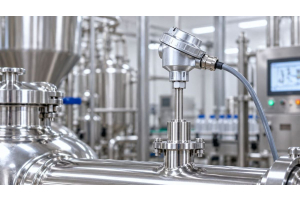
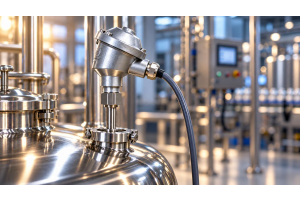
Designed for installation in industrial production processes to continuously monitor sweetness in real-time. Can be connected to automated production control systems to adjust sugar content immediately, ideal for large food and beverage manufacturing plants.
5. Portable Brix Refractometers
Compact and lightweight devices designed for field use such as measuring fruit ripeness in orchards or checking raw material quality off-site, available in both analog and digital models that are durable under various environmental conditions.
6. Dual Sweetness & Saltiness Meter (2 IN 1)
A versatile tool capable of measuring both sweetness (°Brix) and saltiness (%) in one device, suitable for food industries requiring sugar and salt control, aquaculture, and marine aquariums. Saves space and costs compared to purchasing separate meters.
If you are interested in Brix Refractometers, SCMA is now available for purchase!
SCMA is a high-quality distributor of various models of Brix Refractometers selected from leading global manufacturers. Every tool undergoes quality inspection and meets international standards. We have a team of experts ready to provide consultation to help you choose the appropriate equipment for your needs, along with comprehensive after-sales services including calibration, maintenance, and warranty. With extensive experience in the measurement tool industry, SCMA is committed to delivering accurate and reliable measurement solutions to elevate quality standards in your industry.
Summary
A refractometer is a crucial tool for measuring sugar content in solutions based on the principle of light refraction. There are various types available to suit different needs, ranging from basic analog models to highly accurate digital ones. Usage is not complicated; simply drop a sample onto the prism and read the value. However, proper calibration is essential for accuracy. SCMA offers a variety of Brix Refractometer models to meet every need, along with expert consultation services and comprehensive after-sales support. Whether you are in the food, beverage, agriculture, or research industry, we are ready to help you achieve consistent quality products through precise sugar content control.
Frequently Asked Questions
What is the sugar content in Brix?
Brix is a measurement of sucrose concentration in a solution, where 1 degree Brix (°Bx) corresponds to a solution containing 1 gram of sucrose dissolved in 100 grams of water. It is widely used in the food and beverage industry to measure sweetness.
What is a refractometer?
A refractometer is an instrument that measures the refractive index of light in a solution, which correlates with the concentration of that solution. In the food and beverage industry, Brix refractometers are used to measure the amount of dissolved solids, particularly sugar.
What is the new sweetness standard?
The new sweetness standard refers to a unit called "relative sweetness," which compares the sweetness of various sweeteners to sucrose, which is set at a value of 1. For example, fructose has a relative sweetness of 1.7, meaning it is 1.7 times sweeter than sucrose.
What is used to measure the volume of syrup in a bottle?
The volume of syrup in a bottle can be measured with various tools, such as a measuring cylinder for small quantities. In an industrial setting, flow meters or automatic filling machines equipped with precise volume control systems may be used. While Brix refractometers are used to measure sweetness, they do not directly measure volume.