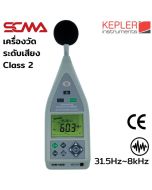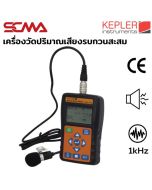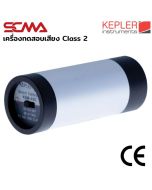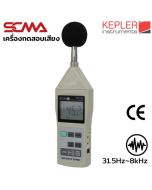

Sound level meters are important devices for measuring and assessing noise levels in various environments, whether it be in industrial plants, workplaces, or public areas. These tools help us detect, measure, and control noise pollution effectively, which is essential for preventing health impacts and improving quality of life. This article will guide you through every aspect of sound level meters, from their working principles to types, usage, and diverse benefits.
What is a Sound Level Meter?

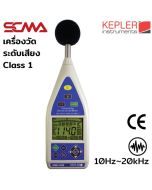
A sound level meter, or Sound Level Meter is an instrument used to measure sound levels in decibels (dB) and designed to accurately detect and analyze sound waves in various environments. This tool integrates multiple functions into one device, allowing for diverse sound measurements according to international standards. When using it, hold the meter at arm's length or use a tripod mount to minimize body impact on measurement results, ensuring accurate and reliable outcomes for analysis or comparison with safety standards.
What is a Sound Level Meter Used For?
Sound Pressure Level Meter is a crucial tool for monitoring and protecting human hearing health by detecting and alerting when sound levels exceed safety standards in work environments such as industrial factories or construction sites. Using this meter helps business owners comply with occupational health and safety requirements, prevent lawsuits and fines, and reduce the risk of noise-induced hearing loss among employees. Additionally, in public areas and communities, a sound level meter aids in identifying sources of noise pollution, assessing their impact on quality of life, and implementing effective measures to control noise.
In terms of the environment and ecosystems, sound meters play an important role in studying and protecting wildlife from the impacts of noise pollution. Research has shown that human activities such as transportation, construction, or industry can disrupt communication patterns, mating behaviors, and feeding habits of wild animals, leading to behavioral changes and reduced survival rates. Measuring and monitoring sound levels in conservation areas, protected zones, or important habitats for wildlife helps conservationists and policymakers design appropriate noise reduction measures, such as traffic restrictions, building sound barriers, or establishing quiet zones, to maintain ecological balance and biodiversity over the long term.
How does a sound level meter work?

The working principle of a sound meter is the process of converting sound waves in the air into readable values, starting with high-quality microphones that have thin diaphragms to detect and convert sound waves into electrical signals related to the loudness of the sound. Then, the electrical signal from the microphone is sent to electronic circuits that process the signal and display the sound level in decibels. These circuits include amplifiers to boost the signal and frequency weighting circuits that adjust the signal to match human hearing perception. The system also includes detection circuits and processing units that calculate important values such as averages, maximums, or frequency analysis before displaying results on the screen in a format that users can read and understand immediately.
How many types of sound level meters are there?
Sound level meters can be categorized into several types based on their accuracy and functionality. Choosing the right meter for your specific needs is crucial to achieving accurate results and getting a good return on investment, whether it's for high-precision scientific research or basic environmental assessments.
Class 1 Sound Level Meter
Comparable to high-end cameras in photography, Class 1 meters offer the highest accuracy (±1.5 dB) according to IEC 61672-1 standards, making them the top choice for researchers, acoustic engineers, and experts who require precise data. Regular calibration and high-quality materials enable their use in scientific research, product testing, and regulatory compliance measurements. Despite the higher cost, they are worth it for work that demands maximum reliability.
Class 2 Sound Level Meter
With acceptable accuracy (±2.0 dB), these meters meet the needs of general inspections in factories, offices, and communities, such as noise assessment, environmental condition checks, or preliminary surveys. Their affordable price and user-friendly operation make them widely popular. Users can efficiently collect basic data without excessive investment.
Integrating Sound Level Meter
This innovation not only measures instantaneous sound levels but also calculates average values over time (Leq), a crucial metric for assessing long-term noise exposure. These meters feature powerful processors capable of analyzing various statistical data, including maximum and minimum values as well as different percentiles. They are ideal for evaluating employee noise exposure according to occupational health standards, studying community noise impacts, or analyzing complex sound sources.
Logging Sound Level Meter
Like a detective monitoring every movement of sound around the clock, these meters continuously record data and automatically store it in memory or on a memory card. They come with octave band frequency analysis functions and automatic measurement scheduling, allowing users to study long-term noise trends, identify periods exceeding standard levels, or detect recurring patterns of noise disturbances. It's like having an expert constantly monitoring and collecting audio evidence without the need for constant supervision.
What are the benefits of using a sound level meter?

What should be considered when selecting a sound level meter?
Selecting an appropriate sound level meter is crucial as it directly affects the reliability of the data obtained. Users should consider several key factors, starting with the type or class of the device defined by ANSI or IEC standards, which impacts measurement accuracy. Class 1 is suitable for high-precision work such as research or environmental noise measurements, while Class 2 is appropriate for general industrial use.
Additionally, one should consider the working environment and the range of sound pressure levels. Most meters cover a range of 30-130 dB, but some applications may require lower ranges down to 25 dB or higher up to 140 dB, which must be selected appropriately. Other important factors include data logging capability, frequency measurement range, octave band frequency analysis, and compliance with industry standards such as IEC 61672-1, which ensures accuracy and reliability.
If you are interested in purchasing a sound level meter, SCMA is now available!
SCMA proudly presents high-quality sound level meters from leading global brands, both Class 1 and Class 2 models that meet international standards. We not only sell top-notch products but also provide calibration services according to ISO/IEC 17025 standards and training by expert teams, ensuring you use the equipment correctly and efficiently. Additionally, SCMA offers comprehensive after-sales service including maintenance, genuine spare parts, and technical consultation. Contact SCMA today for special offers and advice on selecting a sound level meter that meets your needs.
Summary
A sound level meter is an essential tool for measuring and controlling noise pollution in various environments. Choosing the right quality equipment will ensure accurate and reliable measurements, whether it's for occupational health, environmental management, or acoustic engineering work. A sound level meter helps us understand and manage noise pollution effectively, leading to better hearing protection and improved quality of life.
SCMA is ready to be your high-quality measurement tool partner for your organization, with products carefully selected from top manufacturers worldwide. We offer comprehensive services ranging from consultation to maintenance, dedicated to helping you achieve noise control goals and enhance safety standards in your organization.Contact SCMA today to start professional noise management.
Frequently Asked Questions
What does a Sound Level Meter measure?
A sound level meter measures the loudness of sounds in decibels (dB). It can measure instantaneous sound levels, average sound levels (Leq), maximum sound levels (Lmax), and minimum sound levels (Lmin). Additionally, a frequency analysis sound level meter can also measure sound energy in each frequency band. This data helps assess the impact of noise on human hearing and the environment.
How do you use a Sound Level Meter?
Using a sound level meter starts with turning it on and selecting an appropriate measurement mode (such as Fast, Slow, or Peak). Then hold the device with its microphone pointed towards the source of noise to be measured. It should be held at a height of approximately 1.2-1.5 meters from the ground and at least 1 meter away from reflective surfaces. Hold the device steadily and read the value once it stabilizes. For measurements in windy environments, use foam to cover the microphone head to reduce wind noise.
How many types of sound level meters are there?
Sound level meters come in several types based on standards and accuracy. Generally, they are categorized into four main types: 1) Class 0 for reference laboratories requiring the highest precision, 2) Class 1 for research or engineering work that requires high accuracy, 3) Class 2 for general field use where very high accuracy is not required, and 4) Survey type which is a simple meter providing approximate values. Additionally, there are portable sound level meters, permanently installed ones, and those connected to data logging systems.
What is the difference between dB and dBA?
dB (decibel) is a unit of measurement for sound loudness without weighting, measuring sound pressure equally across all frequencies. On the other hand, dBA or dB(A) is a weighted sound level measurement based on frequency A-weighting, which adjusts to be closer to human hearing sensitivity that varies with different frequencies. It reduces the significance of low-frequency sounds and gives more weight to mid-to-high frequency sounds, making dBA better at reflecting the impact of noise on humans. Therefore, it is commonly used for measuring noise pollution and setting safety standards.