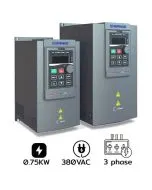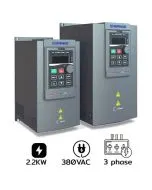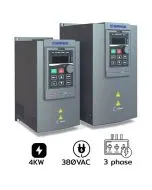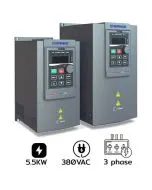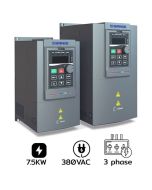

Inverters, or Inverter, are electronic devices that are well-known in the manufacturing industry. They play a crucial role in controlling motor speeds to increase efficiency and save energy. Currently, Inverters have become increasingly popular, whether it's for industrial applications or systems requiring precise control. For those interested in using Inverters or inverter systems, you should not miss the opportunity to consult with experts at SCMA for advice on selecting and installing systems that meet your needs.
What is an Inverter? What are its functions?

An Inverter, or inverter, is an electronic device that adjusts the speed of AC motors by converting alternating current (AC) to direct current (DC), and then back to adjustable voltage and frequency AC. This allows for precise motor speed control, enhancing efficiency and saving energy.
The functions of an Inverter can be summarized as follows:
- Converts the form of electrical current to control motor speed.
- Adjusts motor speeds accurately according to requirements.
- Increases efficiency and reduces energy loss in the system.
- Extends motor lifespan and reduces maintenance costs.
What are the internal structures of an Inverter?
Inside an inverter, there are three main components:
- Converter Circuit - Converts alternating current (AC) from the power source into direct current (DC)
- Inverter Circuit - Receives DC power from the converter circuit and converts it back to AC, allowing for adjustments in voltage and frequency as needed
- Control Circuit - Controls the operation of the converter and inverter circuits according to usage requirements
The basic function of an Inverter starts by receiving AC power from a power source, passing through the converter circuit to convert it into DC. Then, the inverter circuit converts the DC back into AC while adjusting voltage and frequency as specified, controlling the speed of electric motors according to requirements. The control circuit manages all operations.

Applications
Inverters can be applied in various ways, such as:
- Controlling the speed of electric motors in machinery, conveyor belts, pumps, fans, etc., to increase production efficiency
- Used as a backup power source in UPS systems to replace main power when an outage occurs
- Converting direct current (DC) electricity from solar panels into alternating current (AC) for use in the system or various devices
- Converting high-voltage DC power from transmission systems to low-voltage AC power for end-users
- Controlling the heating in induction furnaces to provide appropriate heat levels
Types of Inverters
Inverters can be categorized into several types based on their usage characteristics as follows:
Hybrid Inverter
This is a hybrid inverter that combines the advantages of both Grid Tie and Minigrid inverters with Pure Sine Wave to enhance performance, making it more versatile for various applications.
Grid Tile Inverter
This type of inverter converts direct current (DC) electricity from solar panels into alternating current (220VAC) to feed the building's electrical system. Additionally, it helps maintain a constant voltage level.
Modify Sine Wave Inverter
It operates similarly to a Pure Sine Wave Inverter but is an older model with slightly lower quality output compared to the Pure Sine Wave type.
Pure Sine Wave Inverter
This inverter converts direct current (DC) electricity from a battery into alternating current for use with electrical appliances inside buildings. The output waveform is a pure sine wave, closely resembling the main power grid.
Micro Grid Inverter
Also known as Minigrid Inverter, its operation is similar to that of a Grid Inverter but differs in that it can convert electricity from one solar panel at a time, reducing the need for AC wiring.

What Should You Consider When Buying an Inverter?
When choosing the right inverter for your needs, you should consider the following:
- Power Capacity (Watt) - Choose a capacity that is higher than the total load to ensure sufficient power and accommodate motor startup loads which require high power.
- Output Waveform - Opt for Pure Sine Wave models to provide electricity quality similar to main grid supply, ensuring safe and efficient use with various electrical devices.
- Reputable Brand - Choose a well-known brand that meets standards and enjoys popularity for assurance of product quality and after-sales service.
- Product Warranty - This is an important aspect reflecting the manufacturer's commitment to quality, providing protection and peace of mind in case of product issues.
Consult SCMA for Inverter Usage Today!
SCMA Co., Ltd. is an expert in industrial measurement control and automation systems, offering consultation on inverter usage across all aspects including selecting the right model, wiring circuits, designing inverter motor circuits, installation, operation, and maintenance to ensure maximum efficiency, energy savings, and sustainable use. Our team of engineers provides professional advice and valuable information for customers to maximize benefits from using inverters and trust our quality.SCMA Services
Summary
An inverter is an electronic device that plays a crucial role in controlling the speed of electric motors to operate efficiently and save energy. By converting electrical current and adjusting voltage and frequency, it can be applied in various ways. Inverters come in different types based on their usage, with factors to consider before purchasing to ensure they meet your needs and provide the best value.
For more information about selecting the right and suitable inverter, you can consult experts from SCMA who are ready to offerservice and technical support to ensure that you get an efficient system that is safe to use and truly maximizes benefits for your business.

Frequently Asked Questions
What is the difference between an Inverter and a Converter?
Inverter converts DC power to AC, while a converter converts AC power to DC. Both devices are often used together in an inverter system to control motors.
What is an Inverter System?
It involves using an inverter to control the speed or torque of a motor, such as in production lines, pumps, fans, to increase efficiency and save energy.
What is the difference between an Inverter and a Standard Motor?
A standard motor runs at a constant speed, but a motor used with an inverter can adjust its speed as needed, providing more precise control and energy savings.
What is the function of Inverter Equipment?
An inverter converts DC power to AC power that adjusts voltage and frequency, controlling motor speed and torque appropriately. This helps increase efficiency and save energy in systems.