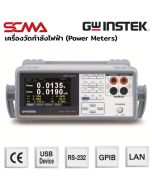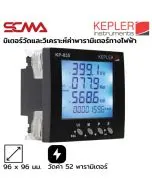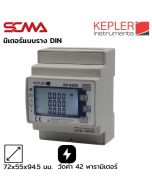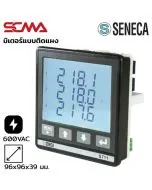

In an era where every industrial factory focuses on increasing efficiency and controlling costs, have you ever wondered how to know how much energy each machine consumes or which points in the production line are wasting energy unnecessarily? The answers to these questions lie in a crucial piece of equipment called Digital Power Meter or digital power meter. This article from SCMA will introduce you to what a Digital Power Meter is, its importance in energy management within factories, and how it can help you achieve your manufacturing goals so that you can choose the most suitable tool for your business.
What is a Digital Power Meter?

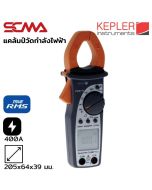
A digital power meter is a device that measures and analyzes electrical energy parameters digitally using microprocessor technology to measure various electrical parameters accurately and quickly. This type of power meter differs from traditional analog meters (rotating disk) because it can display results as numbers on an LCD or LED screen immediately, making reading easier, reducing errors, and also sending data to control systems or computers for further analysis. It is an essential tool in modern industrial electricity systems.
How Digital Power Meter Works
The basic principle of operation of a digital power meter involves converting analog signals (Analog) obtained from measuring voltage and current into digital signals (Digital) using electronic circuits called Analog-to-Digital Converters (ADC). Then, the microprocessor inside the device processes mathematical calculations with the digital data to calculate various electrical parameters such as power (Watt), energy (kWh), Power Factor, and others before displaying them on the screen. This results in accurate and detailed information.
What are the Functions of a Digital Power Meter?

Based on the experience of the SCMA engineering team, we found that a Digital Power Meter is not just an energy meter but rather an intelligent assistant with diverse functions to help operators and engineers manage energy efficiently. The main roles include:
- Metering electrical parameters: It can measure basic and advanced parameters comprehensively in one device such as voltage (V), current (I), real power (P), energy (Wh), power factor (PF) up to harmonic values that affect the quality of electricity.
- Energy consumption analysis: Helps understand the energy usage behavior of machinery or production lines, can identify peak demand periods for better planning and find points where energy loss occurs.
- Anomaly alerts: Can be set to alert when there are abnormal electrical conditions such as voltage drop, overvoltage, or current exceeding the specified limit. This helps maintenance teams address issues promptly before equipment damage occurs.
- Data logging and storage: Many digital meter models can log historical energy usage data for trend analysis and evaluation of energy-saving measures implemented.
- Connectivity and control: Can connect to automated control systems such as SCADA or Building Management System (BMS) for central monitoring and control of energy use.
What are the features of a Digital Power Meter?
In selecting a Digital Power Meter for an industrial plant, considering the features is crucial to ensure that you get a tool that meets long-term usage requirements. Key features to look out for include:
- High Accuracy: Typically featuring accuracy levels of Class 0.5s or 0.2s, which are sufficient for high-precision industrial applications.
- Clear Display: LCD or LED screens displaying multiple parameters simultaneously and easily readable even in low-light conditions.
- Communication Port: Supporting standard protocols such as Modbus RTU (via RS-485 port) or Modbus TCP/IP (via Ethernet port) for connecting to other systems.
- Data Logging Functionality: Equipped with internal memory to store energy usage data over specified time intervals.
- Comprehensive Electrical Measurement Capabilities: Able to measure basic values, energy consumption, demand values, and power quality parameters such as THD (Total Harmonic Distortion).
What are the Types of Power Meters?

A power meter is a versatile tool designed to suit different applications. We can categorize electrical energy meters in several ways, but the most commonly used method in industry is by type of current and function.
Categorizing by Measured Current Type
Selecting the right type of meter for the current is the most important basic requirement to ensure accurate and safe measurements.
AC Power Meter (AC Power Meter)
This is the most common type of digital power meter, used to measure energy in alternating current (AC) systems, which are standard electrical systems used in buildings and general industrial facilities. It can be further divided into single-phase for residential use or small loads, and three-phase for machinery in factories.
DC Power Meter (DC Power Meter)
This meter is specifically designed to measure energy in direct current (DC) systems, particularly important in renewable energy industries such as solar cell systems, electric vehicle charging stations (EV Charger), battery storage systems (ESS), and data centers.
Categorizing by Function
Classifying by function helps select meters that better meet the needs for data analysis.
- Single-Function Meters: Used to measure a single parameter, such as voltage or amperage. Suitable for less complex tasks.
- Multifunction Meters: The most popular type in industry because they can measure and display multiple parameters on one device, saving space and being cost-effective.
- Standard kWh Meter (kWh Meter): Focuses primarily on measuring the total amount of electrical energy used in kilowatt-hours (kWh), similar to household electricity meters.
- Maximum Demand Meter: Used to measure and record peak power consumption during a billing period, crucial for calculating time-of-use/time-of-day (TOU/TOD) rates for factories.
- Power Quality Meter: An advanced meter capable of analyzing electrical quality issues such as voltage sags, surges, and harmonics, which are significant causes of electronic machinery malfunction or damage.
What are the Benefits of a Digital Power Meter?
Investing in a Digital Power Meter is not just about changing equipment, but it's an investment to enhance business competitiveness. The clear benefits our customers have received include:
- High accuracy and reliability: Reduces measurement errors leading to better production quality control and reduced waste.
- Energy savings and lower electricity costs: Data helps identify high energy usage points and plan targeted energy management, resulting in tangible cost reductions for electricity bills.
- Increase the efficiency of electrical systems: Helps monitor the health of electrical systems and plan preventive maintenance (Preventive Maintenance), reducing the risk of unexpected downtime (Downtime).
- Enhanced safety: Alert functions help quickly detect abnormalities, reducing risks from short circuits or overloading.
- Data analysis insights: Recorded data can be analyzed to improve production processes for maximum efficiency.
- Supports automation systems: A key component in developing towards a smart factory (Smart Factory) or Industry 4.0.
Applications of Digital Power Meter
Digital Power Meters are widely used across various industries, providing essential data for management:
- In industrial plants: Installed at the MDB (Main Distribution Board) to monitor overall energy usage, installed on critical machinery to measure efficiency and plan maintenance, or used in building control systems.
- In office buildings and shopping centers: Used to separate meters for individual tenants and analyze HVAC and lighting system energy use to find ways to save energy.
- In data centers (Data Centers): Used to control and manage crucial power to ensure the highest stability of the system.
- In renewable energy systems: Used to measure electricity generated from solar panels, assessing system efficiency.
What are the advantages of Digital Power Meters?
When compared to traditional analog meters, digital power meters have clear advantages in many aspects, which is why they have become the new standard nowadays.
Precision
Digital meters are much more accurate due to electronic processing, eliminating moving parts that wear out over time like the spinning disk of an analog meter. This ensures that measured values remain precise throughout their lifespan.
Energy Consumption
The meter itself consumes very little power; typically only a small amount, significantly less than analog meters, thus not unnecessarily burdening the electrical system.
Functionality
This is perhaps the most significant advantage. Digital Power Meters do more than just measure—they come with numerous additional functions that analog meters cannot provide:
- Computer Connectivity: Can transmit data through various communication protocols, as explained by SFEE, for further processing.
- Remote Control: Can be part of an automated system to remotely turn devices on and off.
- Flexible Configuration: Parameters and alerts can be set via software according to needs.
- Overload
Digital Power Meters have a higher capacity for handling overloads compared to older meters, making them suitable for industrial applications where large motors may start, causing high surge currents briefly.
Why are Digital Power Meters Popular?
The rapid popularity of digital power meters in the industry stems from their ability to meet comprehensive needs with a single device, which is more cost-effective than installing multiple separate meters.
- Multifunctional Readings: Can read various values such as Voltage, Current, Frequency, Power Factor, Active Power, Reactive Power, and Harmonics in the system all at once.
- Data Analysis Connectivity: Communication ports allow for easy data extraction to analyze and store on computers.
- Affordable Pricing: Currently, digital power meters are much more affordable compared to their diverse functionality, making them a worthwhile investment.
If you are looking for a "High-Quality Digital Power Meter", think of SCMA!
Selecting a power meter is not just about buying an equipment, but choosing a partner that will help ensure the stability and maximum efficiency of your production system. From our team's engineering experience at SCMA, we understand that even minor measurement errors can lead to immeasurable business losses. Therefore, we carefully select high-quality digital power meters that are accurate, durable, and reliable, along with a team of experts ready to provide consultation for the appropriate selection and installation tailored to your needs.
Summary
A Digital Power Meter is an essential electrical measuring tool for today's industrial sector. With its ability to measure accurately, analyze deep data insights, and connect with automated systems, it plays a crucial role in energy management to reduce costs and enhance production efficiency. Choosing the right meter and proper installation will help your business move forward steadily. If you need further advice on electrical measurement devices or solutions tailored specifically for your factory, our service team is fully prepared to support you.
Frequently Asked Questions
What is a Digital Power Meter?
A digital power meter is an electronic energy measuring device that displays numerical data. It can measure various electrical parameters such as voltage, current, active power, and reactive power with high accuracy and can be connected to computer systems.
How does a Digital Power Meter work?
It works by receiving analog signals (voltage and current), converting them into digital signals, then using a microprocessor to calculate various electrical parameters which are displayed on an LCD or LED screen for quick and accurate results.
Why is the Digital Power Meter popular?
Because it offers multiple functions in one device (multifunctional) including measurement, data logging, and connectivity with other systems. It has higher accuracy than old meters, easy installation, and cost-effective compared to its functionality, making it an essential tool for modern energy management.