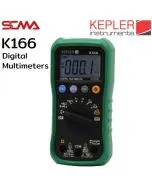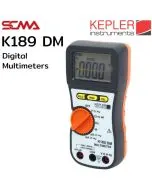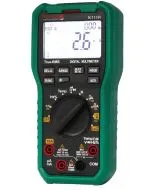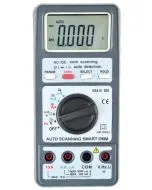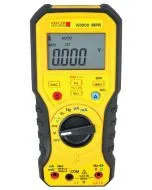

Digital multimeters are innovations that are increasingly popular in the current era due to several advantages over traditional analog meters, including higher accuracy, reliability, and ease of use.SCMA Company Limited, a leader in industrial automation solutions, recognizes the importance of digital multimeter technology and therefore offers consultation services, sales, and installation design to meet diverse usage needs and enhance energy management efficiency.
What is a Digital Multimeter?

A digital multimeter (Digital Multimeters) is a versatile electrical parameter measuring device that uses digital technology. Its primary function is to measure voltage, current, and resistance, as well as additional functions such as diode testing, circuit continuity testing, capacitance measurement, frequency measurement, and temperature measurement. The results are displayed in easy-to-read numbers on an LCD screen, making the analysis, inspection, and troubleshooting of electrical circuits more convenient, faster, and more accurate.
Comparison of the Advantages of Digital Multimeters vs Analog Meters
Digital Multimeters
Digital multimeters (Digital Multimeters) or simply digital meters have prominent advantages such as:
- Provide highly accurate measurements with high-resolution numeric readings on the LCD display in a digital format
- Have high input impedance, which does not burden circuits and helps prevent damage to delicate electronic components
- Can measure and display both RMS (True RMS) and average values, which are useful for accurately measuring sine and non-sine waveforms
- Offer a variety of functions such as automatic measurement mode, maximum/minimum value recording, data transmission via USB port, etc.
- Designed for easy and convenient use, whether handheld or tabletop
Analog Meters
Analog meters (Analog Meter) or needle meters have advantages such as:
- Can show real-time changes through the movement of a needle, which is suitable for measuring rapidly changing signals
- Have low input impedance, which may be beneficial for certain types of circuit measurements
- Are durable and resistant to impact and vibration, making them suitable for field use
- Are cheaper than digital meters
However, the disadvantage of analog meters is lower accuracy in reading values and a higher chance of error, making them unsuitable for high-precision work. Therefore, in recent times, digital multimeters have gained popularity and largely replaced traditional analog meters.
How to Use a Digital Multimeter

Using a digital multimeter is not difficult. Start by selecting the appropriate measurement range for the value you want to know, whether it's voltage (V), current (A), or resistance (Ω). Insert the red and black test leads into the correct terminals.
Next, connect the measuring wires to the point in the circuit that needs to be measured. When you turn on the digital multimeter, the measurement value will appear on the LCD screen for direct reading. If there is an alarm sound or abnormal symbol displayed, check if the measurement range has been set correctly and whether the circuit connection is incomplete.
In addition, digital multimeters also have other special functions to choose from, such as continuity testing, capacitance measurement, diode testing. These can be read in the manual or directly consulted with experts from SCMA for assurance of accurate and precise measurements.
Features of Digital Multimeters
Today's new digital multimeter models are developed with prominent features that cater to a wide range of usage scenarios, such as:
- High-resolution LCD or LED display screens with backlighting for clear readings even in low light conditions
- Large push buttons and rotary switches that are easy to grip, dustproof, and waterproof
- Capable of measuring both AC and DC power by switching with a single button
- Automatic range selection (Autoranging) that selects the appropriate measurement range without manual adjustment
- Automatic power-off (Auto Power Off) after a period of inactivity to extend battery life
- Support for connecting to computers via USB ports for data transfer or firmware upgrades
- Some models may have special features such as infrared cameras, data loggers, graphic multimeters, etc.
SCMA offers advisory services and sells high-quality digital electricity meters with after-sales service and product warranty to meet the needs of customers seeking accuracy and professional use.
What Precautions Should Be Taken When Using a Digital Multimeter?

Although digital electrical meters are easy to use, there are still some precautions that users should be aware of for safety purposes. These include:
- Ensure the correct function and measurement range is selected according to what you need to measure, as setting it incorrectly can damage the meter.
- Do not use the meter to measure voltages higher than specified, such as high voltage in homes or factories, which is dangerous and could be lethal.
- Be cautious of short circuits when connecting the leads to live points, especially when setting the current measurement range.
- Do not use or store digital multimeters in areas with high temperatures or humidity as this may cause damage.
- Regularly check the condition of the meter, leads, and fuses. If any cracks or damages are found, replace them immediately.
- Keep digital electrical meters clean, including terminals and leads, free from dust and dirt.
- When not in use for long periods of time, remove the batteries to prevent battery leakage and corrosion of circuits.
If you have any doubts or uncertainties about using a digital multimeter, you can seek advice from SCMA's expert team to ensure safe and reliable use in every application.
Applications of Digital Multimeters
Digital electrical meters are versatile tools with a wide range of applications, such as:
- Maintenance and repair of electrical and electronic equipment, checking for abnormalities in voltage, current, or other components.
- Installation and inspection of building electrical systems, such as wiring, installing plugs and switches, testing outlets and light fixtures.
- Used in the development and testing of new products, measuring the electrical properties of components and equipment.
- Used for automotive maintenance tasks such as battery testing, checking ignition systems, charging circuits, electric motors, etc.
- Maintenance of industrial machinery, such as inspecting electrical and control systems.
- Used in HVAC work, such as testing thermostats, checking fans, compressors, and temperature control systems.
- Measuring renewable energy sources, such as checking the efficiency of solar panels, wind turbine systems, fuel cells, etc.
- Used in laboratories or educational institutions for testing and experimenting with basic electrical circuits.
With the diverse capabilities of digital multimeters, they are essential tools for electricians or professionals in this field, engineers, and experts in various fields, as well as hobbyists or DIY enthusiasts.
If you need a digital meter, SCMA is now available for purchase!
As experts in industrial measurement and control systems, we offer high-quality digital multimeters from leading global brands equipped with the latest technology and versatile functions to meet all user needs.
Whether you are a professional or an amateur, we provide advice on selectingdigital multimeters that suit your usage, along with reliable after-sales service. For orders or inquiries, contact our team today for full support.
Summary
Digital multimeters are essential tools for those working with electricity and electronics, enabling accurate, convenient, and quick electrical measurements. SCMA recognizes the importance of digital technology in advancing this field and is committed to providing high-quality digital meters and excellent service to customers. If you are looking for a digital multimeter for use, contact the experts at SCMA today to get products that best meet your usage needs.
Frequently Asked Questions
Why do we need to replace analog electricity meters with digital ones?
Digital electricity meters offer more accurate measurements, are easier to read, consume less power, and can be connected to computer systems for data logging and analysis. This aligns well with the current digital era, enhancing work efficiency and energy management.
What is a digital electric meter?
A Digital Electric Meter (DEM) is an electrical measuring device that displays results as digital numbers on an LCD screen. It can directly measure voltage, current, and power with high precision, accuracy, and stability compared to analog needle meters. Therefore, it is widely used in industrial plants, office buildings, and modern homes.
How do digital electricity meters differ from analog ones?
Digital electricity meters not only display clear digital numbers that are easy to read without estimation but also offer higher accuracy and stability. They have a higher input impedance, which means they don't load the circuit being measured. This allows for more accurate measurement of complex electrical waveforms and offers diverse functions such as connecting to computers for data collection and analysis. In contrast, traditional analog meters have limitations in these areas.
How do digital electricity meters work?
Digital electricity meters use electronic technology to convert the electrical signals they need to measure into digital signals. The internal circuitry includes an analog-to-digital converter, a processor, memory, and a display screen. High sampling rates and processing speeds up to kHz - MHz provide highly detailed and accurate measurements. Additionally, they have True RMS systems for accurately calculating sine and non-sine wave currents and voltages, with input impedances as high as 10 megohms or more, ensuring reliable measurement results without burdening the circuit during measurement.