Current industries are developing at a rapid pace, marking the entry into Industry 4.0 with smart factories. This requires the use of technology to assist in automated machinery systems and the utilization of sensors to enhance production efficiency. Inductive Proximity Sensors are considered another crucial sensor that helps push factories towards becoming superior smart factories. SCMA will introduce everyone to what an Inductive Proximity Sensor is and how it can be categorized.
What is an Inductive Proximity Sensor and How Does it Work?

An Inductive Proximity Sensor is a type of sensor used to detect metallic objects. It is typically applied for position detection to control the operation of machinery. This type of sensor works by generating an electromagnetic field around the front face of the sensor. When a metal object comes close to the sensor, it induces eddy currents in the object which cause changes that can be detected as indicating the presence of metal near the sensor.
Types of Inductive Proximity Sensors
For the types of Inductive Proximity Sensors used in industry, there are mainly two categories, which are
- The first type of Inductive Proximity Sensor is a sensor that uses electromagnetic field principles to detect metal objects. This type of sensor is typically used for detecting most metallic objects.
- Capacitive Proximity Sensor, another type of object detection sensor that works based on electrical charge principles and is used to detect objects composed of both metal and non-metal components.
Shape of Inductive Proximity Sensor
In addition to the type selected for use, there is also the shape of the sensor that can be used to differentiate types and define usage. The shapes of Inductive Proximity Sensors used in industries are as follows:
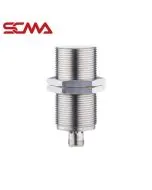
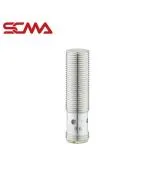
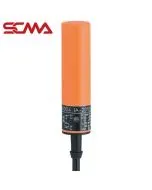
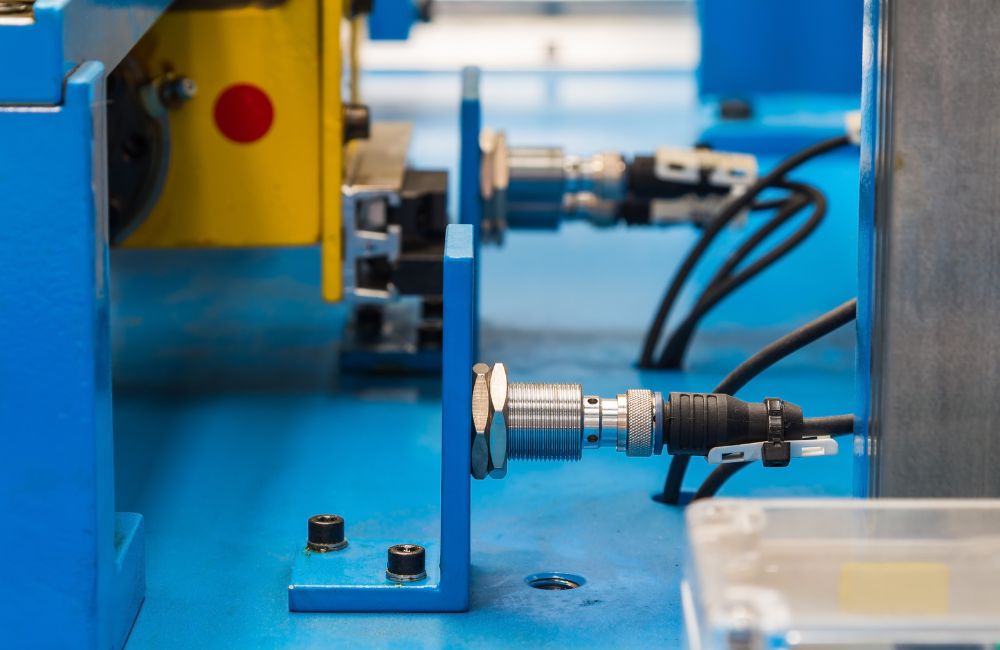
- Cylindrical Inductive Proximity Sensor is often chosen based on the diameter of the sensor. This cylindrical type includes both threaded and non-threaded models. For non-threaded models, an M is prefixed followed by the diameter in millimeters (mm), then X with the thread size in millimeters, such as M8x1. In non-threaded models, there will be a Diameter symbol ⌀ followed by the diameter in millimeters at the front end, for example ⌀8.
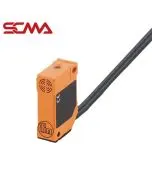
- Rectangular Inductive Proximity Sensor is often made from plastic material. The rectangular shape allows for a longer detection range and can be used in various sizes, such as 17x17 mm, 25x25 mm, 30x30 mm, 40x40 mm, and 60x60 mm.
Categorization Using Wires of Inductive Proximity Sensor
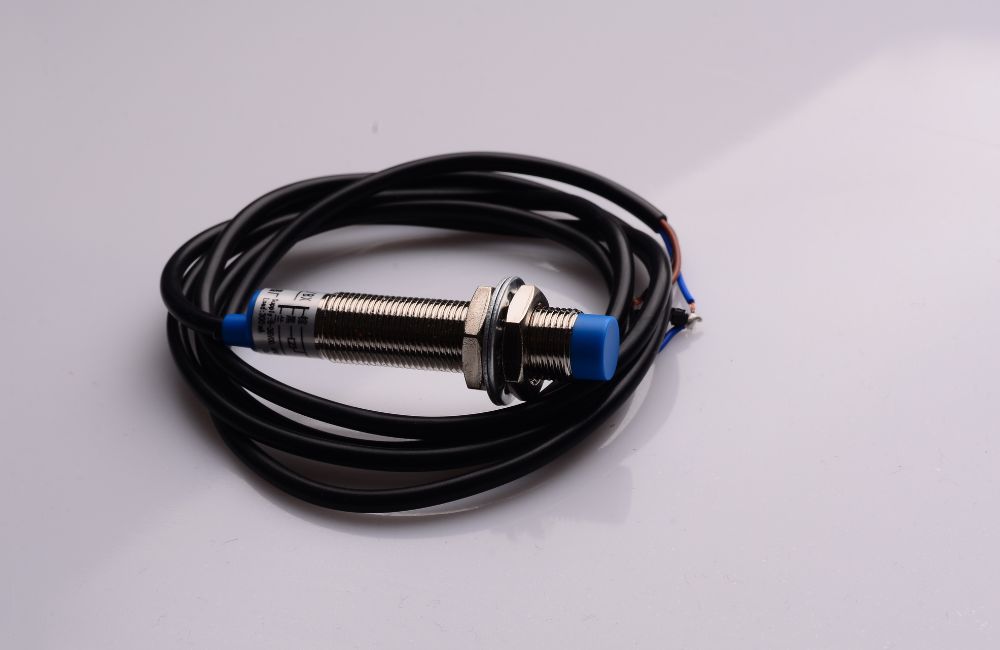
One thing to consider when selecting an Inductive Proximity Sensor is the electrical signal connection type. Typically, a Prox sensor comes in either a two-wire or three-wire configuration, depending on usage requirements.
- Two-Wire Inductive Proximity Sensor A two-wire Inductive Proximity Sensor can be either AC or DC with a normally open (NO) or normally closed (NC) status.
- Three-Wire Inductive Proximity Sensor A three-wire Inductive Proximity Sensor is designed for DC power and has an output type of NPN or PNP, with a choice between normally open (NO) or normally closed (NC).
Components of Inductive Proximity Sensor
- Coil ( Coil ) The coil in an Inductive Proximity Sensor consists of the internal winding, which is responsible for emitting a high-frequency electromagnetic field through the front area of the sensor to detect moving metal objects.
- Oscillator ( Oscillator ) is a frequency-generating circuit that sends electrical signals to the Coil section. This is crucial for creating the electromagnetic field of an Inductive Proximity Sensor.
- Amplifier ( Amplifier ) is an amplifying circuit that amplifies the signal resulting from changes in inductance.
- Trigger ( Trigger )The trigger circuit evaluates the change in electromagnetic field strength to determine its current state. Once evaluated, it initiates a command to the output section to change status.
- Output Driver ( Output driver ) plays a crucial role in generating the output signal as the final component of an Inductive Proximity Sensor. The generated signal has standard levels that are compatible with connected equipment.
SCMA also offers high-quality Inductive Proximity Sensors from the renowned German brand ifm, which enhances efficiency when used with smart systems within factories. Therefore, anyone interested can inquire or purchase through SCMA via all available channels.
Reference : factomart.com, techsourcemarketplace.com, tic.co.th