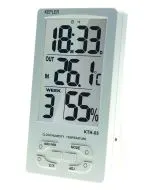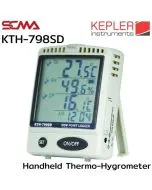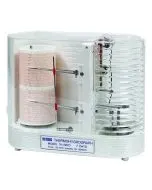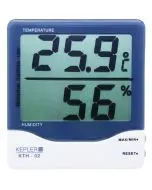

Have you ever wondered how we can accurately measure relative humidity with temperature? The answer is by using a wet-dry hygrometer, which is a standard tool used in both research and industry. Understanding this instrument helps us efficiently control weather conditions and production processes, and when combined with the services of SCMA, experts in industrial measuring equipment, it further enhances confidence in its use.
What is a Wet-Dry Hygrometer?

A wet-dry hygrometer is a tool that uses two thermometers, namely the dry bulb for measuring air temperature and the wet bulb wrapped in water-soaked cloth to observe evaporation. The difference between these temperatures is used to calculate relative humidity. This device is also known as a psychrometer and is widely used in research, agriculture, and environmental control.
How Does a Wet-Dry Hygrometer Work?
A wet-dry hygrometer works by comparing the temperature from the dry bulb measuring normal air with that of the wet bulb wrapped in water-soaked cloth which evaporates. In dry air, the wet bulb temperature is significantly lower than the dry bulb, but when the air is humid, both temperatures are close to each other. This difference is calculated using a psychrometric table to accurately determine relative humidity at a given temperature, making it a popular choice for research and meteorology.
What is Relative Humidity in Air?
The relative humidity of the air refers to the ratio between the actual amount of water vapor present and the maximum amount that the air can hold at the same temperature, expressed as a percentage (%). It varies according to environmental conditions. Controlling relative humidity at an appropriate level is crucial for human health, agriculture, and manufacturing processes requiring precise standards.
What are the benefits of wet and dry bulb hygrometers?
Wet and dry bulb hygrometers allow for accurate measurement of relative humidity with temperature, suitable for research, education, and various industries that require climate control. This equipment also supports energy efficiency, reduces health risks, and maintains appropriate relative humidity in all environments.
Achieve Accurate Humidity Measurement
Wet and dry bulb hygrometers use the comparison of temperature between a dry bulb and a wet bulb to calculate accurate relative humidity. This method is reliable for both research and industrial applications, making it a standard tool that ensures users' confidence in data quality.
Increase Energy Efficiency
Checking values with a wet-dry bulb thermometer helps HVAC professionals accurately assess the performance of evaporative cooling systems. Wet and dry bulb hygrometers thus help controllers adjust systems to use energy efficiently, reducing long-term costs.
Monitor and Evaluate Climate Conditions
Dry-wet bulb thermometers are used in meteorology and agriculture to collect relative humidity data. Data from a psychrometer also aids in analyzing climate change trends more accurately.
Promote Health and Comfort
Controlling relative humidity with a hygrometer directly affects human health. Excessively dry air may irritate skin and respiratory systems, while overly high humidity can foster mold growth. Using a hygrometer helps maintain balance for comfort and safety in daily life.
Support Agriculture and Environmental Management
In agriculture, farmers can use wet bulb hygrometers to decide on watering or prevent damage from excessively dry conditions. Additionally, they help environmental research track changes in ecosystems.
Aid Control and Improve Production Processes
In industries where humidity affects product quality, such as food, textiles, and pharmaceuticals, using a wet-dry bulb hygrometer allows manufacturers to accurately control relative humidity, impacting production consistency and standards. This also helps reduce losses and enhance product quality.
Reduce Risks and Prevent Disease Spread
Inappropriate levels of humidity promote the growth of pathogens and fungi. Using a wet-dry bulb hygrometer maintains appropriate relative humidity to reduce disease spread risks, creating cleaner and safer environments.
Benefits for Research and Education
A psychrometer is a standard tool used in educational institutions and laboratories to teach students and researchers about the relationship between relative humidity and temperature. Using dry-wet bulb thermometers also aids in training scientific calculation and analysis skills, promoting deeper understanding and practical learning.

How to Use a Wet-Dry Bulb Hygrometer
Before use, check the integrity of the equipment and prepare clean water to keep the cloth on the wet bulb moist at all times. Properly following the steps will ensure accurate and reliable relative humidity readings. Usage Steps (How to Use): Fill the wet bulb with water so that the cloth remains moist for evaporation. Install in a shaded area with good air circulation, away from obstructions such as trees or buildings. Apply clean water drops on the cloth covering the wet bulb before starting use. Swing or allow airflow through the device for about 3 minutes to stabilize readings. Read the temperature from both the wet and dry bulbs, then compare it against standard humidity tables.
How to Read a Wet-Dry Bulb Hygrometer
To read the thermometer values of the wet-dry bulb hygrometer, you need to compare the temperatures of the dry bulb and the wet bulb to determine relative humidity. This is the basic process for using a psychrometer. Correct reading method: Read the temperature from the dry bulb (Dry Bulb) such as 30°C. Read the temperature from the wet bulb (Wet Bulb) such as 27°C. Find the difference between both temperatures (30 – 27 = 3°C). Use the dry bulb temperature and this difference to compare against a humidity table, resulting in relative humidity values like 78%.
Want to Buy a Wet-Dry Bulb Hygrometer? SCMA is Available Today!
Selecting high-quality wet-dry bulb hygrometers is crucial for maintaining the accuracy of measurements in research, education, and industry. SCMA offers standardized humidity measurement tools with comprehensive warranties and after-sales services. Customers receive guidance on selecting suitable thermometers that fit their budget and usage requirements.
Summary
The wet-dry bulb hygrometer is a critical tool for accurately measuring and calculating relative humidity based on the evaporation principle of water in the wet bulb compared to the dry bulb, providing reliable results used across various fields including research, agriculture, meteorology, and industrial production processes. If you are looking for standard equipment with expert support, SCMA's services make selection easier and more confident.
Frequently Asked Questions
What are dry and wet bulb thermometers?
A dry bulb thermometer measures normal air temperature, while a wet bulb thermometer is wrapped in a water-soaked cloth to induce evaporation. They are used together to calculate relative humidity.
What else is a wet and dry bulb hygrometer called?
A wet and dry bulb hygrometer is also known as a psychrometer, which uses the principle of comparing temperatures from a dry bulb and a wet bulb to accurately and reliably measure air's relative humidity.
What is a wet-dry bulb thermometer?
This device consists of two types of bulb thermometers: a dry bulb and a wet bulb. They work together to measure the relative humidity in the air.
What is a hair hygrometer?
A hair hygrometer is another type that uses human hair or synthetic fibers which expand and contract with changes in atmospheric moisture, used for measuring relative humidity values.
How does a hair hygrometer work?
The principle is that the hair stretches when humidity is high and contracts when humidity is low. This mechanism is transmitted to the gauge needle on the face of the hygrometer to indicate the relative humidity value.